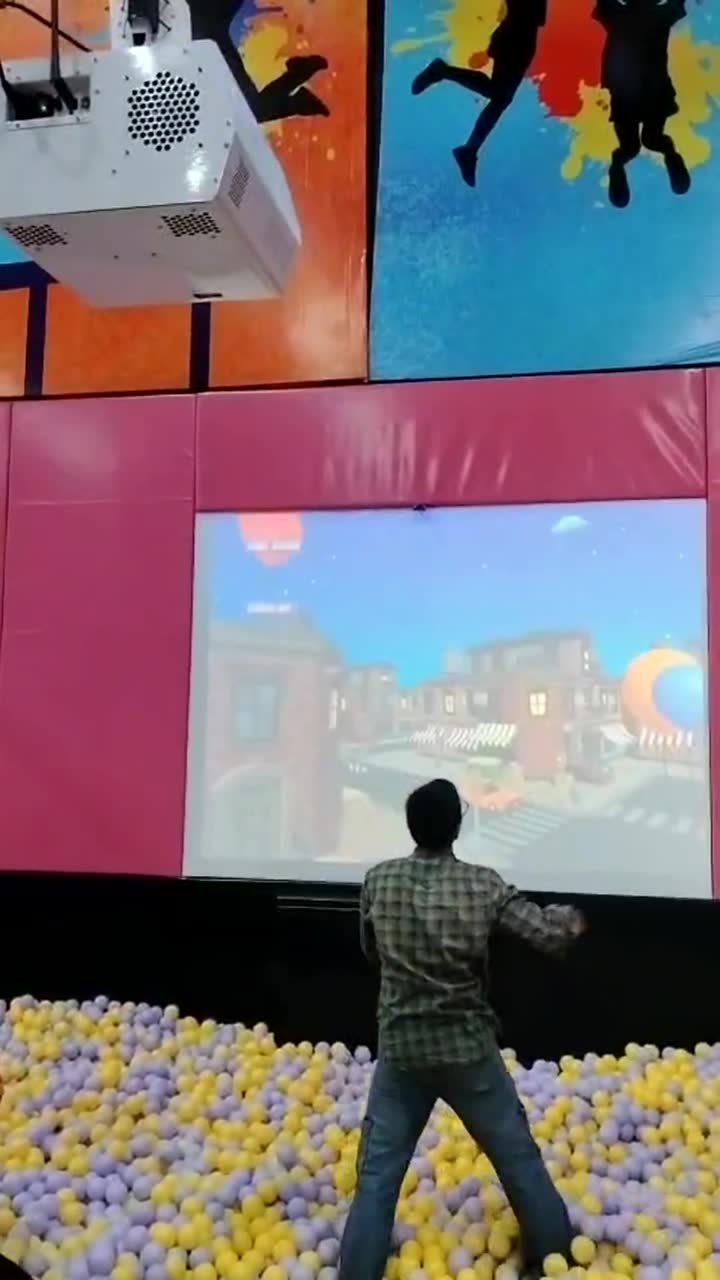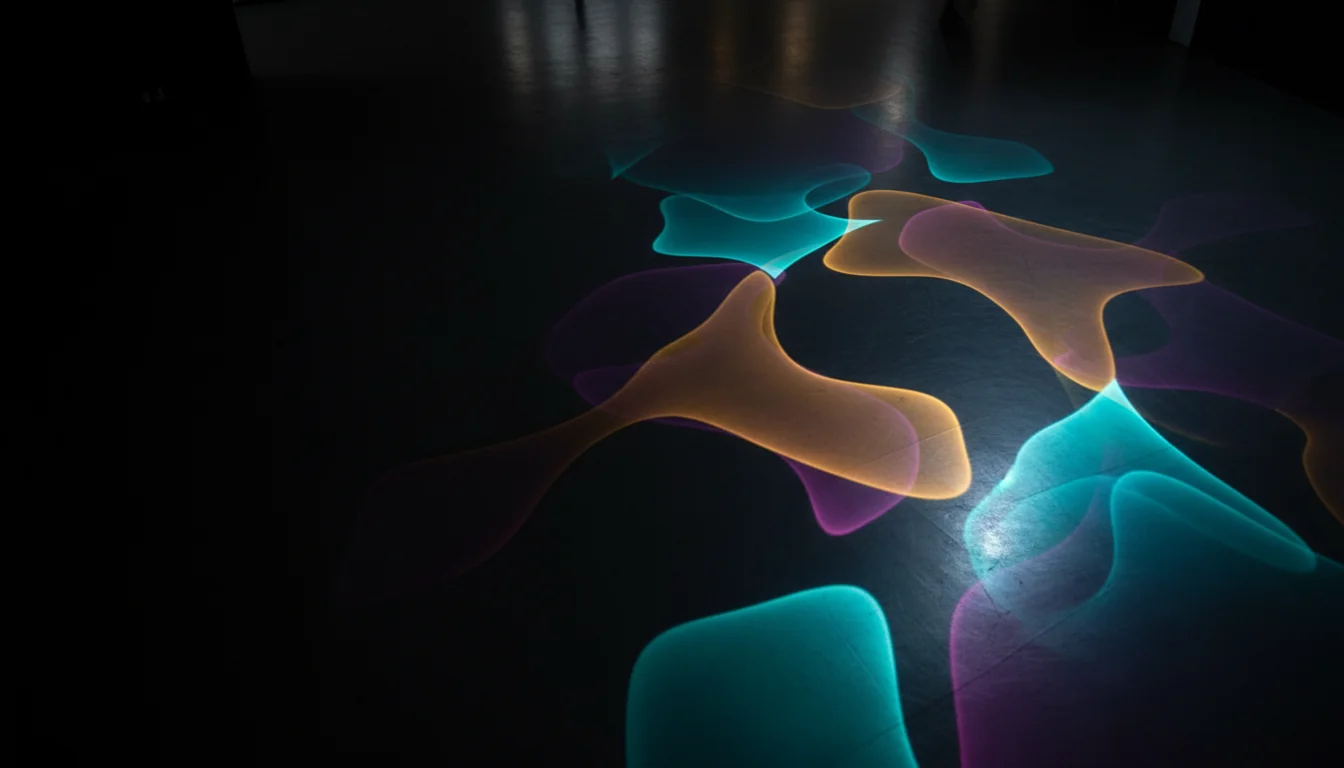
An interactive projection screen turns an ordinary surface — a floor, a wall, even a tabletop — into a responsive display that reacts to where people move, step, or touch. There's no touchscreen panel and no headset: a projector throws the image, a motion sensor reads movement, and software makes the visuals respond in real time. The result is a surface people can play with using their whole body.
It's become one of the most flexible attractions a venue can install because the same hardware runs dozens of experiences and three different physical formats. Here's how they differ and where each one earns its place.
The three formats
Floor projection
The image is cast down onto the floor and reacts to footsteps. Best for big, energetic, crowd-forming games — kick the ball, splash the water, dodge the obstacle. Floor systems are the natural choice for mall atriums, play zones, and PE halls because they pull a crowd from a distance and invite group play.
Wall projection
The image is cast onto a vertical surface and reacts to touch, throw, or gesture. Better for reach-and-touch games — sorting, drawing, target-throwing, climbing-style challenges. Wall systems shine where floor space is tight or where you want to turn a blank feature wall into an attraction.
Table / surface projection
A compact version cast onto a tabletop or counter, ideal for restaurants, lobbies, and waiting areas where a small footprint matters.
How it actually works
Every interactive projection screen has three parts: a projector (the display), a depth/motion sensor (reads where people are), and the software (maps movement to the game). Because the experience is software, one installation can switch between a high-energy sports game and a calm, slow sensory scene with a setting change — you're not buying a single game, you're buying a platform. For the full mechanics, see our explainer on how interactive floor projection works.
What to check before you buy
- Surface and space: floor systems need clear floor area and adequate mounting height; wall systems need a clean vertical surface. We scope this to your room.
- Content library + custom games: how many games ship with it, and can new ones — branded or curriculum-specific — be built? (We build custom floor and wall games to brief.)
- Brightness for the environment: bright atriums need higher-lumen projectors than dim rooms.
- Support and parts: an interactive system is only useful while it's running — company-backed support and locally available parts matter more than the sticker price.
Where each format fits
| Venue | Best format |
|---|---|
| Mall atrium / play zone | Floor (crowd-former) |
| School PE hall / classroom | Floor + wall |
| Restaurant / café kids' corner | Floor or table |
| Hotel lobby / waiting area | Wall or table |
| Museum / exhibition | Wall + floor |
(See worked use-cases for malls, schools, and restaurants & cafés.)
Built and supported in India
Because Bamigos.com designs the games, the software, and the systems in-house in New Delhi, interactive projection screens come with content built for your venue and language, the option of fully custom games, and company-backed support — rather than an imported black box with no one to call when it goes dark.
Interested in Interactive Projection?
Get pricing and specs for interactive floor & wall projection systems.
Pricing depends on the format, surface size, brightness, and how much custom content you want, so we scope each install to the space.
Frequently asked questions
What's the difference between floor, wall, and table projection?
Floor suits big step-and-move games and crowds; wall suits reach-and-touch games and tight spaces; table is a compact format for restaurants, lobbies, and counters.
Do I need a special floor or surface?
No special flooring — you need a clear, suitably sized surface plus the right projector throw distance and mounting height, which we scope to your room.
How bright a projector do I need?
Bright, daylit atriums need higher-lumen projectors than dim indoor rooms; we match brightness to your environment.
Can new games be added later?
Yes — it's a platform, so you can add games over time, including custom or branded ones built to brief.
Turn a floor, wall, or table into an attraction
Interactive projection systems — built, customised, and supported in India.
Get a Projection Quote