Ask any primary-school teacher what's hard about teaching today and "keeping them still and engaged" comes up fast. Screens are everywhere, attention spans are short, and a worksheet rarely competes. Interactive projection flips that problem on its head — instead of fighting children's urge to move, it uses it. The lesson becomes a game played with the whole body, on the floor or the wall, and suddenly the energy in the room is working for you.
This is why interactive floor and wall projection has moved from a novelty into a genuine teaching tool in Indian schools, preschools, and special-needs settings.
What it actually is
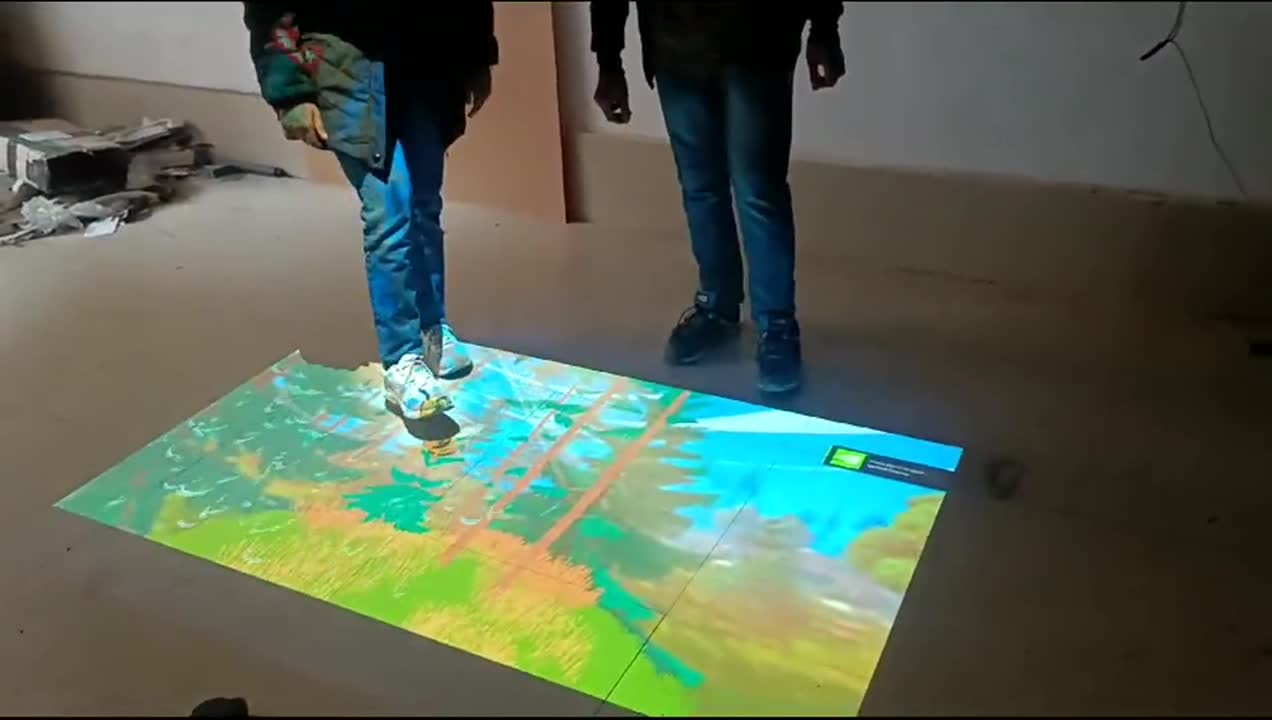
A projector and motion sensor turn any floor or wall into a touch-free, reactive surface. Step on a number, stamp out a word, throw a "ball" at the right answer, sort the animals into the correct habitat — the projection responds to where children move. No tablets to hand out, no controllers to break, no headsets. One surface, the whole class taking turns or playing together.
There are two formats, and most schools use both:
- Floor projection — best for movement-heavy, full-body games: maths hopscotch, spelling stomps, sports and reaction games for the PE hall.
- Wall projection — better for reach-and-touch games: sorting, matching, drawing, and quieter classroom activities.
Why schools choose it over a smartboard
A smartboard is one child at the front while thirty watch. Interactive projection is the opposite — it's built for a group to be physically active together. The benefits teachers report:
- Engagement through movement. Kinaesthetic learning sticks; children remember what they did with their bodies.
- Inclusive by default. Shy children join in because it doesn't feel like being tested — it feels like play.
- No fragile hardware in little hands. Nothing to drop or fight over; the "device" is the room.
- Instant variety. One install runs dozens of games across subjects, so it doesn't gather dust.
Custom educational games, built around your curriculum
This is where a generic imported system falls short and a custom build wins. Because Bamigos.com designs the games and the software in-house, the content can be made for your syllabus and your language — number ranges that match the grade, Hindi or regional-language word games, your school's mascot in the game, themes tied to what's being taught that week. Off-the-shelf packs are fixed; custom games grow with the school. (See more on our custom-built games for floor and wall.)
Sensory rooms and special-needs education
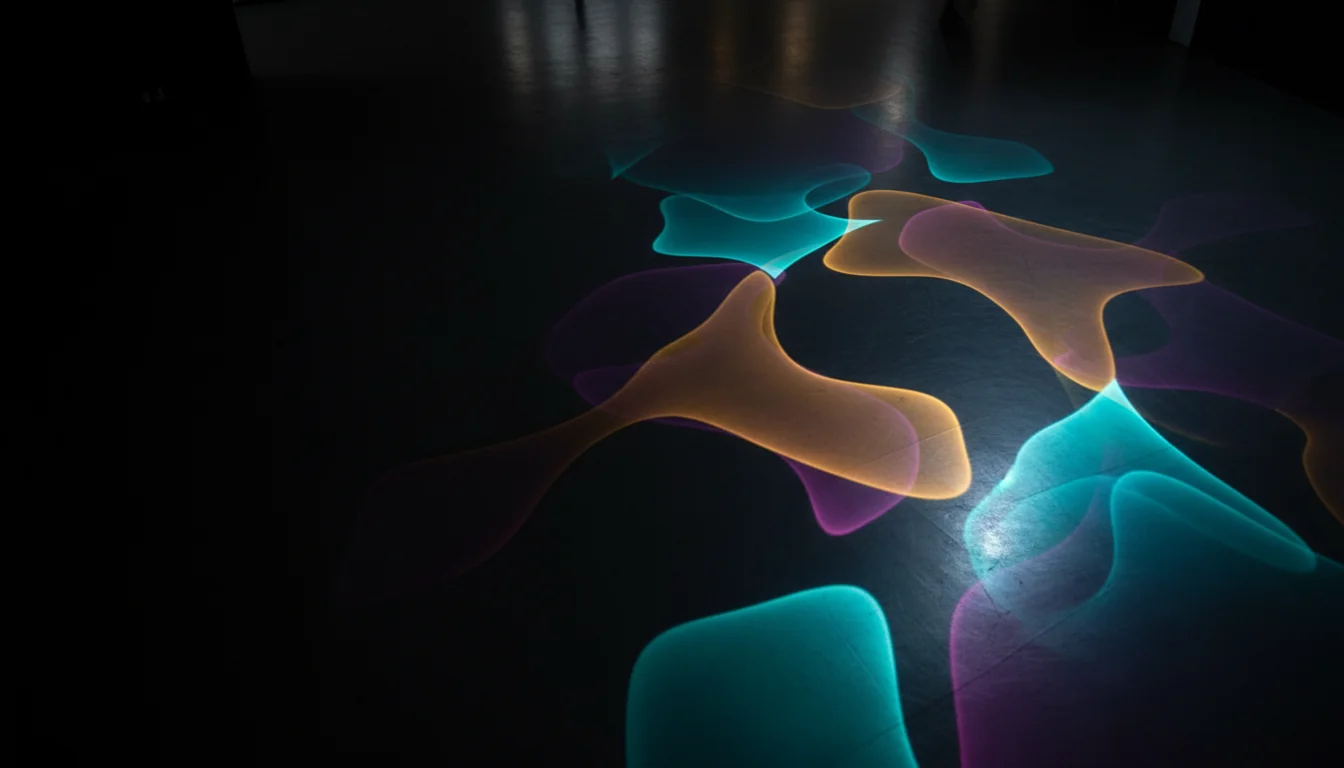
One of the highest-impact uses is the sensory room. Calm, slow, responsive projections — ripples that follow a hand, lights that react gently to movement — give children with autism or sensory-processing needs a controllable, low-pressure space. The same hardware that runs an energetic PE game can run a soothing sensory scene; it's a setting change, not a new system.
Where it goes in the school
- PE hall / activity room — floor projection for active games and reaction drills.
- Early-years / KG classrooms — floor or wall for play-based learning.
- Sensory / therapy room — calm responsive scenes.
- Library or "discovery corner" — wall projection for quiet interactive learning.
What it costs and how to start
Interactive projection is sold as tiered setups depending on the surface size, the number of games, and whether you want custom educational content built in. Rather than a fixed sticker price, we scope it to the space and the goal — tell us the room and the age group and we'll put together options.
A good way to start is a single PE-hall or KG-classroom install, prove the engagement, then expand to the sensory room and other classrooms once teachers see it working.
Interested in Interactive Projection?
Get pricing and specs for interactive floor & wall projection systems.
Frequently asked questions
Are interactive projection games safe for young children?
Yes. There are no controllers, headsets, or fragile devices in children's hands — the game is projected and read by a motion sensor, so children play with their whole body on a clear floor or wall.
Can the games be matched to our curriculum and language?
Yes. Because we build the games in-house, content can be made for your grade levels and in Hindi or regional languages, with your school's themes or mascot.
How much space does a school installation need?
A floor system needs a clear floor area and adequate mounting height; a wall system needs a clean vertical surface. We scope the exact requirement to your PE hall, classroom, or sensory room.
Can one system run both calm sensory activities and energetic games?
Yes — it's a software platform, so one installation switches between high-energy PE games and slow, responsive sensory scenes with a setting change.
Bring active, educational play to your school
Custom floor & wall projection games, built around your curriculum and language.
Talk to Us About Your SchoolNew to interactive projection? Start with our explainer on how interactive floor projection works.