A trampoline by itself keeps kids busy for about twenty minutes. A trampoline with a game keeps them busy for two hours — and that's exactly why every trampoline park in Delhi, Mumbai and Bangalore runs structured games on its courts instead of just open jumping.
This list has 15 trampoline games that actually work: the classics Indian park marshals run every weekend, plus backyard versions you can play on a home trampoline with zero equipment. Every game has real rules you can start today. After the list, the part that's changing the industry: jumping games where the trampoline itself becomes the controller, and how parks are turning their beds into video game platforms.
Two safety rules before any game: one jumper per bed whenever the game involves tricks or roughhousing, and flips only into foam pits or under marshal supervision. Every serious park enforces these; your backyard should too.

The Classics: Games on the Main Court
1. Trampoline Dodgeball. The most-played trampoline game in Indian parks, and the one with dedicated courts at most venues. Two teams, soft foam balls, players on opposing trampoline lanes. Get hit below the neck and you're out; catch a thrown ball and the thrower is out plus one teammate returns. Last team with a player standing wins. The bouncing makes dodging three-dimensional — a jump at the right moment clears almost any throw.
2. Slam Dunk Contest. Every trampoline park has basketball hoops over the lanes for a reason. Each player gets three attempts; judges score on difficulty and style. A two-hand dunk is 1 point, a dunk off a trick (360 spin, between-the-legs) is 2–3 points, and anything the crowd hasn't seen before is 5. Highest total wins. Backyard version: a plastic hoop zip-tied to the net pole works fine.
3. Crack the Egg. One player sits cross-legged in the middle of the bed, arms wrapped tight around pulled-up knees — that's the egg. Everyone else bounces around them trying to shake the egg loose. If the egg's grip breaks (arms unlock or legs unfold), the egg is cracked, and a new player takes the centre. Brutal fun for ages 6–12; adults last about fifteen seconds.
4. Poison Ball. One soft ball is placed on the trampoline bed and everyone jumps. Touch the ball with any body part and you're out; last player bouncing wins. The rule that makes it work: players must keep jumping — standing still to watch the ball is also out. Use a foam ball, never a cricket ball, and cap it at four players per bed.
Group and Elimination Games
5. Freeze Bounce (Statue Jumping). Musical statues, airborne edition. Music plays, everyone jumps and dances on the bed. Music stops, everyone freezes mid-position — even if that position is sideways and falling. Anyone who moves is out. The catch: you land from your frozen pose, so freeze badly and you fall over, which is most of the fun.
6. Simon Says Bounce. One caller, everyone else jumping continuously. "Simon says touch your toes mid-air" — do it, stay in. Do a move Simon didn't say, or miss a Simon-says move, and you sit out a round. Good callers mix easy commands (clap three times) with coordination traps (seat drop, then 180° turn). Works brilliantly for mixed-age birthday groups because the caller can balance difficulty per player.
7. Follow the Leader — Trick Chain. Players line up; the leader performs a move or short sequence (a seat drop, a knee drop, a half twist). Each player copies it in turn. Anyone who can't land the sequence is out; the last player becomes the next leader. For little kids keep it to single moves; teens will chain three or four.
8. Add-On (Trampoline Horse). Like the basketball game HORSE, built for trampolines. Player one does a trick. Player two repeats it and adds one of their own. Player three does the whole chain plus one more. Miss any part of the chain and you collect a letter — spell B-O-U-N-C-E and you're out. Best for confident bouncers; agree on a no-flip rule first.
Games That Need Park Equipment
9. Battle Beam. Two players, one padded beam over a foam pit, one foam pugil stick each. Knock your opponent off the beam into the pit and you win the round; first to three rounds takes the match. Parks run this as a tournament format at birthdays — it's the single best spectator game on the floor, and the falls into foam are half the entertainment.
10. Foam Pit Challenges. A category rather than a single game, and the foam pit is where tricks get attempted. Run it as a judged format: each player announces a move (front flip, back drop, star jump), attempts it into the pit, and judges score landing quality. Beginner version: longest jump wins — start a metre from the pit edge and move the launch line back each round.
11. Popcorn (Double Bounce). Two players on one bed. Player one sits holding their knees (like crack the egg, but cooperative); player two times a big bounce right next to them to launch the "popcorn" into the air. Swap after three launches. Height is scored by agreement or by a spotter. This is the game that teaches timing on a trampoline — and why parks separate big kids from small kids.
Party and Late-Night Games
12. Lava Floor. The park floor is lava; the trampolines are the only safe ground. Players cross the court by bouncing bed to bed, and the moment anyone touches the floor between beds, they're out. Add a referee who can call "eruption" — everyone must reach a designated far bed within ten seconds. Better in parks with connected lanes; at home, cushions between the bed and the sofa do the job.
13. Bounce Tag. One player is "it" and must tag another jumper while everyone keeps bouncing. Tagged player becomes it. The rules that make it work on a trampoline: tags must be below the shoulders, and no pushing — only touching. On a single home bed, cap it at three players or someone ends up in the safety net.
14. Musical Bounces. Musical chairs without chairs. Lay one fewer pool noodle (or taped X marks) than players on the beds. Music plays, everyone bounces anywhere on the court; when it stops, each player must land sitting on a marker. One player misses out each round, remove a marker, repeat. Landing accuracy is genuinely hard on a trampoline — this one humbles the overconfident.
15. Glow Bounce (Neon Night). The evening format parks run on weekends: lights down, UV or coloured lights on, jumpers in white or neon with glow sticks taped to wrists. Any game from this list played under glow lights feels like a different sport — glow dodgeball and glow freeze bounce are the two that fill courts. At home, a dark room plus two glow sticks per kid is enough.
Planning a Trampoline Park?
Get equipment pricing and setup guidance for your trampoline park.
The Interactive Future: When the Trampoline Becomes the Video Game

Everything above depends on a human caller, a referee or a judge. The new generation of trampoline games removes all three: an interactive trampoline system mounts a large screen and motion sensors over the bed, tracks the jumper's movement in real time, and turns jumps, ducks and timing into inputs for a video game. The trampoline becomes the controller.
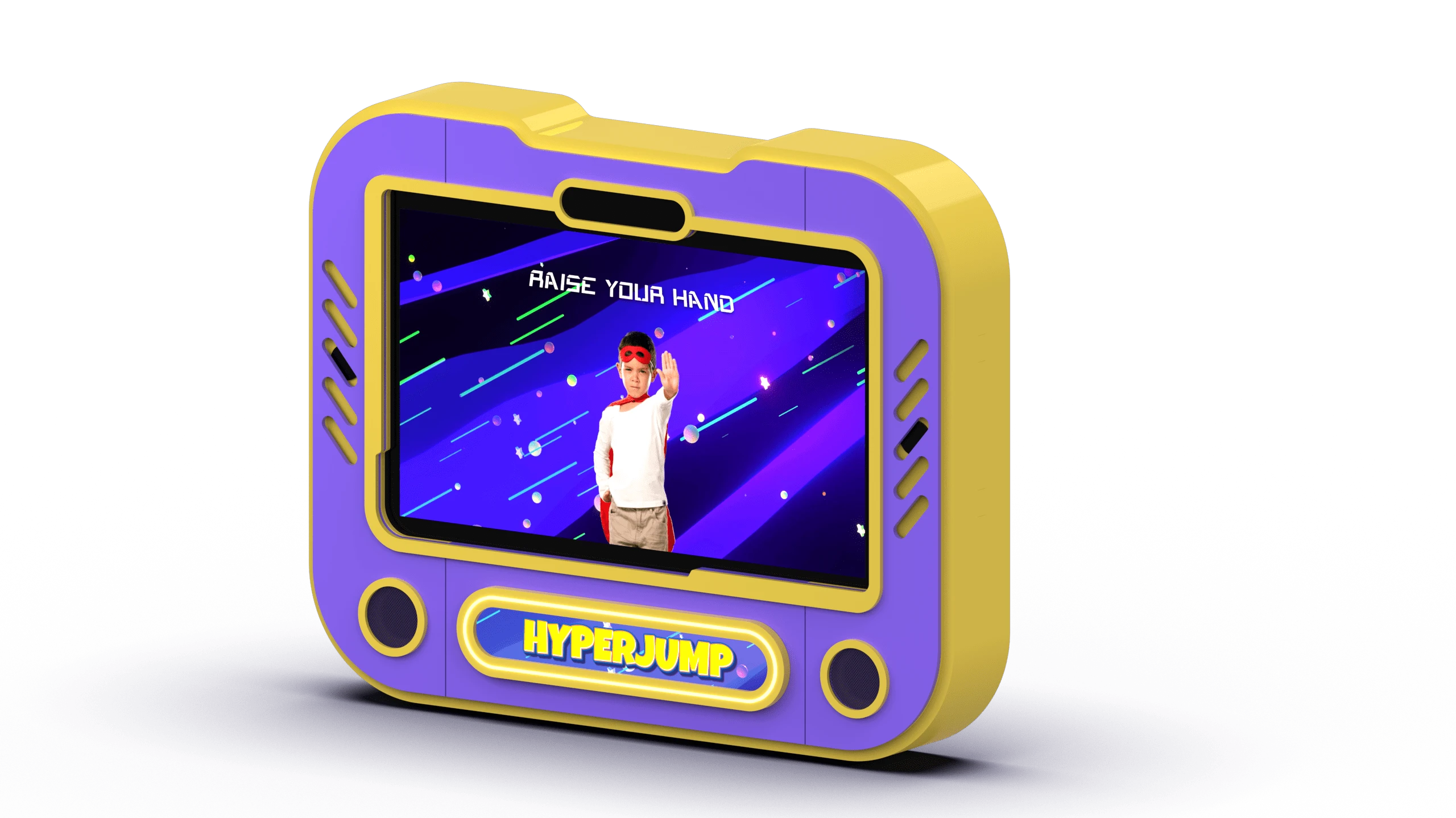
The format started in Europe with systems like ValoJump, and it's now built in India. The one we manufacture is Hyper Jump:
- 75-inch display in front of the bed, with custom-built speakers — the game plays out at life size in front of the jumper
- AI-powered motion sensors that track every jump and body position with no wearables, no harness, nothing held in hand
- 4 dynamic games built in — competitive jump challenges, target-based scoring, rhythm jumping and multiplayer modes — with new games added through regular software updates
- AI avatars and automatic video recaps — the system generates a personalised animated character for the player and cuts a shareable clip of the session, which is exactly the content that ends up on Instagram
- Leaderboards that persist across visits, so regulars come back to defend a high score
The design targets behind gamifying a bed are commercial: interactive trampoline systems are built to drive roughly 50% higher revenue per bed versus standard trampolines and around 3x repeat visits, because a game with a leaderboard gives people a reason to return that free jumping doesn't. Those are the outcomes the systems are designed for — your actual numbers will depend on location, pricing and how well the zone is staffed and promoted.
On cost, the gap between imported and Indian-made is the real story. An imported system like ValoJump typically costs 2–4× a comparable Indian-made system in India once duties, shipping and installation land, with a 6–12 week lead time and spare parts shipping from Europe. Hyper Jump delivers in 2–4 weeks at factory-direct pricing — contact us for a quote — and installs on-site with staff training included: no import duty, local spare parts, one-year warranty. We did the full feature-by-feature breakdown in our ValoJump vs Hyper Jump comparison.
The part existing parks care about most: Hyper Jump retrofits onto a regular jumping bed. The system mounts above the trampoline without modifying the bed itself, so a park can upgrade lanes one at a time instead of rebuilding a zone.
For Park Owners: The Business Angle
If you're running or planning a venue, the games on this list are your free programming — a marshal running dodgeball tournaments and foam pit challenges is what separates a park people visit once from one with birthday bookings every weekend. Interactive systems sit on top of that as the premium, ticketed attraction. The economics of the whole venue — beds, courts, staffing, payback — are in our trampoline park business guide for India, and the wider category of screen-and-sensor attractions (floors, walls, trampolines) is on our interactive projection games page.
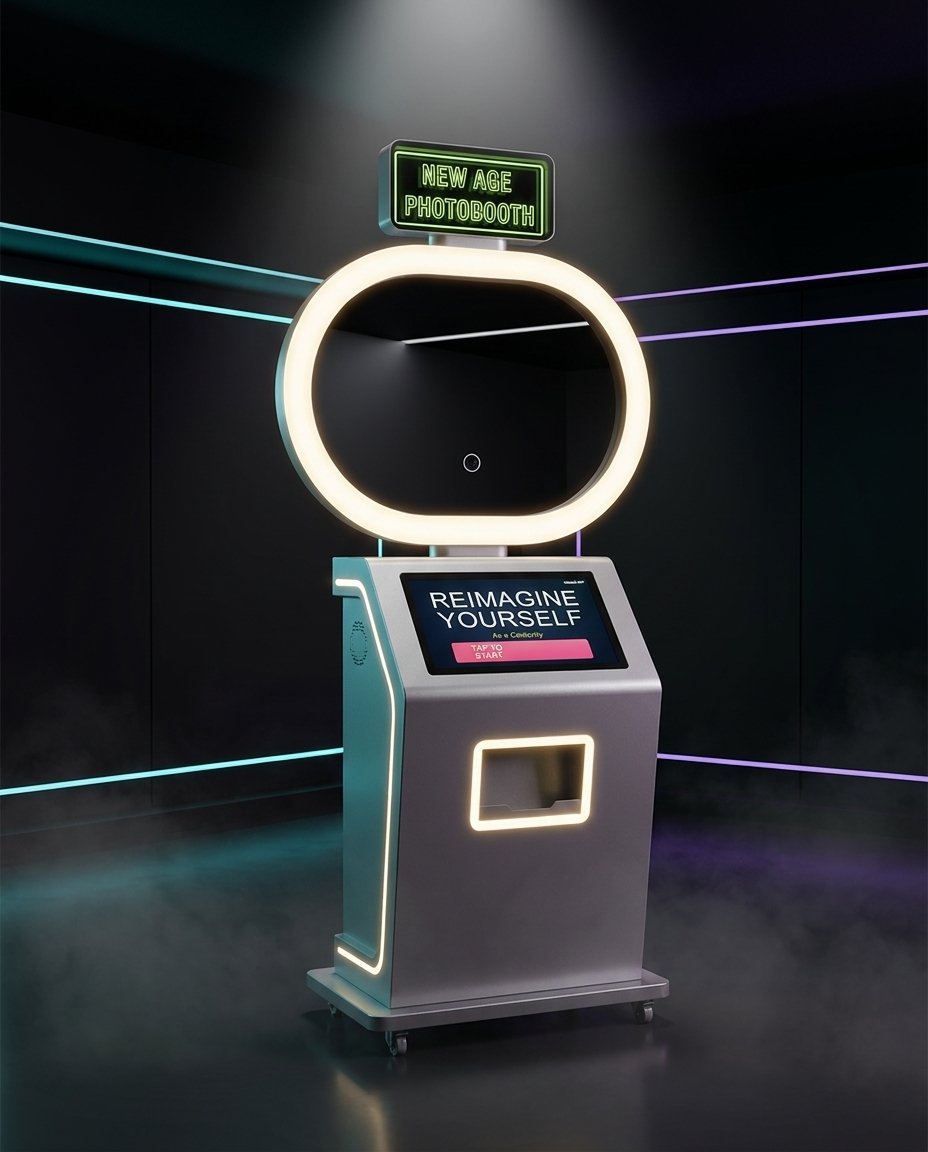
Explore the machines: Pikcha AI Photo Booth · Interactive Projection Games · Shop All Machines
FAQ
What games can you play on a trampoline? The most popular trampoline games are dodgeball, slam dunk contests, crack the egg, poison ball, freeze bounce, Simon says, follow-the-leader tricks, battle beam and foam pit challenges. Group games like musical bounces and glow bounce work well for parties, and interactive systems like Hyper Jump turn the bed into a video game with motion sensors and a big screen.
What is the most popular trampoline park game? Dodgeball. It has dedicated courts at most trampoline parks, works for any group size from 6 to 20, and the bouncing adds a vertical dodge that flat-ground dodgeball doesn't have. Battle beam is the best spectator game, and slam dunk contests are the most popular with teens.
How do you play crack the egg on a trampoline? One player sits in the centre of the bed, arms wrapped tight around pulled-up knees — the egg. Everyone else bounces around them, trying to shake the egg's grip loose with the bounce waves. If the egg's arms unlock or legs unfold, it's cracked, and another player takes the centre.
What is an interactive trampoline? An interactive trampoline combines a jumping bed with a large display and motion sensors. The sensors track the jumper's movement and use it to control video games shown on the screen — jumping higher, ducking and timing become game inputs. Systems like Hyper Jump add AI avatars, automatic video recaps and leaderboards, and retrofit onto existing trampoline beds.
How much does an interactive trampoline system cost in India? Imported systems like ValoJump typically run 2–4× the cost of comparable Indian-made systems after duties and installation. The Indian-made Hyper Jump comes with 2–4 week delivery, on-site installation and staff training included, and no import duty. The total depends on your configuration and the number of beds, so contact us for a quote.
Are trampoline games safe for young kids? Yes, with two rules enforced: one jumper per bed for any game involving tricks or rough play, and foam-pit-only flips. Games like Simon says, freeze bounce and follow the leader suit ages 4–8; dodgeball, battle beam and trick chains are better for 9 and up. Parks separate age groups for a reason — size differences, not skill, cause most collisions.
Can you add games to an existing trampoline park? Yes. Every game on this list needs nothing more than foam balls, a hoop or a beam. Interactive systems like Hyper Jump mount above existing beds without modifying the trampoline structure, so parks can upgrade single lanes one at a time.
Hyper Jump is manufactured by Bamigos in New Delhi with pan-India installation and support. See Hyper Jump features and pricing or view the product page.