Ticket redemption games are the machines that pay out tickets players exchange for prizes — and per square foot, they are the hardest-working equipment in most Indian family entertainment centres. This post is the pillar guide for operators evaluating redemption equipment: how the payout percentage actually works, what the margin math looks like with real numbers, how machine pricing works in India in 2026 (factory-direct, quote on request), and how a small 3-5 machine zone pencils out.
We manufacture redemption games in New Delhi — Panda Escape, Beat Blaze, and Hoppy Floppy — so read this knowing where we stand. The economics below come from our own operator FAQ and product pages, and pricing is quoted on request because configuration and quantity move the number.
What ticket redemption games are
A ticket redemption game is an arcade machine that dispenses tickets based on player performance. The loop is simple:
- Player pays — coins, tokens, or a card-based payment system
- Player plays a skill or chance-based game
- The machine dispenses tickets proportional to the score
- Player accumulates tickets and exchanges them for prizes at a redemption counter
The prize counter is what separates redemption from a plain video arcade. A racing cabinet gives the player two minutes of fun and nothing to carry home. A redemption game gives the same fun plus a growing strip of tickets — a visible, tangible stake that only becomes valuable at the prize counter. That difference drives everything about the economics.
Why redemption games out-earn video arcade machines
The numbers from our operator data and redemption games page:
- Repeat play. Around 70% of redemption players return multiple times. The prize is a goal, and goals bring people back — a player 200 tickets short of the prize they want is a player who visits again next weekend.
- Higher spend per visit. Players spend 2-3x more chasing ticket targets than they do on non-redemption games. Nobody feeds a racing cabinet five times in a row to beat their own score; they do exactly that when 50 more tickets means the plush toy instead of the keychain.
- 40-60% higher revenue versus non-redemption games in the same footprint.
- Multiplayer machines multiply this. Multiplayer-capable redemption units generate 2-3x the revenue of single-player units — four kids competing on one cabinet is four revenue streams on one electricity bill and one patch of floor.
There is also a foot-traffic effect that doesn't show up in per-machine numbers: a visible prize counter pulls families into the venue, and redemption players bring siblings and parents who spend on everything else.
The prize psychology, briefly
Tickets work because they convert an abstract score into a physical collection. A child holding 800 tickets has something — and the counter display turns "something" into "almost the remote-control car." Operators who understand this put the high-value prizes at eye level behind the counter, clearly labelled with ticket costs, and rotate stock seasonally so regulars always have a new target.
Payout percentage, explained honestly
The payout percentage is the share of game revenue that flows back to players as ticket value. It is operator-adjustable — you set it in the machine's configuration, along with game difficulty. This is the single most misunderstood number in the redemption business, so here is how it actually works:
- The machine issues tickets per the payout settings you configure
- Each ticket has a notional value you define (your "ticket value")
- The prizes those tickets buy should cost you 10-20% of ticket value at wholesale
That last line is where the margin lives. An illustrative example with round numbers: say your settings issue ₹40 of ticket value per ₹100 of game revenue (a 40% payout), and your prize counter is stocked so prizes cost you 15% of their ticket value. Your actual prize cost is ₹40 × 15% = ₹6 per ₹100 of revenue. The player experiences a generous 40% payout; your prize cost is 6%.
Two honest caveats. First, these are illustrative numbers, not a promise — your payout setting, ticket value, and prize sourcing decide your real figure. Second, payout that is too tight kills the business faster than a generous one: if regulars never win anything worth having, the 70% repeat rate disappears. Set payout so players visibly win, and let the 10-20% prize-cost ratio protect your margin. Machines with adjustable difficulty and ticket payout settings — all three of ours have them — let you tune this per venue instead of guessing once.
Setting your ticket value
The ticket value is the exchange rate between tickets and prizes, and it is entirely yours to define. The practical way to set it: work backwards from your prize shelf. Take your wholesale cost for each prize, divide by your target prize-cost ratio (10-20% of ticket value), and that gives you the ticket price the prize should carry. A plush toy that costs you ₹150 wholesale at a 15% ratio should sit on the counter at 1,000 tickets. Do this across the whole shelf and your margin is locked in regardless of how generously the machines pay out — generous payout just means players hold more tickets, not that prizes cost you more. This is also why wholesale prize sourcing matters so much, and why we connect operators with wholesale prize suppliers as part of the setup: a 20% better buy on prizes flows straight to margin.
Prize counter strategy in practice
Structure the shelf in tiers. Small consumable prizes (keychains, candy, small toys) at low ticket counts give young kids an instant win and clear the tickets of casual players. Mid-tier prizes in the few-hundred-ticket range are where regulars bank across visits. And one or two visibly aspirational prizes — the big plush, the gadget — do the marketing: almost nobody redeems them, but everybody plays towards them. Rotate stock seasonally so your regulars always have a new target, and label every prize clearly with its ticket cost; an unlabelled prize is a prize nobody is chasing.
The margin math: 50-60% margins, 8-14 month ROI
The figures we give operators, from our ticket redemption games page FAQ:
- Typical margins: 50-60% on redemption game revenue, after prize costs
- Typical ROI: 8-14 months on the machine investment
- A well-managed redemption zone of 4-6 machines can generate ₹3-6 lakh monthly revenue in high-traffic locations
What moves you inside those ranges:
| Factor | Effect |
|---|---|
| Footfall quality | Mall and FEC locations with family traffic outperform standalone spots |
| Payout tuning | Adjustable difficulty + payout keeps prize cost at 10-20% of ticket value |
| Prize counter appeal | Attractive display with aspirational prizes raises spend per visit |
| Machine mix | Multiplayer units (2-3x revenue) anchor the zone |
| Uptime | Local spares and support matter more than a small price difference on day one |
On uptime: all Bamigos machines carry a 1-year comprehensive warranty covering hardware and ticket dispenser mechanisms, with spares stocked in Delhi. A redemption machine that is down on a Saturday earns nothing and — worse — breaks the repeat-visit habit.
One honesty note on the 50-60% figure: that is the margin on game revenue after prize costs — the machine-level economics. Your venue-level profit also carries rent for the 200-400 sq ft, electricity, and counter staffing, which vary too much by city and venue type to quote responsibly here. What the machine-level margin tells you is that redemption leaves more room for those overheads than almost any other arcade category, which is exactly why FECs give redemption their best floor space.
Machine prices in India (2026): factory-direct, quote on request
All three machines are sold factory-direct from New Delhi, and pricing is quoted per order rather than published as a fixed list price — configuration, quantity, and venue requirements move the number, and a stale published price is worse than no price. Current pricing is on request, with a quote typically back within 24 hours:
| Machine | Type | What it is for |
|---|---|---|
| Panda Escape | Multiplayer skill/climbing game | The zone anchor — the multiplayer revenue effect applies here |
| Beat Blaze | Rhythm timing game | Holding the 12+ crowd most redemption floors lose |
| Hoppy Floppy | Skill hopping game | All-ages family width in a compact footprint |
A 3-machine starter zone (one of each) is the standard entry point — contact us for a bundled quote and we'll spec it to your space. For context across the wider market, see our arcade machine price list for India (2026).
Panda Escape

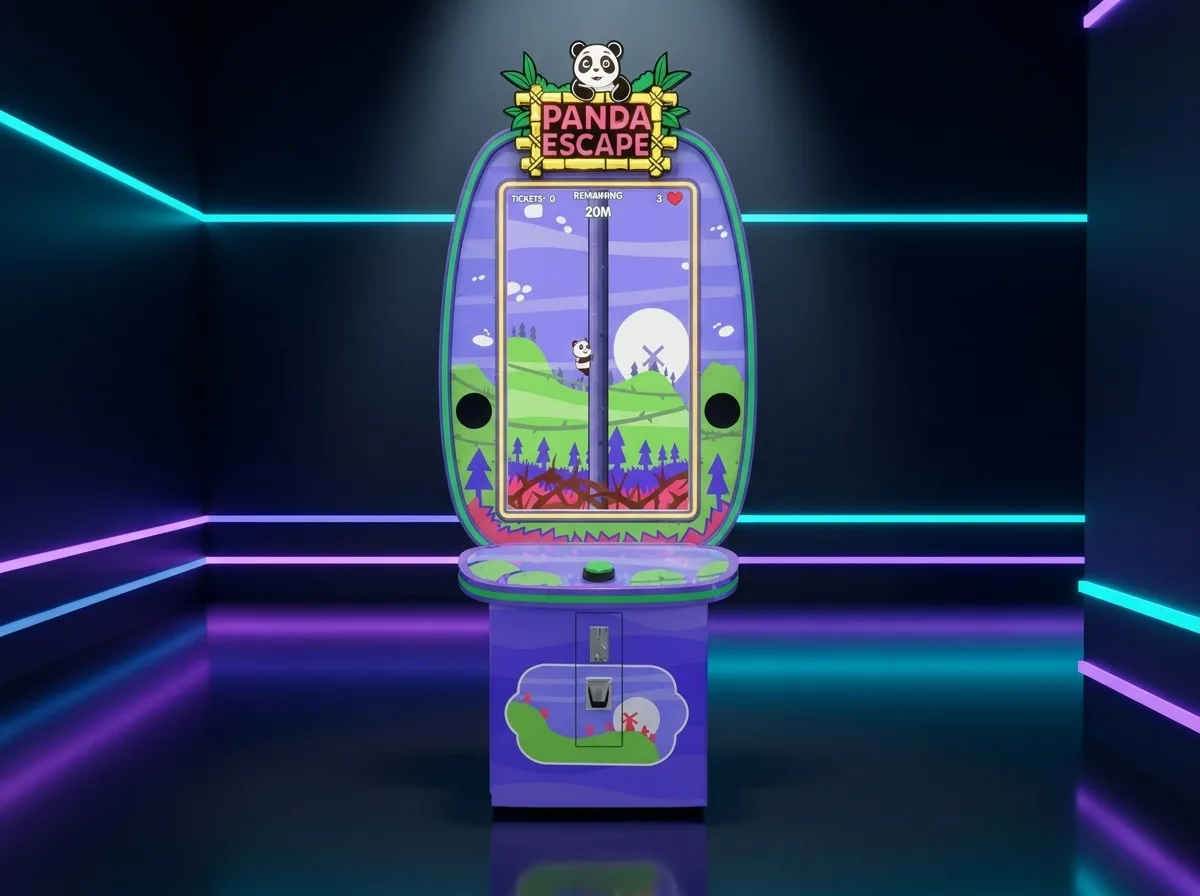
Panda Escape is the zone anchor: players help a panda scale a 100-metre tree with one-tap controls, dodging branches and collecting coins, with a 1,000-ticket bonus at the summit. Simple to learn in five seconds, hard enough that reaching the top is a genuine event other players stop to watch.
- Multiplayer-capable — the 2-3x multiplayer revenue effect applies here
- 43" display with a bright LED cabinet that pulls players from across the floor
- Dynamic difficulty and adjustable ticket payout
- Fast install, compact footprint
Panda Escape gameplay — one-tap climbing, 100m summit, 1,000-ticket bonus.
Planning a Gaming Zone?
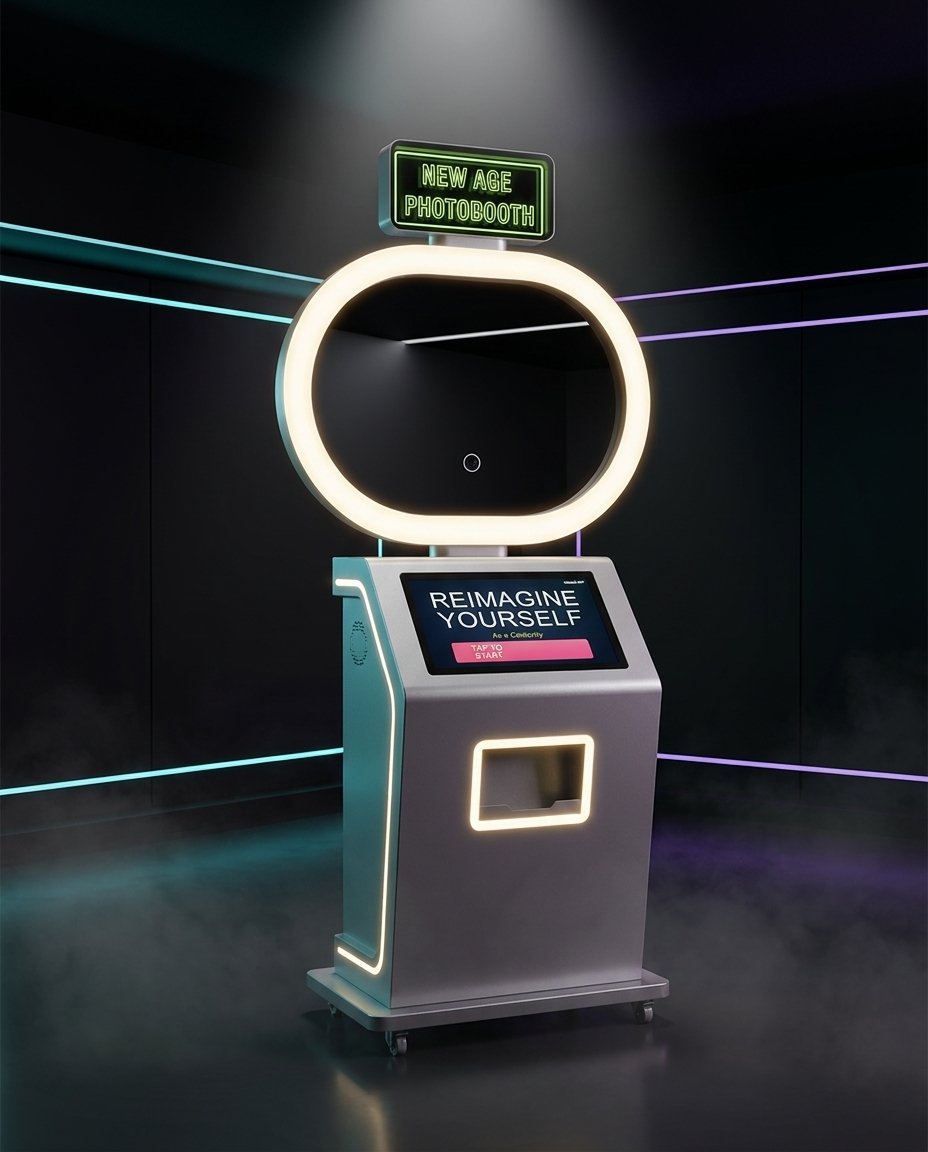
Get expert recommendations and pricing for your venue: including the Pikcha AI photo booth, a self-service photo attraction to evaluate for your venue. No obligation.
View Panda Escape details & pricing →
Beat Blaze
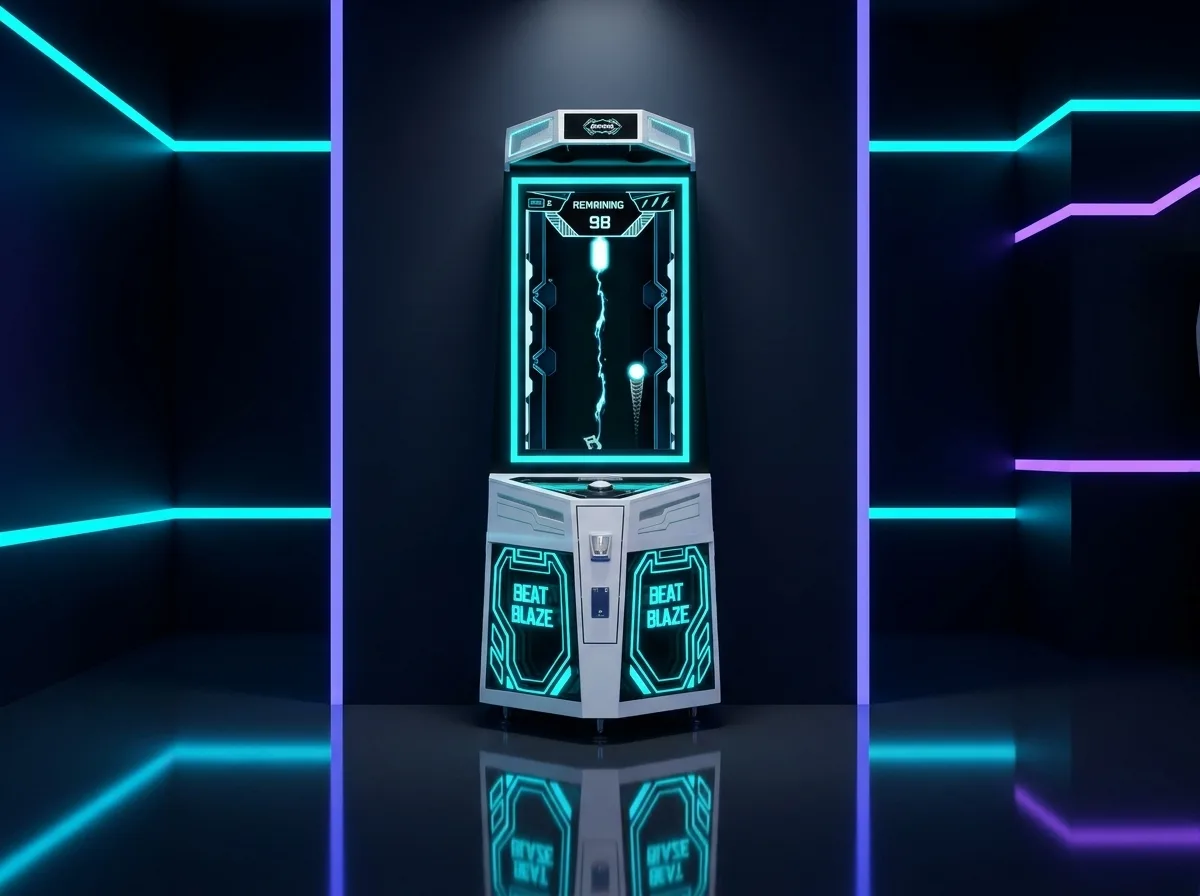
Beat Blaze is a rhythm game: players time one-button taps as a ball moves through cascading music notes on a 43" display. Precisely timed taps convert directly into tickets, and 100 perfect taps in a row pays a 1,000-ticket bonus. It skews slightly older than the other two — ages 12 and up — which makes it the machine that holds teenagers in a family venue, a demographic most redemption floors lose to their phones.
- Music-driven gameplay with high replay value
- One-button controls — zero learning curve, real skill ceiling
- Adjustable difficulty and payout
- Compact, space-efficient cabinet
View Beat Blaze details & pricing →
Hoppy Floppy
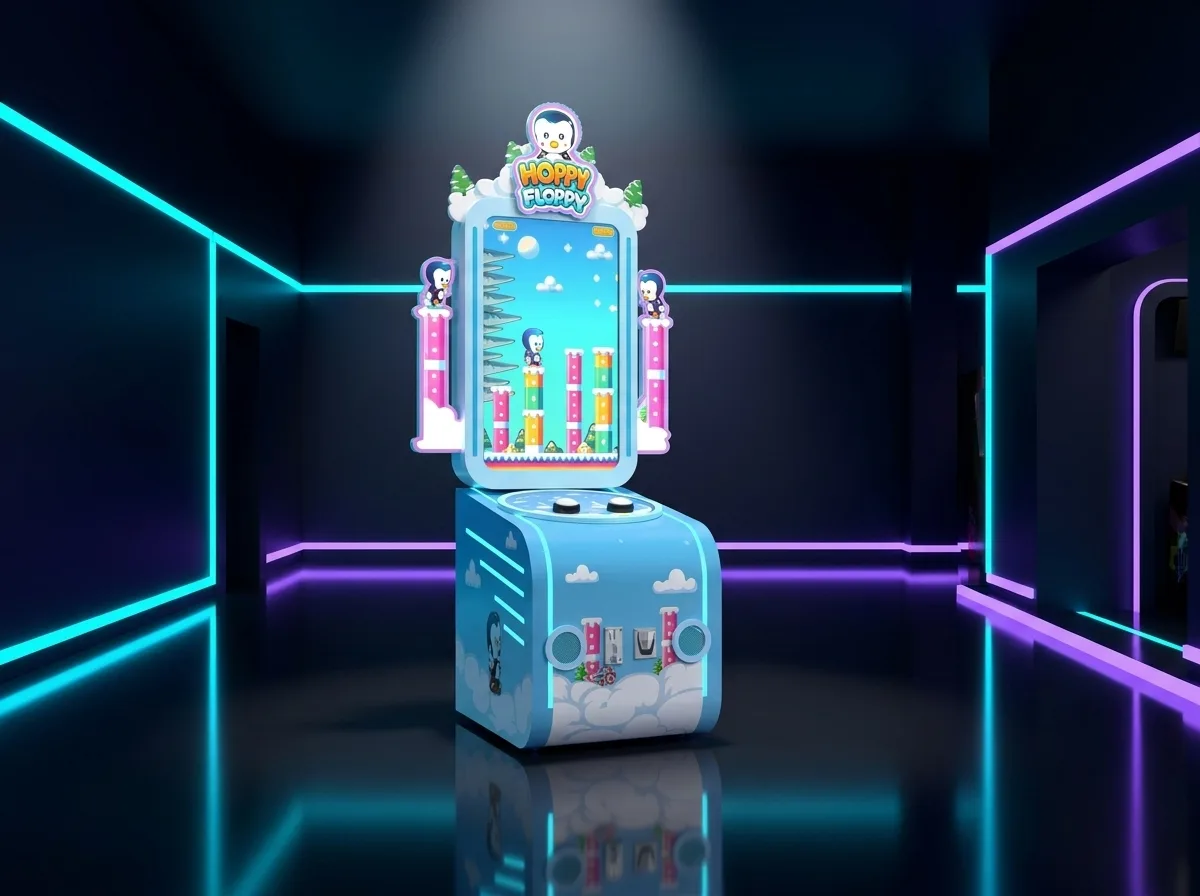
Hoppy Floppy is the family-width machine: tap to make a penguin hop across rising columns — the higher the climb, the more tickets. Simple enough for a 4-year-old, addictive enough that parents take over the button after the kids give up. Fast play cycles mean more paid plays per hour in a small footprint.
- All-ages appeal, genuinely playable from age 4
- Operator-adjustable ticket payout
- Quick game cycles, compact footprint
- Made in Delhi with locally stocked spares
View Hoppy Floppy details & pricing →
Physical vs digital ticket systems
Both work; the right choice depends on venue size and budget.
Physical tickets are the traditional route — dispensers print paper ticket strips the player carries to a staffed counter. Players see and feel their winnings, which is genuinely part of the appeal, and the system is simple and reliable. It suits smaller setups and tighter budgets. The downsides are operational: ticket stock to manage, manual counting at the counter, and no analytics beyond what your staff tracks.
Digital (card-based) tickets load ticket balances onto player cards. They prevent ticket loss and theft, enable automated redemption kiosks, and give you real analytics — tickets issued per machine, redemption rates, prize inventory movement. The trade-off is higher upfront investment in the card system and kiosks.
Our advice for most Indian venues: start physical with 3-4 machines, and move to a card system when the zone grows past 5-6 machines or when counter staffing becomes the bottleneck. We set up both, and can spec the system to the venue.
Zone economics: 3-5 machines in 200-400 sq ft
You do not need a full FEC to run redemption profitably. A basic zone is 3-5 machines plus a prize counter in 200-400 sq ft, and a well-managed zone of this size can generate ₹3-6 lakh monthly revenue in high-traffic locations at the 50-60% margins above.
A realistic starter configuration:
- 1× Panda Escape (multiplayer anchor)
- 1× Beat Blaze (holds the 12+ crowd)
- 1× Hoppy Floppy (all-ages family width)
- Prize counter with opening stock
That three-machine set fits comfortably in 200-250 sq ft with the counter — get a bundled quote for the full setup. Against the ₹3-6 lakh monthly revenue range for high-traffic spots and 50-60% margins, the 8-14 month ROI window is arithmetic, not optimism — though footfall is the variable you control least, so location selection matters more than machine selection once you are buying reliable equipment.
We design layouts from 150 sq ft up to 2,000+ sq ft, and the prize side is turnkey: prize counter design, connections to wholesale prize suppliers, redemption system setup (physical or digital), and staff training on prize management. The goal is a redemption program that is profitable from day one, not a pallet of machines you figure out yourself.
A note on legality
Skill-based ticket redemption with prize counters is a different legal animal from gambling, but the line matters and state rules differ. Prize value caps, the skill-vs-chance distinction, and state-specific amusement regulations all apply to how you configure payout and prizes. We wrote a full guide: Are Redemption Games Legal in India? Complete Guide for FEC Owners. Read it before you set payout percentages, and get local advice for your state.
Explore the machines: Pikcha AI Photo Booth · Interactive Projection Games · Shop All Machines
FAQ
How do ticket redemption games make money? Players spend more trying to win tickets, prize costs run only 10-20% of ticket value, roughly 70% of players return multiple times, and the prize counter drives foot traffic to the whole venue. Typical margins are 50-60%.
What is a good payout percentage for redemption games? There is no universal number — payout is operator-adjustable and should be tuned per venue. What matters is the ratio underneath it: keep prize costs at 10-20% of ticket value, and set payout generously enough that players visibly win and come back.
What is the ROI on ticket redemption machines in India? Most redemption setups achieve ROI in 8-14 months. A well-managed zone of 4-6 machines can generate ₹3-6 lakh monthly revenue in high-traffic locations at 50-60% margins.
How much space do I need for a redemption zone? A basic zone with 3-5 machines plus a prize counter needs around 200-400 sq ft. Layouts can be designed for anywhere from 150 sq ft to 2,000+ sq ft.
Physical or digital tickets — which is better? Digital card systems are more efficient, prevent loss and theft, and provide analytics, but cost more upfront. Physical tickets are simpler and work well for smaller setups. Start physical with a small zone; go digital as you scale.
What do ticket redemption machines cost in India? Pricing is factory-direct and quoted per order — the figure depends on the machine mix, quantity, and your venue's installation requirements, which is why we quote rather than publish a stale list price. All three machines carry a 1-year warranty covering hardware and ticket dispenser mechanisms. Contact us with your floor plan and we'll have a current quote back within 24 hours.
Which redemption games are most profitable? High-engagement skill games like Panda Escape and rhythm games like Beat Blaze lead in India. Machines with adjustable difficulty and payout settings let you optimise margins, and multiplayer-capable units generate 2-3x the revenue of single-player machines.
Do you help with prizes and the redemption counter? Yes — turnkey: prize counter design, wholesale prize supplier connections, redemption system setup (physical or digital), and staff training on prize management.
Planning a redemption zone? Get a quote with layout options for your space — we'll spec the machines, ticket system, and prize counter together. Talk to us about ticket redemption games →