NRI Business Ideas in India 2026: 6 Investments You Can Manage from Abroad
You are an NRI. You earn in dollars, dirhams, or pounds. You have ₹10–₹50 lakh sitting in your NRE/NRO account, and fixed deposits at 7% feel like you are watching your money sleep. You want to invest in India — but you live in Dubai, London, New Jersey, or Singapore. You cannot be there to run something daily.
Every "NRI investment" article recommends the same three things: real estate, stocks, mutual funds. These are not bad — but they are generic wealth-parking strategies. They do not generate monthly cash flow. They do not give you a business. They do not create something you can grow while keeping your day job abroad.
This guide covers six business investments in India that NRIs can set up, fund, and manage remotely — each with real monthly returns, actual capital requirements, and an honest assessment of what "remote management" realistically means.
What "Remote Management" Actually Requires
Before the options, let us define the ground rules. An NRI-compatible business must meet these criteria:
- No daily physical presence in India. You can visit quarterly, not daily.
- Digital revenue collection. UPI or bank transfers that you can track from your phone. No cash-dependent businesses.
- Remote monitoring. A dashboard, app, or digital reporting system that lets you see performance without being there.
- A local contact (not a full-time employee). Someone — a friend, family member, or part-time helper — who can handle the rare physical task (restocking, maintenance, key handover). Not a full-time manager you need to hire and supervise.
With these filters, here are six options ranked by return on investment.
1. AI Photo Booth Network (₹4–₹23L)
Investment: ₹4.13L (single unit, Lite) to ₹23L+ (3-unit Pro fleet)
Monthly income: ₹50,000–₹3,60,000 (1–3 units)
Remote management: Yes — full remote dashboard
India visits needed: 1–2 per year (setup + quarterly check-in)
NRI compatibility: ★★★★★
This is the highest-returning NRI investment on this list — and the most compatible with living abroad.
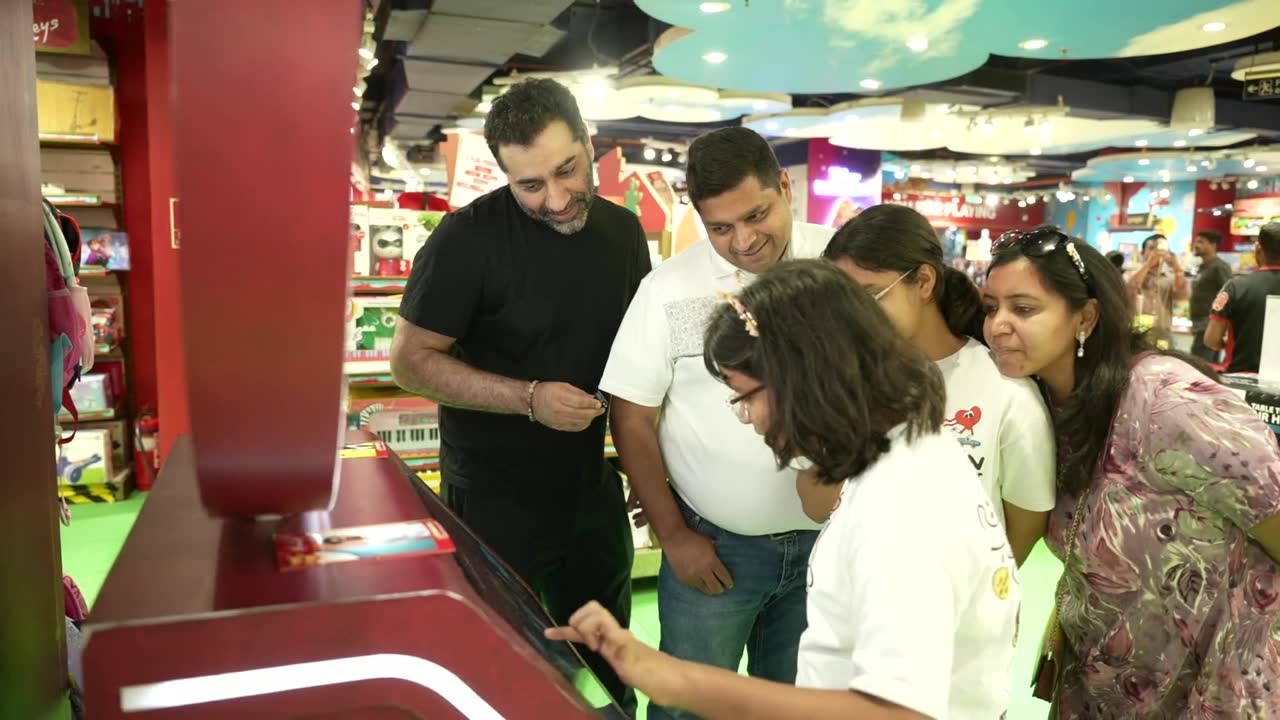
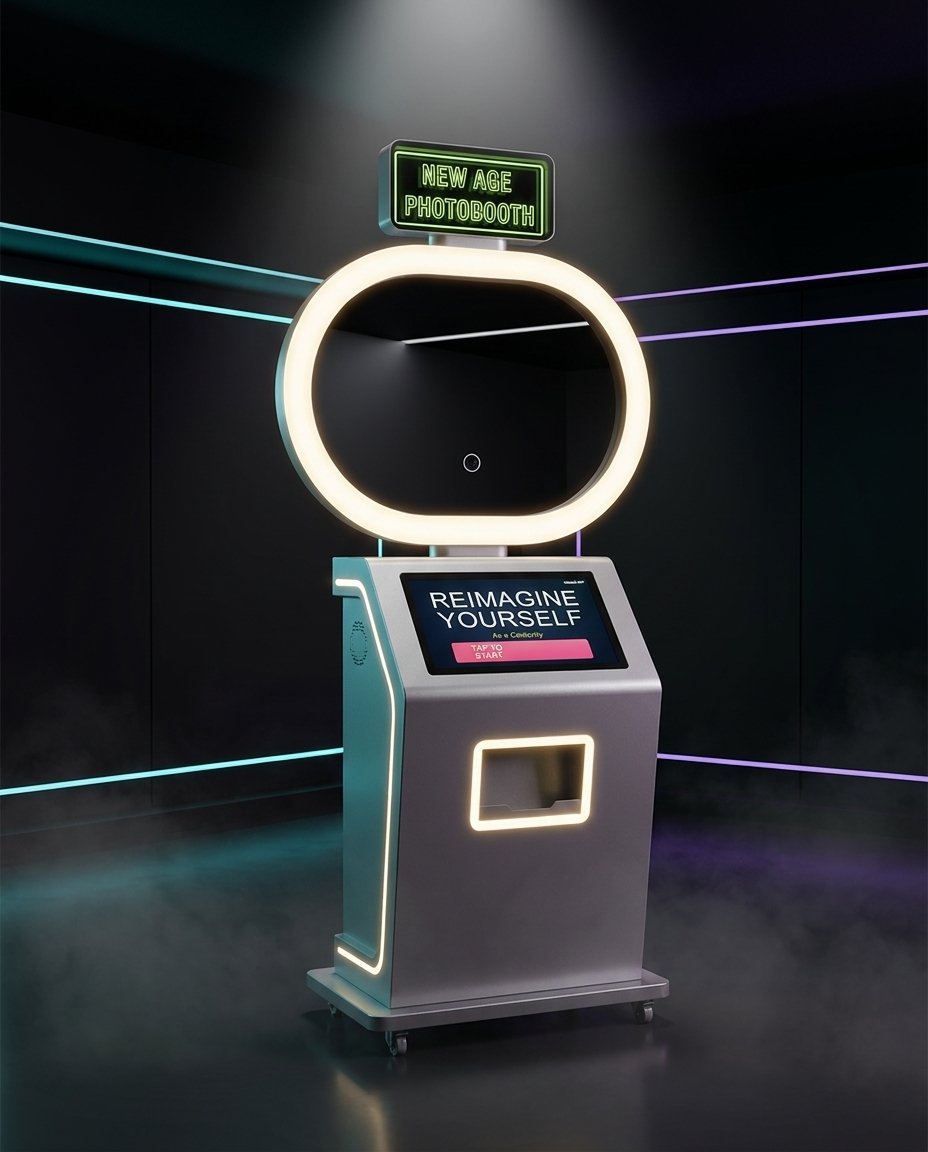
An AI photo booth is a self-service kiosk placed in a shopping mall, hotel, or gaming zone. Customers pay via UPI, choose from 200+ AI effects, and receive instant prints plus WhatsApp delivery. The machine runs without staff. Revenue collects automatically into your Indian bank account.
Why this is built for NRIs:
The Pikcha AI Photo Booth includes a remote operator dashboard accessible from anywhere in the world. From your phone in Dubai or laptop in New Jersey, you can see:
- Live session counts and daily revenue
- Printer paper and ribbon levels (alerts when low)
- System health and error notifications
- Historical analytics (trends, peak days, popular effects)
Your local contact's job: visit the booth once a week (15 minutes) to restock print consumables. That is the entire on-ground requirement.
The multi-unit NRI play:
The Pikcha Pro tier (₹6.5L + GST per unit) is designed for NRIs building a mini-fleet:
- Full white-label branding (your business name, not Pikcha)
- Custom UI and workflows
- Dedicated account manager at Bamigos
- 1-year warranty
Three Pro units across three malls in a metro city generate ₹1.5L–₹3.6L/month net — ₹18L–₹43L annually on a ₹19.5L investment. That is a 92–220% annual return, managed entirely from your phone.
Calculate your multi-unit ROI →
2. Commercial Real Estate (₹25L–₹1Cr+)
Investment: ₹25L–₹1Cr+ (commercial shop/office in tier-1/2 city)
Monthly income: ₹15,000–₹80,000
Remote management: Via property manager or trusted contact
India visits needed: 1–2 per year
NRI compatibility: ★★★★☆
Commercial real estate in India yields 5–8% gross annually — higher than residential (2–3%). A ₹50L commercial unit in a tier-2 city rents for ₹25,000–₹40,000/month. In tier-1, ₹50L gets you a smaller unit or a co-working desk allocation, with similar yields.
The NRI advantage: You buy with forex earnings (strong USD/AED/GBP vs INR), hold the asset in India, and earn rent in INR. Capital appreciation over 5–10 years adds another 6–8% annually.
The NRI disadvantage: Tenant management, legal paperwork, and maintenance from abroad require a trusted local agent. Registration, compliance, and FEMA regulations add complexity. And the capital requirement (₹25L+) is 5–10x higher than the photo booth option — for lower monthly returns.
Best for: NRIs with ₹50L+ available who want a tangible asset with moderate, stable returns and long-term appreciation.
3. Franchise Business (₹5–₹15L)
Investment: ₹5–₹15L (chai, cloud kitchen, laundry, EV charging)
Monthly income: ₹15,000–₹60,000
Remote management: Requires a local manager (₹15,000–₹25,000/month salary)
India visits needed: 2–4 per year
NRI compatibility: ★★★☆☆
Franchise businesses (Chai Sutta Bar, UClean, Rebel Foods cloud kitchen, etc.) offer brand recognition and operational SOPs. But they require on-ground staff — a manager to run daily operations, plus 2–5 employees depending on the format.
The NRI challenge: You are managing Indian employees from another timezone. Staff absenteeism, quality inconsistency, and cash pilferage are real issues when you cannot walk in unannounced. The franchise brand helps with SOPs but cannot replace your physical presence as the owner.
Net return after staff costs: A ₹10L franchise generating ₹80,000/month gross keeps ₹20,000–₹40,000 after a manager's salary, staff wages, rent, royalty, and inventory. That is a 24–48% annual return — decent, but with significantly more operational complexity than automated businesses.
Best for: NRIs with a trusted partner or family member in India who can serve as the on-ground manager. Not viable without a local presence.
4. Stock Market / Mutual Fund Portfolio (₹1L–₹1Cr+)
Investment: Any amount (SIP from ₹500/month to lump sum crores)
Planning a Gaming Zone?
Get expert recommendations and pricing for your venue: including the Pikcha AI photo booth, a self-service photo attraction to evaluate for your venue. No obligation.
Monthly income: ₹0 (capital appreciation) or ₹5,000–₹50,000 (dividend strategy on ₹25L+)
Remote management: Fully remote (Zerodha, Groww, Kuvera — all NRI-compatible)
India visits needed: 0
NRI compatibility: ★★★★★
Index funds, dividend stocks, and debt funds are the most hands-off NRI investment. NRIs can invest via NRE/NRO accounts through brokers like Zerodha (NRI account), Groww, or HDFC Securities.
The return comparison:
| Investment | ₹10L deployed | Year 1 return | Monthly cash flow |
|---|---|---|---|
| Nifty 50 index fund (12% CAGR) | ₹10L | ₹1.2L | ₹0 (reinvested) |
| Dividend stocks (4% yield + 8% growth) | ₹10L | ₹40K dividends + ₹80K appreciation | ~₹3,300/month |
| Fixed deposit (7%) | ₹10L | ₹70K | ~₹5,800/month |
| AI photo booth (1 unit) | ₹5L (remaining ₹5L in SIP) | ₹6–₹14L from booth + ₹60K from SIP | ₹50K–₹1.2L/month from booth |
The photo booth generates 5–10x the monthly cash flow of any financial instrument at the same capital level. The optimal NRI strategy: deploy ₹5L into a photo booth for cash flow, invest the booth profits into index funds for compounding. After 3 years, you have: a cash-generating physical asset + a growing investment portfolio + the original booth still earning.
Best for: Every NRI — as a wealth-building complement, not a primary business. Use financial investments to compound the profits from your cash-generating business.
5. Rental Property (₹15L–₹1Cr+)
Investment: ₹15L–₹1Cr+ (residential flat in tier-1/2 city)
Monthly income: ₹8,000–₹40,000
Remote management: Via property manager (₹2,000–₹5,000/month)
India visits needed: 1 per year
NRI compatibility: ★★★★☆
The traditional NRI investment. Buy a flat, rent it out, earn 2–3% yield. Most NRIs already own property in India — 40% of Indian real estate purchases in 2024 were NRI-funded.
The problem in 2026: Rental yields have compressed to 2–3% in tier-1 cities. A ₹50L flat in Pune rents for ₹12,000–₹18,000/month. After maintenance charges, property tax, and property manager fees, net return is ₹8,000–₹14,000/month — a 2% net yield on ₹50L capital.
Compare: that same ₹5L (10% of the flat's price) in a photo booth earns ₹50,000–₹1,20,000/month. You would need ₹2–₹5 crore in rental property to match one photo booth's monthly cash flow.
Best for: NRIs seeking capital preservation with moderate appreciation. Not an income-generating play at current yield levels.
6. EV Charging Franchise (₹5–₹10L)
Investment: ₹5–₹10L (Tata Power, Statiq, or similar franchise)
Monthly income: ₹10,000–₹30,000
Remote management: Yes (app-based monitoring)
India visits needed: 1–2 per year
NRI compatibility: ★★★★☆
EV charging stations are a long-term bet on India's EV adoption (currently ~5% of new vehicle sales, projected 15–30% by 2030). The chargers run unattended, revenue is collected digitally, and the franchise network handles maintenance.
Current returns: Modest — ₹10K–₹30K/month on ₹5–₹10L invested. But if EV adoption follows projections, the same infrastructure earns 3–5x in 3–5 years without additional investment.
Best for: Patient NRIs with ₹10L+ who want a green-energy asset with long-term upside. Combine with a photo booth for immediate cash flow.
The NRI Investment Comparison
| Investment | Capital | Monthly Income | Fully Remote? | Annual Return |
|---|---|---|---|---|
| AI Photo Booth (3 units) | ₹19.5L + GST | ₹1.5L–₹3.6L | Yes | 92–220% |
| AI Photo Booth (1 unit) | ₹4.1–₹6.5L | ₹50K–₹1.2L | Yes | 92–220% |
| Commercial Real Estate | ₹25L–₹1Cr | ₹15K–₹80K | Mostly | 5–8% yield + appreciation |
| Franchise | ₹5–₹15L | ₹15K–₹60K | Needs manager | 24–48% |
| Stocks/Mutual Funds | ₹1L–₹1Cr | ₹0–₹50K | Yes | 10–15% |
| Rental Property | ₹15L–₹1Cr | ₹8K–₹40K | Mostly | 2–3% yield + appreciation |
| EV Charging | ₹5–₹10L | ₹10K–₹30K | Yes | 12–36% (growing) |
How to Get Started as an NRI
- Research locations remotely. Ask friends or family in India to visit 5–10 malls in your target city. Have them photograph the food court areas, cinema exits, and main atriums. Ask mall leasing teams for rate cards (often available via email).
- Choose your booth tier. For testing with 1 unit: Pikcha Lite (₹3.5L + GST). For building a branded network: Pikcha Pro (₹6.5L + GST, full white-label).
- Contact Bamigos for pricing, NRI payment options, and logistics. Bamigos handles pan-India delivery and can coordinate installation with your local contact.
- Set up remote monitoring. The operator dashboard works from any browser. Configure alerts for low paper, system errors, and daily revenue summaries.
- Launch and scale. Start with one mall. Validate for 2–3 months. If the numbers work (they usually do at good locations), add booths 2 and 3.
Explore more: Photo Booth Manufacturer India · Buying Guide · Franchise
Frequently Asked Questions
Can NRIs start a business in India while living abroad?
Yes. NRIs can invest in Indian businesses, own companies (under the Companies Act), and run businesses remotely. For automated businesses like photo booths or EV charging stations, no daily physical presence is needed. For staff-dependent businesses (franchise, restaurant), you need a trusted local manager. Consult a CA specialising in NRI taxation for FEMA compliance and repatriation rules.
What is the best NRI investment in India for monthly income?
An AI photo booth installation generates the highest monthly cash flow (₹50K–₹1.2L per unit) relative to capital invested (₹4–₹6.5L). For comparison: ₹50L in a residential flat earns ₹12K–₹18K/month, and ₹10L in mutual funds generates ₹0 in monthly cash flow (returns are capital appreciation, not income).
Can I manage a photo booth business from the UAE/US/UK?
Yes. The Pikcha AI Photo Booth includes a remote operator dashboard accessible from any location. You monitor sessions, revenue, system health, and consumable levels from your phone or laptop. The only on-ground requirement is a local contact who visits once a week (15 minutes) to restock print supplies. Many NRI operators use a family member or hire a part-time helper (₹3,000–₹5,000/month) for this.
How do NRIs receive business income from India?
Business income is credited to your Indian bank account (NRO account for business income). Profits can be repatriated to your foreign account subject to RBI limits (currently up to $1 million per financial year for NRIs). Tax implications: business income is taxed in India at applicable slab rates. Consult your CA for DTAA (Double Taxation Avoidance Agreement) benefits based on your country of residence.