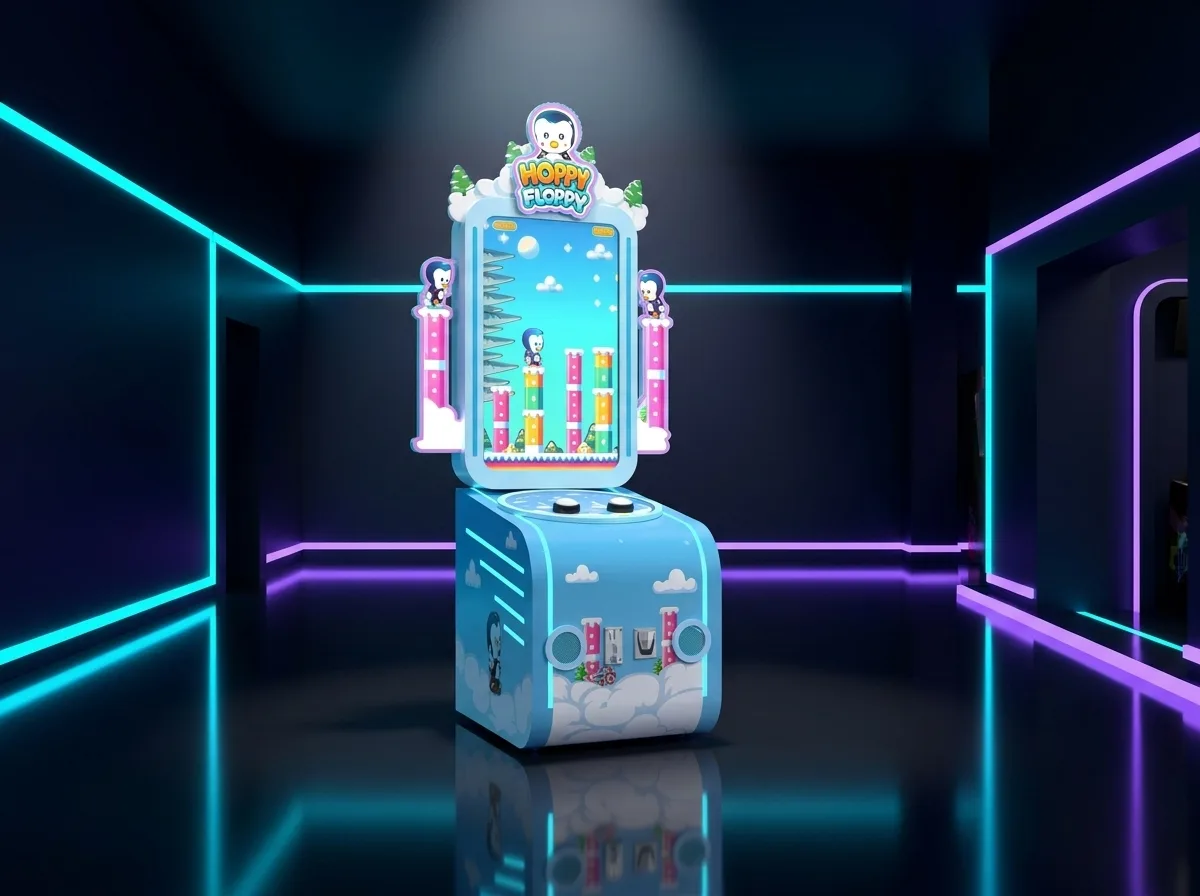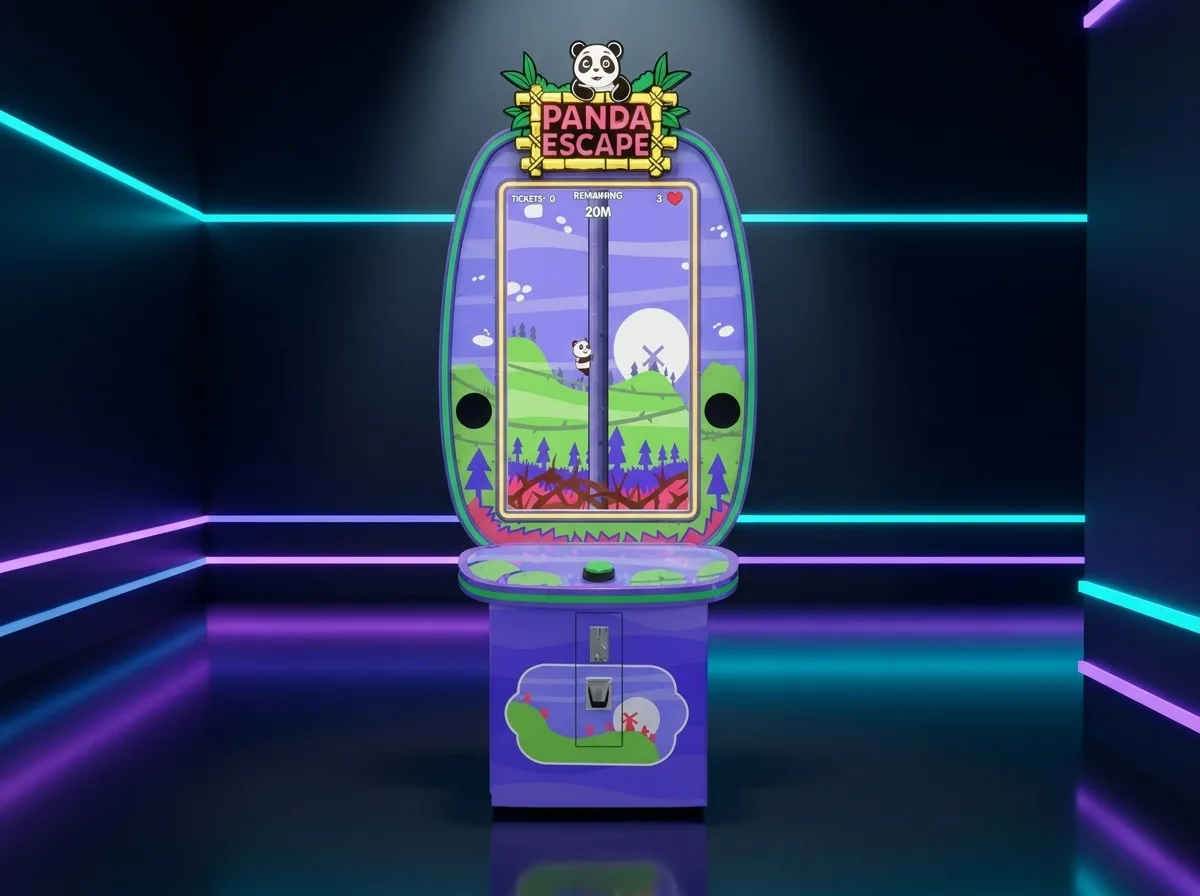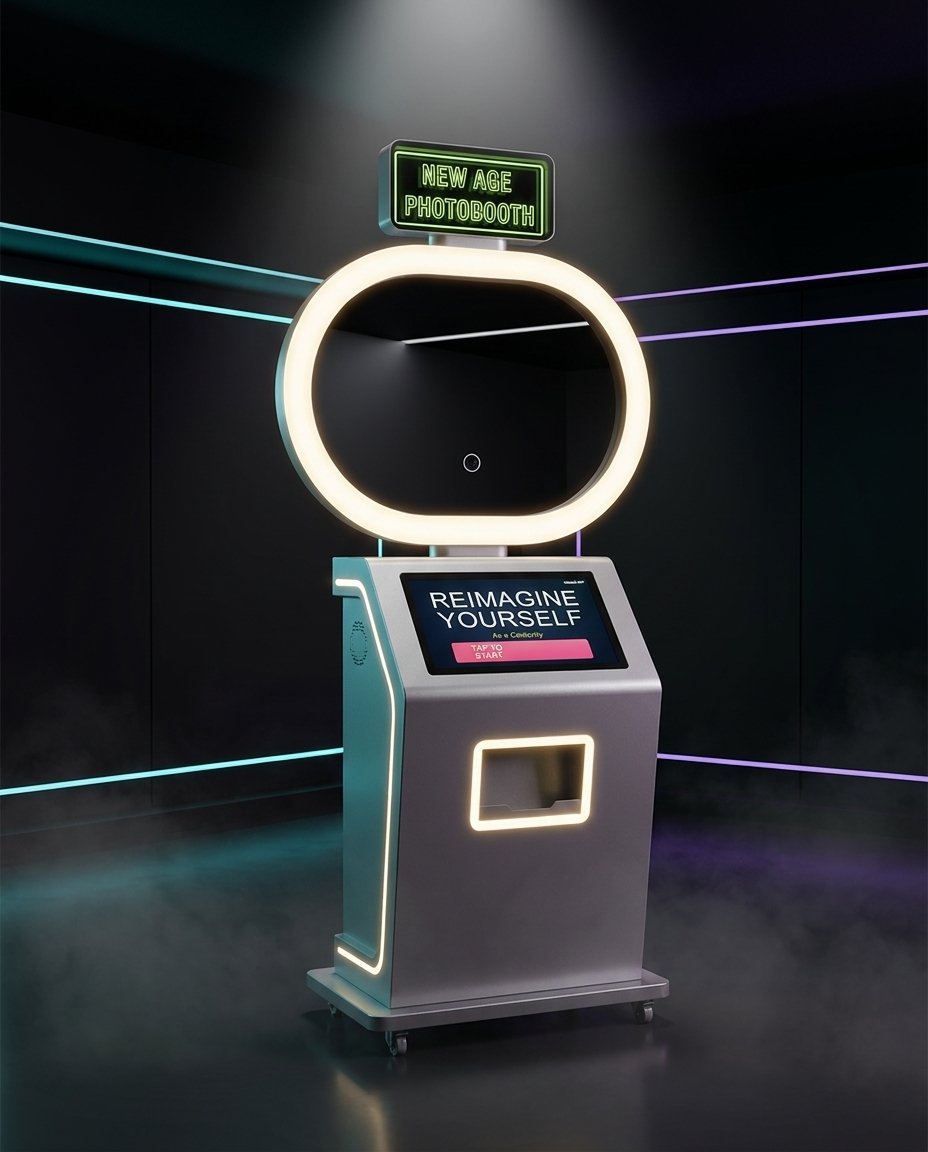
India's indoor amusement centre market was worth ₹4,500 crore in FY2024 and is projected to reach ₹9,370 crore by FY2030, according to a Dun & Bradstreet report filed with SEBI. Walk into almost any shopping mall, entertainment zone or family entertainment centre (FEC) and you will find what that growth looks like — arcade cabinets, claw machines, VR rigs, ticket-redemption games, photo booths. A large share of those machines is imported: India brought in ₹1,232 crore of amusement equipment in FY2025-26 (DGCI&S, provisional). A small and growing cluster of Indian companies designs and manufactures domestically.
This is the 2026 report on what that industry actually looks like — where the machines come from, what they cost, who builds at home, how policy has reshaped the adjacent toy industry, and what could happen next.
Table of contents
- How big is India's amusement industry?
- Where the machines come from
- What an imported machine actually costs an Indian operator
- The post-sale reality: parts, warranty, UPI
- The Indian amusement manufacturers — who's actually building
- Design depth: PCBs, firmware, cabinets, assembly
- The policy map: BCD, IGST, IAAPI's asks
- The toy industry precedent
- Indian amusement exporters: proof that domestic manufacturing works
- The consumer electronics playbook
- What's next
- FAQ
1. How big is India's amusement industry?
A few credible sizes, all from 2025–2026 primary sources:
| Segment | Current value | 2030 projection | CAGR | Source |
|---|---|---|---|---|
| Indoor amusement centres | ₹4,500 cr (FY2024) | ₹9,370 cr (FY2030) | ~13% | Dun & Bradstreet, in a DRHP filed with SEBI (June 2026) |
| India amusement parks | USD 6.39 bn (2025) | USD 11.36 bn (2033) | 7.2% | Grand View Research |
| Indoor amusement centres | — | USD 1.88 bn (2030) | 11.3% | Grand View Research |
| India gaming (adjacent, incl. online) | USD 5.91 bn (2025) | USD 16.72 bn (2034) | 14.6% | IMARC Group |
Consumer spend is up 30–40% against the pre-pandemic baseline. The fastest growth by geography is outside the metros — 40–45% of new mall development over the next two years is forecast in Tier-2 and Tier-3 cities, according to Knight Frank's Think India Think Retail 2024. That brings entertainment equipment demand to cities that historically couldn't justify a 20,000-square-foot FEC.
The venue side is small relative to population. India has roughly 120 amusement parks and about 200 formal FECs for 1.4 billion people. The IAAPI member directory lists ~461 organisations — ride operators, equipment suppliers, park consultants combined. The headroom is still enormous.
Major operators: - Timezone India — 70+ venues (parent group operates 315+ across APAC). - Smaaash — 11 venues across Mumbai, Gurugram, Noida, Dwarka, Ludhiana, Madurai, Mangalore, Hyderabad, Vijayawada and Gwalior. - KidZania — 2 Indian venues (Mumbai and Delhi NCR). - Fun City, Play 'N' Learn, Snow World, Funtura, Funky Monkey and a long tail of regional operators.
(For more on the operator landscape, see our separate FEC and arcade industry market guide.)
2. Where the machines come from
The import breakdown
India's amusement equipment imports fall under HS Chapter 95, Heading 9504 — Video game consoles and machines; amusement machines operated by coins, banknotes, bank cards, tokens. When you pull the customs shipment data for March 2023 – February 2024 (Volza):
| Country of origin | Share (by shipment count) |
|---|---|
| China | ~85% (1,534 of 1,799 shipments in the "amusement equipment" bucket) |
| Italy | ~9% |
| United States | ~6% |
| Singapore / Taiwan / Japan | <1% combined |
Treat these shares with care: they count shipments, not rupees. On HS 950430 (coin-operated arcade games), China supplies 98.5% of the units but only 49.4% of the value, because a Chinese unit declares about ₹1,289 against ₹69,758 for an American one. Trackers like Volza publish counts, so every "85% from China" headline is really a unit count.
A narrower cut — games arcade — puts China at 82% of India-bound shipments. Globally, China is the single largest exporter of coin-operated arcade games under HS 9504.30 (~25–35% of global exports), competitive with the US, Mexico, Bulgaria and Austria. Within India specifically, China's dominance is much higher than its global share.
The Chinese OEM landscape
These are the Chinese manufacturers most visible in Indian mall arcades and entertainment zones:
- Guangzhou Wahlap Technology Co., Ltd. — 30-year-old listed arcade OEM. Makes Storm Racer 2, Storm Rider X, Phantom Vanguard (co-developed with IGS and Gameloft), and licensed cabinets for Konami (Jubeat, Bombergirl), Sega, Bandai Namco, Taito and Initial D / Maimai / Chunichm. Indian channel: distributed via Bandai Namco Amusement Europe (BNAE) and sold to Timezone.
- Zhongshan Neofuns Amusement Equipment Co., Ltd. — Claw cranes, boxing machines, coin pushers, basketball shooters, ticket redemption. Claims exports to 100+ countries including India. 50+ patents.
- UNIS Technology / Universal Space — Zhongshan HQ, est. 1994, 1,000+ employees, 60+ country presence. Kiddie rides, motion simulators, big-ticket redemption.
- Guangzhou EPARK Electronic Technology Co., Ltd. — Claw, VR, boxing, basketball, kiddie rides, racing simulators.
- Guangzhou BLEE / Riteng / YPFuns / Funspace / Yuto / Dreamfuns / Haojile — Mid-tier FEC equipment OEMs supplying Indian distributors.
- IGS (International Games System) — Taiwan-headquartered, routes production through Chinese partners.
The Indian distributor tier
The path from Chinese factory to Indian mall runs through a B2B distributor layer:
- Bandai Namco Amusement India (Mumbai, Japanese-owned subsidiary, established September 2015). Official India distributor for Bandai Namco, Sega, Raw Thrills, Step Revolution.
- Red Sun Systems — Authorised distributor for Bandai Namco, exA-Arcadia, Raw Thrills, Sega, Step Revolution across the Indian subcontinent.
- NM Amusement (Chennai) — Founded 2004; explicitly states "we import some products from USA, China."
- Alpha Amusements Pvt Ltd (Delhi) — Established 1996; positions as importer + wholesaler + service provider.
- Amusement Services International LLC (ASI) — UAE-based, covers Indian subcontinent.
- CSML Group (Mumbai) — Not a manufacturer; exclusive Brunswick Bowling distributor for India and SAARC; 1,500+ Brunswick lanes, 17,000+ arcade games deployed, 250+ FECs served.
The pricing pattern across this tier is consistent: imported machines reach Indian operators at 2–3× the FOB cost after duties, freight, distributor margin and service overhead.
3. What an imported machine actually costs an Indian operator
The duty stack
India's tariff on HS 9504 applies uniformly across sub-headings:
| Duty | Rate | Who it applies to |
|---|---|---|
| Basic Customs Duty (BCD) | 20% | All importers |
| Social Welfare Surcharge | 10% of BCD (≈2% of CIF) | All importers |
| IGST | 18% | All importers; creditable for GST-registered buyers |
(Source: CBIC India Customs Tariff 2025–26, HSN 9504.30 / 9504.50 / 9504.90.)
Worked example: a ₹5 lakh FOB-Shenzhen machine
Here is what the operator actually pays, step by step:
| Line item | Amount (₹) | Running total |
|---|---|---|
| FOB Shenzhen | 5,00,000 | 5,00,000 |
| Ocean freight + THC + CFS (LCL, ~3 CBM) | 25,000 | 5,25,000 |
| Insurance (~1% of CIF) | 5,500 | 5,30,500 |
| Basic Customs Duty (20% of assessable) | 1,06,100 | 6,36,600 |
| Social Welfare Surcharge (10% of BCD) | 10,610 | 6,47,210 |
| IGST (18%, creditable) | 1,16,498 | 7,63,708 |
| Customs clearance / CHA / inland transport | 15,000 | 7,78,708 |
| Landed cost to importer | ~₹7,78,700 | |
| Distributor margin (35%, norm is 30–40%) | 2,72,548 | ~10,51,256 |
| Final B2B price to Indian mall operator | ~₹10,51,300 |
The uplift on FOB cost: 110%. Even when a GST-registered operator credits back the IGST, the non-creditable premium over FOB is still approximately 79%.
A concrete example: Mario Kart Arcade GP DX — a Bandai Namco arcade racing cabinet with an international retail of ~USD 14,499 — shows up on IndiaMART at ₹4,10,000 (~USD 4,900). The gap likely reflects a grey-market Chinese clone rather than an authentic unit. Either way, the price signal for operators is that landed costs are consistently 2–3× the Chinese FOB price.
4. The post-sale reality: parts, warranty, UPI
The invoice price is only half the story. Ask operators who run imported machines and you hear the same pattern:
Replacement parts are slow and expensive. Warranty on imported equipment typically runs 12–24 months, covering mainboards and motors but excluding consumables. When a PCB, sensor or thermal print head fails, sourcing from Shenzhen takes 5–10 days end-to-end including customs clearance. Air freight for a small replacement part costs ₹5,000–₹12,000; larger sub-assembly replacements run significantly higher. During that window, the machine earns zero. Industry guidance recommends carrying 2–4 weeks of spare consumables on-site.
Warranty service lags. Most Indian imports come through traders, not direct factory relationships. Fault resolution is mediated through the distributor, the Chinese factory and sometimes a third intermediary. The 24-hour-remote / 48–72-hour-on-site SLAs that look clean on paper rarely hold across borders.
UPI integration is missing. This is the India-specific problem imported hardware cannot solve out of the box. Chinese amusement equipment sold for the domestic Chinese market often integrates with WeChat Pay and Alipay. Export units for India are typically configured without Indian payment options, which means operators have to bolt on aftermarket UPI-enabled terminals. That adds capex and creates reconciliation headaches between the machine's internal revenue tracking and the external payment log.
These frictions are not fatal. Thousands of Indian FECs run imported machines every day. But they add up to a real premium over the invoice cost — and they are exactly the kind of structural disadvantage a domestic manufacturer can design around.
For operators thinking about photo booths specifically, we've written a separate photo booth ROI calculator that models the per-session revenue economics of a Pikcha AI Photo Booth at different daily footfalls.
5. The Indian amusement manufacturers — who's actually building
Indian amusement equipment manufacturing is small relative to the size of the market, but it is not one company. The cluster spans several sub-categories, with genuine domestic capability in some (rides, interactive installations, soft play, photo booths) and thinner capability in others (coin-operated arcade cabinets, large ticket-redemption pieces, motion simulators).
Rides and thrill equipment
- Bombay Amusement Rides Pvt Ltd (BARPL), Mumbai — Founded 2005 by P. Sharma (a former Liberty Footwear electronics engineer). True ride manufacturer. Products: trains, trams, thrill rides, roller coasters. Claims 300+ installations, exports to USA, Italy, UK, Saudi Arabia, Indonesia and Mauritius. Offices in US, Canada, UK, UAE, Italy. Claims compliance with EN 13814 and NDT testing. (bombayamusement.com)
- Parkash Amusement Rides & Fun World Pvt Ltd, Delhi — Incorporated 1989 by Rajesh Khursija. Claims 6,000+ installations and 26 turnkey amusement parks. Products: wave pools, giant wheels, family and mine roller coasters, suspended coasters. Exports to the Middle East and South Asia. (parkashamusement.com)
Interactive installations
- TouchMagix Media Pvt Ltd, Pune — Founded 2009; R&D in Pune with manufacturing partnership in Wisconsin, USA. Genuine hardware + software R&D. Products: interactive projectors, floors, walls, tables, and coin-operated arcade redemption pieces. Deployed in 40+ countries with 100+ Fortune 500 clients. Third-party revenue estimate ~USD 21.9M (2025). (touchmagix.com)
Soft play, trampolines, inflatables
- Funriders Leisure & Amusement Pvt Ltd, Kochi — Founded 2010. Indoor playground, soft play, trampoline, arcade and bumper-car manufacturer. ISO 9001:2015 + ISO 14001:2015 certified, MSME ZED certified, Startup India recognised. Claims to be the only indoor soft-play manufacturer in India with ISO certification. (funriders.in)
- Super Amusement Games, Ahmedabad — Operating since 1996. Bouncy castles, inflatables and soft-play manufacturer with export activity.
- Kashvi Inflatables India, Delhi — Founded 2009, inflatables and soft-play manufacturer.
Arcade cabinets, redemption, ticket games, custom integration
- Funtime India, Bengaluru — Claims to design, code and build interactive arcade games in-house. Classic plus modern ticket redemption. (funtimeindia.in)
- HGR Amusement, Ahmedabad — Founded 2022. Coin-operated arcade, VR, bowling, soft play, redemption, pinball, kiddy rides.
- Full Fun Amusement Games, Delhi — Amusement train rides, mechanical bulls, break-dance rides, bumper cars, trackless trains, basketball arcades.
- Chennai cluster — Laya Vibhuti (battery-operated kids rides, VR racing simulators), Tanriya Amusement Rides (est. 2007), NM Amusement (Pattabiram children rides, exporter), Ice Digitek India, Oye Selfie Photobooth.
Photo booths
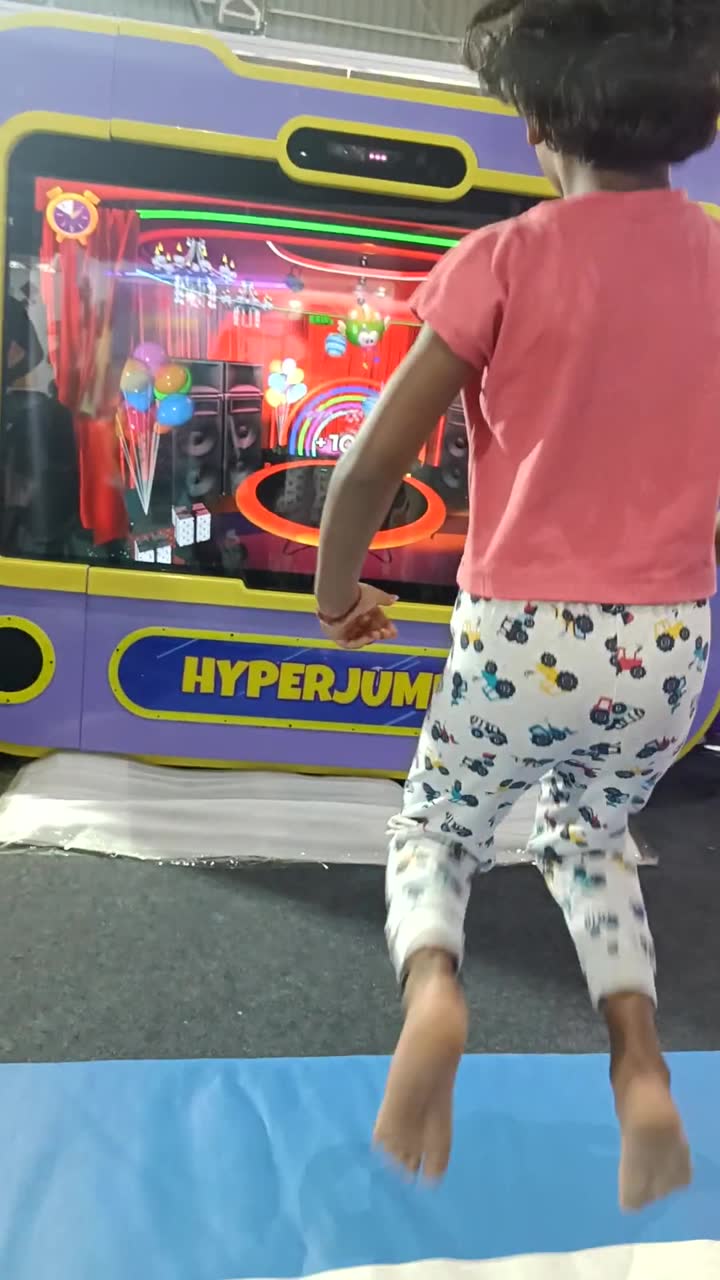
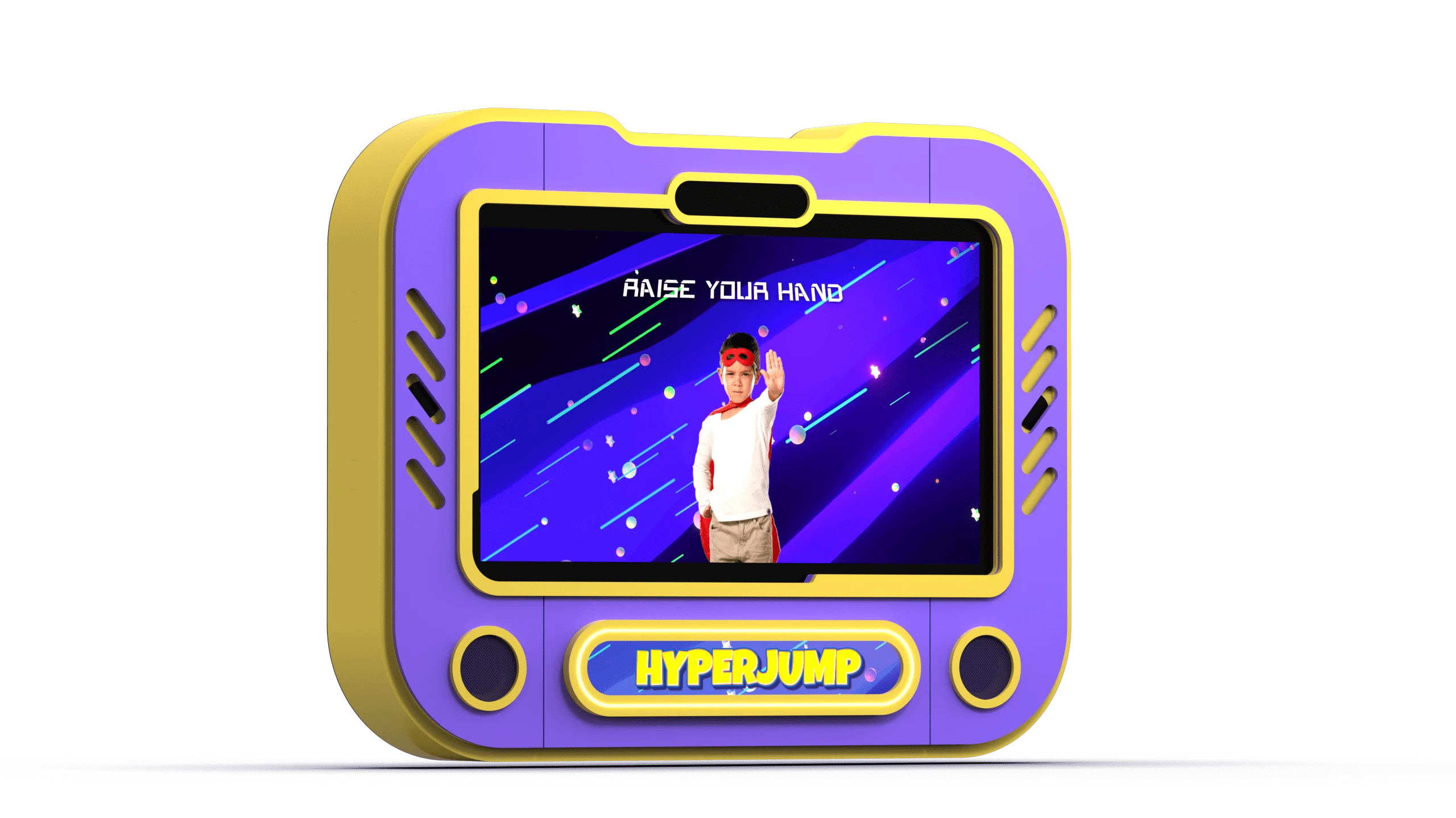
- Bamigos, New Delhi — Founded 2022. Manufacturer of games and experiences. Machines are built in India by Bamigos, using components from a vendor network. Product line includes the Pikcha AI Photo Booth, ticket redemption games, Hyper Jump, arcade cabinets, VR gaming setups and interactive projection games. (bamigos.com)
- GoKapture — Delhi, Mumbai, Bangalore. Rental-first operator for photo booths including AR, selfie, green screen, 360°, VR and AI variants. (gokapture.com)
- Photo Master India — Rental-first photo booth suite (Glambot, AI Photobooth, Robot Photobooth, Flip Book, iPad, Magic Mirror, Caricature). (photomasterindia.com)
- The PhotoBooth Company, Mumbai — Magic Mirror, 360 selfie, compact and retro booths; rental/service model. (thephotoboothcompany.in)
This is the honest map: you can count serious Indian manufacturer names across all amusement sub-categories on two hands. The rides, interactive and soft-play segments are the furthest along. The arcade cabinet, large ticket-redemption and photo booth segments are the most reliant on imports — which is where the Made-in-India opportunity is most concentrated.
For a deeper comparison of domestic photo booth options specifically, see our comparison of the best AI photo booths in India.
6. Design depth: PCBs, firmware, cabinets, assembly
Not every "Indian manufacturer" in the list above does the same depth of work. The honest gradient runs from pure trading at one end to genuine R&D at the other:
| Level | Activity | Indian examples |
|---|---|---|
| 1 | Pure import + re-branding | Many IndiaMART listings; Alpha Amusements |
| 2 | Import + assembly + local service layer | HGR, many photo booth rental operators |
| 3 | Local cabinet fabrication + vendor-sourced electronics | Funriders (soft play), Super Amusement (inflatables), parts of Parkash |
| 4 | In-house industrial design + cabinet manufacturing + electronic assembly | Bombay Amusement Rides, Parkash Amusement Rides |
| 5 | Built in India by Bamigos | TouchMagix, Bamigos |
Level 5 — the stack where the industrial design, the printed circuit boards, the firmware on those boards and the cabinet itself are all done in India — is where the Atmanirbhar Bharat value chain actually gets captured. Only commodity components (LCD displays, motors, cameras, thermal print heads, standard ICs) are sourced from a global vendor network. This is the same pattern that Apple, Dixon Technologies and Kaynes Technology operate under in consumer electronics — deep local value-add with global commodity sourcing.
For a photo booth company, the Level 5 stack looks concretely like this:
- Industrial design: form factor engineered for 12–14-hour daily mall operation, Indian voltage conditions, monsoon humidity.
- Cabinet manufacturing: sheet-metal fabrication, welding, powder coating, acrylic and laminate work.
- Custom PCB design and fabrication: proprietary control and I/O boards, not white-label reference designs.
- Custom electronic sub-assemblies: payment modules, lighting controllers, interface boards engineered in-house.
- Firmware: embedded code on proprietary electronics.
- Software + AI: themed effects, computer-vision pipelines, operator dashboards, remote management.
- Payment integration: UPI through Google Pay, PhonePe, Paytm.
- Post-sale support: local parts inventory, onsite service, language-appropriate support.
- Localization: theme packs for Bollywood, cultural, regional events; multi-language UI.
- Final assembly + quality certification.
The typical Indian amusement operator evaluating a ₹10 lakh imported machine versus a comparable domestic alternative is, in effect, comparing two products that look similar on the showroom floor but are structurally different in post-sale economics. That difference is what a Level 5 manufacturer is selling.
7. The policy map: BCD, IGST and IAAPI's asks
Current rates (FY 2025–26, HS 9504)
- Basic Customs Duty: 20%
- Social Welfare Surcharge: 10% of BCD
- IGST: 18% (creditable for GST-registered buyers)
What IAAPI is asking for (2025–26)
IAAPI has been the most active industry body on policy. Public advocacy statements from January 2026 (Sangribuzz) and the December 2025 IAAPI delegation to the Finance Minister and UP Government identify five concurrent asks:
- Production Linked Incentive (PLI) inclusion — documentation in the final stage; not yet formally submitted to Commerce Ministry.
- BIS certification relaxation for imported rides and machines — in ongoing discussion with Ministry of Commerce and Industry.
- GST reduction from 18% to 5% — IAAPI delegation met the Finance Minister on 11 December 2025. The argument is parity with zoos, museums and melas (0% or very low GST) given that indoor amusement is structurally part of the tourism and experiential-economy cluster.
- Ministry of Tourism collaboration — working on a strategic roadmap; consultancy engaged for a white paper on Indoor Amusement Centres.
- Industry status recognition — to unlock MSME benefits for domestic manufacturers.
None of these have been notified as of early 2026. A Parliamentary panel (The Week, March 2026) noted that six of eight MSME-related Budget 2025 promises remain on paper.
The National Manufacturing Mission
Finance Minister Nirmala Sitharaman announced the National Manufacturing Mission in the Union Budget 2025–26 speech (1 February 2025, PIB). It covers five focal areas (ease of doing business, workforce skills, MSME sector, technology, quality products) and places particular emphasis on clean-tech. A separate National Action Plan for Toys was mentioned in the same speech, with the aim of making India a "global toy hub." Industry commentary references a Commerce Ministry recommendation of ~₹3,489 crore for a toys PLI, but that figure is pre-decisional — not notified. Amusement equipment is not explicitly covered under the Mission as it stands.
GeM and Class-I preference
The DPIIT Public Procurement (Preference to Make in India) Order already applies to the Government e-Marketplace (GeM). For procurement orders below ₹200 crore, only Class-I Local Suppliers (≥50% local content) and Class-II Suppliers (≥20%) can bid. This is in force today — but it is general, not amusement-specific. A domestic manufacturer that can prove ≥50% local value-add gets a purchase preference on every GeM tender in the category.
Planning a Gaming Zone?
Get expert recommendations and pricing for your venue: including the Pikcha AI photo booth, a self-service photo attraction to evaluate for your venue. No obligation.
Anti-dumping
The Directorate General of Trade Remedies (DGTR) issued final findings in 13 anti-dumping cases in March–April 2025, most of them against Chinese goods — but none in the amusement, arcade or ride category. The only amusement-related DGTR action on record is a legacy 2000 investigation on toys (File 54/1/2000-DGAD), now concluded. Anti-dumping action on amusement equipment would require a new petition; IAAPI has not yet filed one publicly.
8. The toy industry precedent
Amusement equipment sits at the same policy starting line the Indian toy industry occupied in 2019. What happened to toys over the next four years is the clearest available template.
The policy actions
- 20 February 2020 (Union Budget): BCD on HS 9503 (toys) raised from 20% to 60%.
- 26 February 2020: Bureau of Indian Standards Toys (Quality Control) Order, 2020 notified. Mandatory compliance with IS 9873 (Parts 1, 2, 3, 7 and 9) and IS 15644 (electric toys). Effective 1 January 2021 after a COVID-related extension.
- 1 February 2023 (Union Budget): BCD on toys raised from 60% to 70%.
The results
A Press Information Bureau release in January 2024 (PRID 1993109), citing an IIM Lucknow study commissioned by DPIIT, reports:
- Total Indian toy imports fell from USD 332.55 million (FY15) to USD 158.7 million (FY23) — a 52% decline.
- Chinese-origin toy imports specifically fell by over 80% over a comparable period, per industry trade reports.
- Indian toy exports grew 239% from USD 96.17M (FY15) to USD 325.73M (FY23).
- FY24 imports dropped further to ~USD 65M — a 76% decline on FY15.
- Over 1,200 BIS licences have been issued to domestic toy manufacturers.
- Imported input share inside the Indian toy manufacturing value chain fell from 33% to 12%.
Exports now reach 153 countries, per Union Commerce Minister Piyush Goyal's keynote at the 16th Toy Biz International B2B Expo (New Delhi, 4 July 2025, PIB PRID 2142336). PM Modi's Union Budget 2025–26 remarks (1 February 2025) named toys as a beneficiary of the National Manufacturing Mission.
What changes if the same lever is pulled for amusement equipment
The structural pattern in toys — an import-dependent operator base, a fragmented domestic supplier network, a policy gap that tariff + certification action can close — is the same pattern present in amusement equipment today. None of the policy levers (BCD upward revision, BIS QCO mandate, MSME cluster push, PLI or equivalent scheme) have been pulled for HS 9504. Each one is on IAAPI's asks list.
A 2019-toys-style action on HS 9504 would not make Indian manufacturers win overnight — the toy result took four years. But it would change the economics of the import route enough that operators would start evaluating domestic alternatives seriously.
9. Indian amusement exporters: proof the domestic manufacturing model works
The objection is easy to imagine: if Indian amusement manufacturing could work, why hasn't it already?
The answer is that, in the segments where it can work, it already does. Indian amusement manufacturers are exporting today:
- Bombay Amusement Rides (BARPL) — Active exports to USA, Italy, UK, Saudi Arabia, Indonesia and Mauritius. Offices in the US, Canada, UK, UAE and Italy.
- Parkash Amusement Rides — Exports across the Middle East and South Asia.
- TouchMagix — Products deployed in 40+ countries with 100+ Fortune 500 clients.
- NM Amusement, Chennai — Children's ride exporter.
- Super Amusement Games, Ahmedabad — Inflatables and soft-play exporter since 1996.
An Indian manufacturer whose product is being bought by an operator in Saudi Arabia or Italy has already cleared the quality, certification and reliability bar that actually matters. The obstacle for the Indian operator of a ₹10 lakh imported machine isn't whether domestic alternatives exist — it's whether domestic alternatives exist in their specific category (arcade cabinet, redemption game, photo booth) at the scale and feature-set they need. That gap is narrowing, not widening.
10. The consumer electronics playbook
Every sub-segment of Indian consumer electronics that has successfully localised over the past decade has followed roughly the same arc:
- Assembly-only start: early Indian brands rebadged ODM products from Chinese factories.
- Design investment: in-house industrial design on tools like Autodesk Fusion / SolidWorks. The product starts to look like the company's own, not the factory's.
- Component ownership: own PCBs, own firmware, own sub-assemblies. Commodity parts still sourced globally.
- Certification as a wedge: BIS, QCO, EN, ISO — used as a marketing differentiator against cheaper uncertified imports.
- Export footprint: selling abroad proves the quality bar and pulls valuation premium at home.
boAt did it in consumer audio: founded 2016 as an accessory re-brander, moved to in-house Fusion-based design, scaled from ₹90 crore (2019) to approximately ₹4,000 crore. Noise claims 95%+ India manufacturing with in-house R&D; Bose invested USD 10 million at a USD 450 million valuation. Nothing India (Carl Pei, ex-OnePlus) is executing the same playbook on smartphones. Kaynes Technology runs 16 plants and does end-to-end EMS plus semiconductor work. Dixon Technologies is now ECMS-approved for camera and optical components and is one of the largest listed Indian electronics manufacturers.
The transferable playbook for amusement: start as assembler → invest in industrial design tooling → own PCB/firmware → certify aggressively (BIS, IS 15475, EN 13814) → export as proof → pull valuation premium. Amusement equipment is roughly 10–15 years behind consumer audio on this curve. That is a gap, but it is also an opportunity.
11. What's next
Three conditions, if they hit simultaneously, would re-shape Indian amusement equipment manufacturing the way toys were re-shaped between 2019 and 2023:
- Policy action — BCD upward revision on HS 9504, a QCO-style BIS mandate on imported amusement rides and machines, or formal Make-in-India / National Manufacturing Mission scheme coverage for domestic amusement manufacturers.
- Capital formation — VC-backed hardware startups entering the space (there are currently none surfaced in Crunchbase / Tracxn as funded amusement-equipment OEMs in India), or public MSME credit lines specific to amusement-equipment clusters.
- Demand-side preference — mall chains, FEC operators and government procurement channels (GeM) choosing domestic where a viable alternative exists.
Even without explicit policy action, the structural drivers already in play — indoor amusement centres projected to roughly double to ₹9,370 crore by FY2030, Tier-2/3 expansion, the Korean photo booth consumer wave (see our Korean photo booth India guide), and operator demand for UPI-native and locally-serviced equipment — are tilting the playing field toward domestic supply.
The industry is, in many ways, waiting on its 2019-toy-industry moment.
For entrepreneurs reading this report and evaluating the space, the most immediately actionable segment is the photo booth sub-category. It has low-to-moderate unit cost, a clear path to UPI-native operation, a strong consumer trend (the Korean photo-booth wave) and credible Indian manufacturers. Our separate guide, How to Start a Photo Booth Business in India, walks through the business-plan math; the photo booth ROI calculator models the per-session revenue side.
12. Frequently asked questions
How much amusement equipment does India import?
₹1,232 crore in FY2025-26 (DGCI&S TRADESTAT, provisional): ₹988.94 crore of arcade and table games under HS 9504 and ₹243.29 crore of rides under HS 9508. Rides grew 33.4% year on year. By shipment count China dominates, but by value its share is far lower, because Chinese units are much cheaper per piece than American or European ones.
How much is India's amusement industry worth in 2026?
₹4,500 crore for indoor amusement centres in FY2024, projected to reach ₹9,370 crore by FY2030 (Dun & Bradstreet, filed with SEBI in June 2026). Equipment imports on their own were ₹1,232 crore in FY2025-26.
What's the Basic Customs Duty on imported amusement equipment?
20% on HS code 9504. Plus 10% Social Welfare Surcharge (on BCD, ≈2% of CIF) and 18% IGST (creditable for GST-registered buyers). Compare this to toys (HS 9503) which are at 70% BCD after the February 2020 and February 2023 hikes.
Who are the main Indian amusement equipment manufacturers?
The Indian amusement manufacturer cluster spans several sub-categories: rides (Bombay Amusement Rides, Parkash Amusement Rides), interactive installations (TouchMagix), soft play / trampolines / inflatables (Funriders, Super Amusement Games, Kashvi Inflatables), photo booths (Bamigos, GoKapture, Photo Master India, The PhotoBooth Company), arcade and redemption (Funtime India, HGR Amusement, Full Fun Amusement Games) and regional players in the Chennai, Ahmedabad and Delhi NCR clusters. The industry body IAAPI has 461+ listed members across operators and suppliers.
Why do Chinese-made machines cost so much more in India than in China?
Import duties (BCD, SWS, IGST) add roughly 28% to the CIF cost of a machine. Freight adds another ~5%. The Indian distributor margin is typically 30–40%. After all of that, a ₹5 lakh FOB-Shenzhen machine reaches the Indian mall operator at approximately ₹10.5 lakh — a 110% uplift on FOB cost. Even crediting back the IGST (for GST-registered buyers), the non-creditable premium is approximately 79%.
What did India do with the toy industry that it could do with amusement equipment?
Three things: 1. Raised BCD on toys from 20% to 60% (February 2020), then to 70% (February 2023). 2. Made BIS certification mandatory via the Toys Quality Control Order, 2020 (effective January 2021). 3. Included toys in MSME cluster development and, more recently, in the National Manufacturing Mission (Budget 2025–26).
The result: total toy imports fell 52% between FY15 and FY23 (PIB). Exports grew 239% over the same period, reaching 153 countries.
When will India's amusement equipment manufacturing take off?
There is no announced timeline. The three preconditions — policy action (BCD revision + BIS QCO + scheme coverage), capital formation (VC funding for hardware OEMs) and demand-side preference (operator + GeM procurement for domestic) — are each in early motion. IAAPI's current advocacy puts PLI inclusion, BIS relaxation and GST reduction on the table with the Ministry of Commerce and the Finance Ministry. The toy precedent took four years from the first BCD hike to visibly remake the industry; amusement equipment would likely follow a similar, but not identical, trajectory.
About Bamigos.com
Bamigos.com is a New Delhi-based manufacturer of games and experiences, founded in 2022. Its machines are built in India by Bamigos, using components from a vendor network. Its product line includes the Pikcha AI Photo Booth — an AI photo booth with built-in UPI payments — along with ticket redemption games, Hyper Jump, arcade cabinets, VR gaming setups and interactive projection games.
To learn more, explore our AI photo booth, calculate your photo booth ROI, or contact us for a product demo.
Founder: Virender Khanna (vk@bamigos.com).
Sources and references
Market size and industry data
- Dun & Bradstreet industry report on indoor amusement centres (₹4,500 cr FY2024, ₹9,370 cr FY2030), as filed in a DRHP with SEBI (June 2026).
- DGCI&S TRADESTAT, import data for HS 9504 and HS 9508, FY2025-26 (provisional).
- Grand View Research — India Indoor Amusement Center Market and India Amusement Parks Market.
- IMARC Group — India Gaming Market 2026–2034.
- Knight Frank — Think India Think Retail 2024.
Import data
- Volza India shipment data, HS 9504, March 2023 – February 2024.
- Observatory of Economic Complexity (OEC) — HS 950430 global trade flows.
- Trading Economics — India imports from China, Toys/Games/Sports requisites.
Tariff and duty structure
- CBIC — India Customs Tariff 2025–26, HSN 9504.30, 9504.50, 9504.90.
- Eximguru HS 95045000 duty breakdown.
- India Briefing — Union Budget 2025–26 Customs Tariff.
- Freightos, Pazago, TopChinaFreight — air-freight rate guides (2025).
Toy precedent
- Press Information Bureau — PRID 1993109 (toy industry import decline, IIM Lucknow study commissioned by DPIIT).
- PIB PRID 2142336 — 16th Toy Biz International B2B Expo (4 July 2025).
- Union Budget 2020–21 and 2023–24 customs schedules (BCD timeline).
- TÜV Rheinland and Chambers & Partners — Toys (Quality Control) Order, 2020.
- BIS — Toys QCO PDF.
- Business Standard — Govt hikes import duty on toys to 70% to boost domestic manufacturing (1 February 2023).
Policy sources
- PIB — PRID 2098392 (National Manufacturing Mission).
- PIB — PRID 2098364 (Budget 2025–26 Customs).
- PMO — PM's remarks on Union Budget 2025–26.
- DGTR — 13 anti-dumping cases, mostly against China (April 2025).
- DGTR — Anti-dumping case 54/1/2000 (toys).
- BIS — Upcoming QCOs list; Safety of Household, Commercial and Similar Electrical Appliances (QCO), 2025 (S.O. 2232(E), 19 May 2025).
- GeM — Class-I Local Supplier preference under DPIIT PPP-MII Order.
- IAAPI — policy advocacy statements (Sangribuzz January 2026; Tribune, Eastern Herald on 11 December 2025 GST delegation).
Safety and standards
- IS 15475 (Parts 1–6) — Code of Practice for Amusement Rides (2004).
- IS 15492 — Amusement ride standard.
- IS 302 Part 1:2024 — Amusement machines as electrical appliances.
- BIS public alerts database.
- Wikipedia / Business Standard — 2024 Rajkot gaming zone fire.
Chinese OEM profiles
- Wahlap Technology — company website; Arcade Heroes Wahlap Storm Racer 2 / Phantom Vanguard coverage.
- Guangzhou Neofuns — product catalogue and market distribution.
- UNIS Technology / Universal Space — about page.
- EPARK, Riteng, BLEE — Made-in-China listings and company sites.
- IGS — product catalogue.
- Bandai Namco Amusement Europe and Bandai Namco Amusement India — official sites.
Indian manufacturer profiles
- Bombay Amusement Rides (bombayamusement.com).
- Parkash Amusement Rides (parkashamusement.com).
- TouchMagix Media (touchmagix.com).
- Funriders Leisure & Amusement (funriders.in).
- CSML Group (csmlgroup.com).
- Funtime India (funtimeindia.in).
- HGR Amusement (hgramusement.com).
- Alpha Amusements (alphaamusements.in).
- Bamigos (bamigos.com, bamigos.co.in).
- GoKapture, Photo Master India, The PhotoBooth Company — company websites.
- IAAPI — iaapi.org members directory; IAAPI Expo 2026 announcements (Business Standard, BusinessUpturn, PeachPrime).
Consumer electronics precedent
- boAt — Autodesk Fusion case study.
- Noise — Junior VC comparative analysis; Bose investment coverage.
- Kaynes Technology, Dixon Technologies — company websites and recent coverage (Business Today, April 2025).
Operator economics and post-sale
- Gdepark — Why after-sales support is the real cost of arcade machines.
- Palm-Fun — Coin pusher warranty and support guide for operators.
This report is produced by Bamigos Research, the research desk of Bamigos.com. It synthesises publicly available customs data, market research, primary source filings and company websites. Figures are cited where possible; estimates are flagged. For data questions, corrections, or the underlying dataset, contact vk@bamigos.com.