Starting a photo booth business in India requires an investment of ₹4-7 lakh + GST depending on your chosen model, with monthly revenue potential ranging from ₹50,000 to ₹3 lakhs per location. This photo booth business plan covers everything from equipment costs and revenue projections to legal requirements and scaling strategy, so you can launch confidently in 2026.
Executive Summary: Photo Booth Business in India
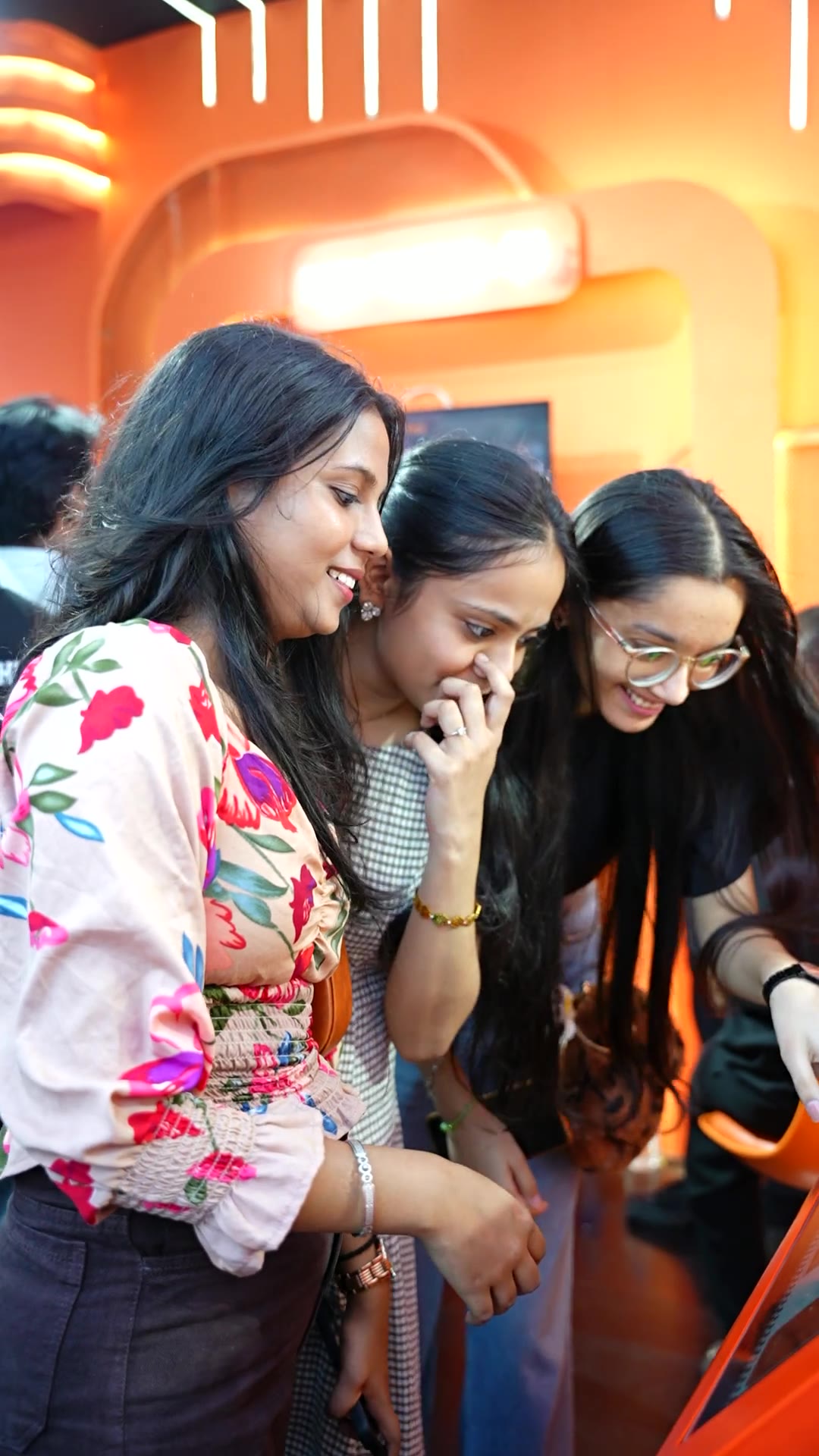
The photo booth industry in India is experiencing rapid growth driven by the country's booming events sector, expanding mall culture, and consumers' ever-increasing appetite for shareable experiences. Whether placed in a high-footfall mall, deployed at weddings and corporate events, or installed in gaming zones and entertainment centres, a AI photo booth generates revenue every time someone steps in front of the camera.
Here is the business at a glance:
| Parameter | Details |
|---|---|
| Initial Investment | ₹4,00,000 - ₹7,00,000 + 18% GST |
| Revenue Per Session | ₹149 - ₹299 |
| Monthly Revenue (Mall) | ₹50,000 - ₹3,00,000 |
| Delhi NCR photo booth rental | On request |
| Gross Margin | On request |
| Break-Even Timeline | 3-6 months |
| Best Equipment | Pikcha AI Photo Booth by Bamigos |
The photo booth business is profitable in India because of high demand, low operating costs, and minimal staffing requirements. With cutting-edge AI-powered booths, you can offer experiences that customers willingly pay a premium for, including AI-generated themes, instant prints, and digital sharing.
Business Model Options for a Photo Booth in India
Before you invest a single rupee, you need to decide which business model fits your goals, risk tolerance, and available capital. There are three proven approaches to running a photo booth business in India, and each has distinct advantages.
Model 1: Permanent Mall Installation
In this model, you place your AI photo booth in a mall or shopping centre on a long-term basis. The booth operates daily during mall hours, and customers pay per session. Revenue is driven by consistent footfall rather than one-off bookings.
- Pros: Predictable daily revenue, passive income potential once set up, brand visibility, minimal logistics after installation
- Cons: Mall rent adds to fixed costs (₹15,000-₹50,000/month), revenue depends on mall footfall, security deposit required, lease lock-in periods
- Best for: Entrepreneurs who want a steady, semi-passive income stream and are willing to commit to a fixed location
Model 2: Event Rental
Here, you rent out your photo booth for weddings, corporate events, birthday parties, product launches, and festivals. You charge a flat fee per event or a combination of flat fee plus per-print charges. India's massive wedding industry alone provides an enormous addressable market.
- For the event-rental business model, price each booking against its full cost: transport, staffing, setup, prints, artwork, maintenance and overheads. Keep the event schedule and guest-facing hours explicit; a supplier hire quote is not the same as the revenue your own business will earn.
- Cons: Irregular income, requires transport and setup for each event, seasonal demand fluctuations, more hands-on management
- Best for: Entrepreneurs comfortable with event-based work who want maximum revenue per deployment
Model 3: Hybrid (Recommended)
The hybrid model combines a permanent mall installation for steady baseline revenue with event rentals on weekends and during peak seasons. This is the most resilient approach and is what we recommend for most new operators.
- Pros: Diversified revenue streams, maximises booth utilisation, balances steady income with high-earning event days, faster ROI
- Cons: Requires at least two booths to fully execute, more complex logistics, needs stronger planning skills
- Best for: Entrepreneurs who want to build a scalable photo booth business and are planning to grow beyond a single unit
Whichever model you choose, the foundation is the same: invest in a world-class booth that delivers an experience customers love. The Pikcha AI Photo Booth by Bamigos — with AI effects updated over the air — is built for all three models, with a portable yet robust design that works equally well in a mall kiosk or at a destination wedding.
Investment Breakdown: How Much Does It Cost to Start?
One of the most common questions about starting a photo booth business in India is the total investment required. Here is a detailed breakdown of every cost you need to plan for.
Equipment Cost
Your photo booth is the core of your business. The Pikcha AI Photo Booth, which includes an AI-powered camera system, touchscreen interface, high-speed dye-sublimation printer, and proprietary software, ships in three tiers from ₹3.5 L to ₹6.5 L + 18% GST — Pikcha Lite (₹3.5 L), Pikcha Studio (₹4.5 L), or Pikcha Pro (₹6.5 L) depending on the configuration, warranty, and branding depth you need.
| Item | Cost Range |
|---|---|
| Pikcha AI Photo Booth (base unit) | ₹3,50,000 - ₹6,50,000 + 18% GST |
| Initial consumables (print media, ink) | On request |
| Transport and installation | Quoted separately (ex-Delhi + optional on-site setup) |
| Security deposit (mall model) | ₹25,000 - ₹1,00,000 |
| Miscellaneous (extension cords, UPS, etc.) | Quoted separately (ex-Delhi + optional on-site setup) |
Total Investment by Business Model
| Business Model | Total Investment |
|---|---|
| Event Rental Only | ₹4,00,000 - ₹6,00,000 + 18% GST |
| Permanent Mall Installation | ₹5,50,000 - ₹8,50,000 |
| Hybrid (starting with 1 booth) | ₹5,50,000 - ₹8,00,000 |
The mall model requires a higher initial outlay because of security deposits. The event rental model is leaner at launch but requires a reliable vehicle or transport arrangement. In either case, the total photo booth investment in India falls well within the ₹4-7 lakh range, making it one of the most accessible business opportunities in the experiential entertainment space.
To calculate your exact investment and projected returns, use our free Photo Booth ROI Calculator.
Revenue Projections: How Much Can You Earn?
Revenue is the part of any photo booth business plan that gets entrepreneurs excited — and rightly so. The numbers are compelling, especially when you factor in India's population density and cultural love for photographs.
Mall Installation Revenue
A well-placed AI photo booth in a busy mall can generate between ₹50,000 and ₹3,00,000 per month. The wide range depends on several factors:
- Footfall: Tier-1 city malls with 30,000+ daily visitors will outperform Tier-2 malls with 8,000-10,000 visitors
- Placement within the mall: Near the food court, entertainment zone, or main atrium performs best
- Pricing: Per-session revenue of ₹149-₹299, depending on the package (basic print vs. AI-enhanced experience with multiple prints)
- Day of week: Weekends and holidays can generate 3-5x weekday revenue
A conservative estimate for a mid-tier mall is 20-30 sessions per day on weekdays and 50-80 sessions on weekends. At an average of ₹150 per session, that translates to ₹1,20,000-₹1,80,000 per month.
Event Rental Revenue
Model event revenue as confirmed bookings multiplied by the agreed fee, plus only those extras actually ordered. Deduct transport, staffing, consumables, artwork and overheads to estimate net income. Account for seasonal demand and downtime rather than assuming every available day is booked.
- Base rental fee: from ₹55,000 per day. Travel and logistics are quoted per city.
- Prints: Print requirements are confirmed in the event quote.
- Upsells: Custom frames, themed backdrops, branded prints for corporate events, and digital copies via email or WhatsApp
During peak wedding season (October to February), an active operator can book 15-20 events per month, generating ₹3,00,000-₹6,00,000 in gross revenue from events alone.
Gaming Zones and Entertainment Centres
Placing a Pikcha AI Photo Booth in a gaming zone, bowling alley, or family entertainment centre can generate up to ₹2,00,000 per month. These venues have a captive audience that is already in the mood to spend on experiences, making conversion rates exceptionally high.
Revenue Summary Table
| Revenue Channel | Monthly Potential | Key Driver |
|---|---|---|
| Mall Installation | ₹50,000 - ₹3,00,000 | Footfall and placement |
| Event Rentals | ₹3,00,000 - ₹6,00,000 (peak) | Number of bookings |
| Gaming Zones | Up to ₹2,00,000 | Captive audience spend |
| Corporate Activations | ₹50,000 - ₹2,00,000 | Brand budgets |
Operating Costs: What You Will Spend Monthly
Understanding your operating costs is just as important as projecting revenue. The photo booth business has a favourable cost structure — once you own the equipment, recurring expenses are modest relative to earnings.
Per-Print Cost
Running costs depend on your print volume and paper choice. Ask us for the numbers for your venue.
Fixed Monthly Costs (Mall Model)
| Expense | Monthly Cost |
|---|---|
| Mall rent / revenue share | ₹15,000 - ₹50,000 |
| Internet (4G/5G SIM or broadband) | ₹500 - ₹1,000 |
| Electricity | Usually included in mall rent |
| Maintenance and repairs | ₹3,000 |
| Insurance | ₹1,000 - ₹2,000 |
Fixed Monthly Costs (Event Model)
| Expense | Monthly Cost |
|---|---|
| Transport (fuel, vehicle hire) | Quoted separately (ex-Delhi + optional on-site setup) |
| Internet (mobile data) | ₹500 |
| Maintenance and repairs | ₹3,000 |
| Staff (setup and event assistant) | ₹10,000 - ₹20,000 |
| Storage (if not home-based) | ₹3,000 - ₹8,000 |
| Marketing and lead generation | Quoted separately (ex-Delhi + optional on-site setup) |
Your profit margin on each session ranges from 60% to 80%, depending on your model and location. This makes the photo booth business one of the highest-margin small businesses you can start in India.
Profitability Analysis: Is a Photo Booth Business Profitable in India?
Let us run the numbers on a realistic scenario to answer the question every aspiring entrepreneur asks: is a photo booth business actually profitable in India?
Scenario: Single Booth, Mall Model, Tier-1 City
- Monthly sessions: 900 (30 per day average across weekdays and weekends)
- Average revenue per session: ₹175
- Gross monthly revenue: ₹1,57,500
- Running costs depend on your print volume and paper choice. Ask us for the numbers for your venue.
- Mall rent: ₹30,000
- Internet + maintenance: ₹4,000
- Staff: ₹12,000
- Total monthly expenses: ₹77,500
- Net monthly profit: ₹80,000
With an initial investment of ₹6,50,000 (Pikcha Pro tier), this operator recovers the full investment in about 8 months and earns approximately ₹9,60,000 in annual profit from a single booth.
Add event rentals on weekends with a second booth, and the annual profit can cross ₹20,00,000. Explore the full photo booth business opportunity in India to see how operators across the country are scaling.
Legal Requirements to Start a Photo Booth Business
Operating legally protects your business and builds credibility with mall operators and event clients. Here are the key registrations and licences you need.
1. Business Registration
Register as a sole proprietorship, partnership, LLP, or private limited company. For most first-time photo booth operators, a sole proprietorship or LLP is sufficient. You will need a PAN card and bank account in the business name.
2. GST Registration
GST registration is mandatory if your annual turnover exceeds ₹20 lakhs (₹10 lakhs in special category states). Given the revenue potential of even a single booth, you will likely cross this threshold within the first year. Register for GST early — many mall operators and corporate clients require GST-compliant invoices.
3. Shop and Establishment Licence
If you are setting up a permanent installation in a mall, you need a Shop and Establishment licence from the local municipal authority. The process varies by state but typically involves a simple application and a nominal fee of ₹500-₹2,000.
4. Trade Licence
Some municipalities require a trade licence for operating an entertainment or amusement service. Check with your local municipal corporation or nagar palika for specific requirements in your area.
5. Insurance
Protect your investment with comprehensive equipment insurance covering theft, damage, fire, and transit. A policy for a photo booth typically costs ₹12,000-₹24,000 per year. Additionally, consider public liability insurance if you are operating in public spaces.
6. Mall-Specific Documentation
Malls will typically require your GST certificate, business registration, insurance certificate, and a security deposit before allowing you to set up. Some malls may also require a fire safety certificate for your kiosk or booth setup.
Location Strategy: Choosing the Right Spot
Your location is the single biggest determinant of success in the mall installation model. A great booth in a poor location will underperform a decent booth in a high-traffic spot. Here is how to evaluate locations systematically.
Mall Selection Criteria
Starting a Photo Booth Business?
Get AI photo booth pricing and ROI details from our team. No obligation.
- Daily footfall: Target malls with at least 15,000 daily visitors. Ask the mall management for footfall data — they track it closely.
- Demographic match: Your ideal customers are families, young couples, and groups of friends aged 15-35. Malls anchored by multiplexes, food courts, and fashion brands attract this demographic.
- Existing entertainment options: Malls with gaming zones, kids' play areas, or cinemas already have visitors primed for experiential spending.
- Rent structure: Negotiate a revenue-share model (15-25% of revenue) rather than a fixed rent. This aligns the mall's incentives with yours and reduces your risk during slow months.
- Competitor presence: Avoid malls that already have a photo booth unless you are confident the Pikcha AI Photo Booth's superior AI experience will draw customers away.
Placement Within the Mall
- Best: Near the food court, main atrium, or entertainment zone — high dwell time and visibility
- Good: Near anchor stores, cinema exits, or kids' play areas
- Avoid: Dead-end corridors, upper floors with low footfall, areas near service exits
Event Venue Relationships
For the event rental model, build relationships with wedding planners, event management companies, hotels with banquet halls, and corporate HR teams. These partnerships generate repeat bookings and referrals that can sustain your business year-round.
Marketing Plan: Getting Customers and Bookings
Even the best photo booth needs a marketing engine to reach its revenue potential. Here is a practical marketing plan tailored to the Indian market.
For Mall Installations
- Sample photos on display: Show sample AI-transformed photos near the booth. People need to see the output to understand the value.
- Demo sessions: Offer free or discounted first sessions during the initial week to build word-of-mouth and create a queue (queues attract more customers).
- Social media sharing: The Pikcha AI Photo Booth has built-in digital sharing. Every shared photo is free advertising. Encourage customers to tag your Instagram handle.
- Google My Business: List your booth location on Google Maps. Many people search for "photo booth near me" — be there when they do.
- Mall promotions: Partner with the mall for festival promotions, holiday specials, and weekend offers.
For Event Bookings
- Wedding platforms: List your service on WedMeGood, Shaadi Baraati, and similar platforms. Upload high-quality photos from past events.
- Instagram marketing: Post event highlights, reels of AI photo transformations, and behind-the-scenes content. Instagram is the number one platform for wedding and event discovery in India.
- Google Ads: Run targeted ads for keywords like "photo booth for wedding," "photo booth rental near me," and "corporate event photo booth."
- Referral programme: Offer event planners a 10-15% referral commission for every booking they bring. This creates a motivated sales force at no fixed cost.
- WhatsApp Business: Use WhatsApp for inquiry handling, quote sharing, and post-event follow-ups. Most Indian clients prefer WhatsApp over email.
Read our complete guide on how to start a photo booth business in India for a deeper dive into customer acquisition strategies.
Scaling Your Photo Booth Business: Adding Booth #2 and Beyond
The photo booth business has excellent unit economics, which means scaling is straightforward once you have proven the model with your first booth. Here is a roadmap for scaling.
When to Scale
- Your first booth has been profitable for 3+ consecutive months
- You are turning away event inquiries due to availability conflicts
- You have identified a second high-potential location or revenue channel
- You have recovered at least 60-70% of your initial investment
Scaling Strategy
- Booth #2 — Diversify your model: If your first booth is in a mall, make your second one an event-focused unit (or vice versa). This diversifies your revenue and reduces risk.
- Booth #3 — Expand geography: Move into a new city or a different part of the same city. Each new location multiplies your addressable market.
- Booth #4+ — Build a brand: At this point, you are running a genuine photo booth company. Invest in a dedicated website, hire a small team, and consider photo booth franchise opportunities to grow faster.
Operational Scaling Tips
- Hire and train operators: Train reliable staff who can handle setup, customer interaction, and basic troubleshooting.
- Buy consumables in bulk: Centralised procurement of print media and ink ribbons reduces per-print costs.
- Use remote monitoring: The Pikcha AI Photo Booth supports remote diagnostics, so you can track performance across locations from your phone.
- Standardise pricing: Maintain consistent packages for events and mall pricing across locations.
Risk Factors and How to Mitigate Them
No business plan is complete without an honest assessment of risks. Here are the key risks for a photo booth business in India and practical strategies to manage them.
1. Seasonality
Photo booth demand is not uniform throughout the year. The wedding season (October to February) is peak time, with a noticeable dip during the monsoon months (July to September). Mall revenue is more stable but still dips slightly during monsoon.
Mitigation: Operate a hybrid model so mall revenue covers your fixed costs during slow months. Use the off-season to service equipment, build marketing assets, and line up bookings for the next peak season. Offer corporate event packages during monsoon — indoor corporate events are unaffected by weather.
2. Mall Lease Terms
Some malls impose unfavourable lease conditions: high minimum guarantees, long lock-in periods, or clauses that allow them to relocate your booth within the mall. A bad lease can turn a profitable location into a loss-making one.
Mitigation: Always negotiate before signing. Push for revenue-share models over fixed rent. Avoid lock-in periods longer than 6 months for your first location. Get everything in writing, including your exact placement within the mall.
3. Technology Obsolescence
Consumer expectations evolve rapidly. A photo booth that feels outdated will lose customers to newer experiences.
Mitigation: This is precisely why choosing the right equipment matters. The Pikcha AI Photo Booth by Bamigos receives regular software updates with new AI filters, themes, and features — keeping the experience fresh without requiring hardware replacement. Investing in cutting-edge technology upfront protects you from obsolescence.
4. Equipment Damage or Theft
Photo booths operate in public spaces and at events where accidental damage or theft is possible.
Mitigation: Comprehensive insurance is non-negotiable. Additionally, the Pikcha booth's robust build quality is designed for commercial environments. For events, always have a staff member present. For mall installations, coordinate with mall security and consider CCTV coverage.
5. Competition
As the market grows, more operators will enter the space.
Mitigation: Differentiate on experience quality. An AI-powered photo booth that produces stunning, shareable images creates a moat that basic camera-and-printer setups cannot match. Build your brand, collect reviews, and create a portfolio that showcases the Pikcha AI Photo Booth's capabilities.
Related guides: Photo Booth Manufacturer India · Franchise Opportunities · Buying Guide
Frequently Asked Questions
How much does it cost to start a photo booth business in India?
The total investment to start a photo booth business in India ranges from ₹4,00,000 to ₹8,00,000 + 18% GST. This includes the booth equipment (₹3.5-6.5 lakh (Pikcha Lite to Pikcha Pro)), initial consumables, transport, and security deposits. The exact amount depends on whether you choose a mall installation, event rental, or hybrid model.
Is the photo booth business profitable in India?
Yes, the photo booth business is highly profitable in India. A single mall-installed booth can generate ₹50,000 to ₹3,00,000 per month in revenue, with profit margins of 60-80% after operating costs. Most operators recover their full investment within 6-9 months and begin earning pure profit thereafter.
How much revenue can a photo booth generate per day?
For a paid venue, daily gross revenue is the number of paid sessions multiplied by the session price. For a booked event, it is the agreed event fee and authorised extras. Net income is lower after venue charges, staffing, transport, consumables and other operating costs; use your own demand assumptions.
Do I need any special licence to run a photo booth in India?
You need a business registration (sole proprietorship or LLP), GST registration if your turnover exceeds ₹20 lakhs, a Shop and Establishment licence for permanent installations, and optionally a trade licence depending on your municipality. Equipment insurance is strongly recommended though not legally mandatory.
What is the best location to place a photo booth in a mall?
The best locations within a mall are near the food court, main atrium, cinema exit, or entertainment zone. These areas have the highest dwell time and footfall. Avoid upper floors with low traffic, dead-end corridors, and areas near service entrances. Always ask the mall for footfall data by zone before finalising placement.
How many events can a photo booth be booked for per month?
An active operator can book 8-12 events per month during regular months and 15-20 events per month during the peak wedding season (October to February). The number depends on your marketing efforts, network of event planners, and geographic coverage. With two booths, you can serve multiple events on the same day.
Can I run a photo booth business part-time?
Yes, the event rental model works well as a part-time or side business. You deploy the booth only when you have bookings — primarily on weekends and holidays. Many successful operators start part-time and transition to full-time once the revenue justifies it. A mall installation, however, requires daily monitoring and is better suited for full-time operators.
What is the difference between a regular photo booth and an AI photo booth?
A regular photo booth simply takes and prints photos. An AI photo booth like the Pikcha by Bamigos uses artificial intelligence to transform photos into artistic creations — think Bollywood posters, vintage paintings, futuristic avatars, and more. The AI experience commands higher per-session pricing (₹149-₹299), generates more social media shares, and creates a "wow factor" that drives repeat visits and word-of-mouth referrals.
Ready to start your photo booth business? Explore the complete photo booth business opportunity with Bamigos, or calculate your potential returns with our ROI Calculator. The sooner you launch, the sooner you start earning.
Ready to execute on your business plan?
Pikcha is the AI photo booth most Indian operators are plugging into their business plans — ₹3.5L–₹6.5L capex, ₹1.2L–₹3.75L/month gross at active venues, 6–14 month payback. No franchise fee, no royalty. You own it, you keep 100%.
The Pikcha AI Photo Booth line — three tiers
Bamigos manufactures the Pikcha AI Photo Booth — built in India by Bamigos — across three tiers:
- Pikcha Lite — ₹3.5 L + 18% GST. Entry tier. Black powder-coat cabinet, 21.5" standard touchscreen, 200+ AI effects, UPI built in, 1-year warranty. Best for entry mall kiosks, weddings, events, and small gaming zones.
- Pikcha Studio — ₹4.5 L + GST. Silver-chrome cabinet, 21.5" industrial-grade touchscreen, 4K camera, reactive ambient lighting, co-branded print frames (80% your brand / 20% powered by Pikcha), 1-year warranty. Best for malls, FECs, hotels, and serious commercial installations.
- Pikcha Pro — ₹6.5 L + GST. Full white-label with custom cabinet wrap in any colour, custom UI, up to 3 custom workflows, 1-year warranty, dedicated account manager. Best for hotel chains, franchise networks, and 5-star venues.
All three tiers ship with 200+ AI effects, 21.5" touchscreen, UPI built in, and lifetime software updates. Logistics ex-Delhi, wooden crate packaging, and optional on-site setup are quoted separately. Post-warranty operation requires a mandatory Annual Maintenance Contract (AMC) at 9.5% of base price per year. See full Pikcha pricing.
Operating cost reality — including AMC
The one operating cost most business plans miss: post-warranty AMC.
Bamigos Pikcha carries a mandatory Annual Maintenance Contract (AMC) of 9.5% of booth base price per year, starting the year after your warranty ends. On a Pikcha Lite this is ₹33,250/year after the 6-month warranty; on Studio ₹42,750/year from Year 2; on Pro ₹61,750/year from Year 2. AMC covers technical support, spare parts dispatch, software updates, and (on Studio and Pro) frame changes.
5-year total cost of ownership:
- Lite: ₹3.5 L booth + ₹1,49,625 AMC (4.5 years) = ₹4,99,625 over 5 years
- Studio: ₹4.5 L booth + ₹1,71,000 AMC (4 years) = ₹6,21,000 over 5 years
- Pro: ₹6.5 L booth + ₹2,47,000 AMC (4 years) = ₹8,97,000 over 5 years
Post-warranty operation without an active AMC results in software lockout after a 30-day grace period. Build AMC into your annual expense line from Year 2 onwards. See full Pikcha pricing.
Explore Bamigos.com Photo Booth Products
- AI Photo Booth India — Pikcha is India's flagship AI photo booth: 200+ effects, UPI payments, designed and manufactured in Delhi since 2022.
- Photo Booth Machines in India — commercial-grade units from ₹3.5 lakhs with full specs, pricing tiers, and ROI math.
- AI Selfie Booth for Events — brand activations, trade shows, college fests, weddings; UPI-native, instant sharing.
- Korean Photo Booth India — 4-cut strip frames, studio lighting, K-culture aesthetic for Gen-Z venues.
- Photo Booth Franchise / Business Opportunity — own a Pikcha outright; no franchise fee, no royalty, no territory lock-in.