Where to Invest ₹10 Lakhs in India in 2026: Business vs Stocks vs Real Estate
You have ₹10 lakh. Maybe it is a bonus. Maybe you sold a property. Maybe you have been saving for years. The question is not whether to invest — it is where.
Your bank will tell you to put it in an FD at 7%. Your colleague will say mutual funds — "12% CAGR over 20 years." Your uncle will say gold. Your father will say real estate. And none of them will mention the option that actually generates ₹50,000–₹2,40,000 per month in cash flow from month one.
This is not an investment advice article. This is a comparison of what ₹10 lakh actually does across five asset classes in India in 2026 — with 1-year and 5-year projections, tax implications, and liquidity realities. You decide which column makes sense for your situation.
The 5-Year Comparison Table
Let us start with the numbers. ₹10 lakh deployed across five options:
| FD (7.5%) | Index Fund (12%) | Gold (10%) | Real Estate (Down Payment) | AI Photo Booth (2 Units) | |
|---|---|---|---|---|---|
| Year 1 value | ₹10.75L | ₹11.2L | ₹11L | ₹10L (EMI period) | ₹10L asset + ₹12–₹28L cash |
| Year 1 cash flow | ₹62,500 (interest) | ₹0 (reinvested) | ₹0 (no yield) | −₹60K–₹1.2L (EMI minus rent) | +₹12L–₹28L |
| Year 5 value | ₹14.36L | ₹17.6L | ₹16.1L | ₹15–₹20L (appreciation) | ₹10L asset + ₹60L–₹1.4Cr cumulative cash |
| Year 5 total return | 43.6% | 76% | 61% | 50–100% (leveraged) | 600–1,400% |
| Monthly income (Year 1) | ₹5,200 | ₹0 | ₹0 | −₹5K–₹10K (negative) | ₹1L–₹2.3L |
| Liquidity | 7 days (with penalty) | T+2 days | 1–3 days | 3–12 months | Equipment sellable in 2–4 weeks |
| Tax | Slab rate | 12.5% LTCG | 12.5% LTCG | 12.5% LTCG | Business income (slab rate, deductions available) |
| Your effort | Zero | Zero | Zero | Tenant management | 2–4 hours/week |
The gap is not marginal — it is an order of magnitude. ₹10L in financial instruments generates ₹5,000–₹10,000 per month in year 1 (and most of that is not even liquid — it is paper appreciation). ₹10L in a photo booth business generates ₹1–₹2.3L per month in actual cash deposited to your bank account.
Option 1: Fixed Deposit (7–7.5%)
₹10 lakh in an FD at 7.5% earns ₹75,000 per year — ₹6,250 per month. After tax (at 30% slab): ₹4,375/month.
What is good: Zero risk, zero effort, guaranteed returns, insured up to ₹5L per bank (DICGC).
What is real: At 6% inflation, your real return is 1.5%. In 5 years, your ₹10L becomes ₹14.36L in nominal terms but has the purchasing power of ₹10.7L. You have not built wealth — you have barely preserved it.
FDs are for capital you cannot afford to lose. Emergency funds, short-term parking (1–2 years before a planned expense), or the risk-free base of a larger portfolio. They are not a wealth-building strategy.
Option 2: Mutual Funds / Index Funds (12% CAGR)
₹10 lakh in a Nifty 50 index fund has historically returned ~12% CAGR. Your ₹10L becomes ₹17.6L in 5 years — a 76% total return.
What is good: Diversified, liquid (T+2 settlement), professionally managed, tax-efficient (12.5% LTCG above ₹1.25L gains per year).
What is real: The 12% is a long-term average. In any given year, returns could be −15% to +30%. You cannot plan monthly expenses around it. And critically: there is no monthly cash flow. Your money is growing on paper, but you cannot spend it without selling units and breaking the compounding.
The optimal use: Mutual funds are where you invest your business profits — not where you deploy your starting capital. Run a cash-generating business, route the monthly profits into SIPs. That gives you both: monthly income (from the business) and long-term compounding (from the SIPs).
Option 3: Gold (8–10% Historical)
₹10 lakh in gold (physical, sovereign gold bonds, or gold ETFs) has returned approximately 10% annually over the last 10 years. SGBs add a 2.5% annual interest on top.
What is good: Inflation hedge, culturally valued in India, SGBs offer tax-free capital gains at maturity (8 years).
What is real: Gold does not generate income. It sits there and (hopefully) appreciates. The 10% historical return includes the 2020–2024 bull run — gold has also had 5-year stretches of flat or negative real returns. And unlike stocks, gold produces nothing — no dividends, no earnings, no cash flow. It is pure price speculation with a 5,000-year track record.
Best use: 10–15% of your total portfolio as an inflation hedge and crisis asset. Not a primary investment for someone who wants monthly income.
Option 4: Real Estate (Down Payment on a Property)
₹10 lakh as a 20% down payment buys a ₹50L property with an ₹40L home loan. At 8.5% interest over 20 years, your EMI is ₹34,700/month.
If rental property: A ₹50L flat in a tier-1 city rents for ₹12,000–₹20,000/month. Your monthly cash flow is negative (₹34,700 EMI minus ₹15,000 rent = −₹19,700/month out of pocket). You will be cash-flow-negative for 15+ years until the loan is repaid.
If self-occupied: No income at all — just a roof over your head and a 20-year liability.
The real estate case: Real estate works as a long-term wealth builder through leverage and appreciation. If the property appreciates 6% annually, your ₹50L flat is worth ₹67L in 5 years — a ₹17L gain on your ₹10L down payment (170% leveraged return). But you paid ₹20.8L in EMIs over those 5 years, plus maintenance and property tax. Net: roughly break-even in 5 years, positive in 7–10 years.
Best for: People who need a place to live (self-occupied) or who want leveraged appreciation over 10+ years. Not for monthly income.
Planning a Gaming Zone?
Get expert recommendations and pricing for your venue: including the Pikcha AI photo booth, a self-service photo attraction to evaluate for your venue. No obligation.
Option 5: AI Photo Booth Business (2 Units)
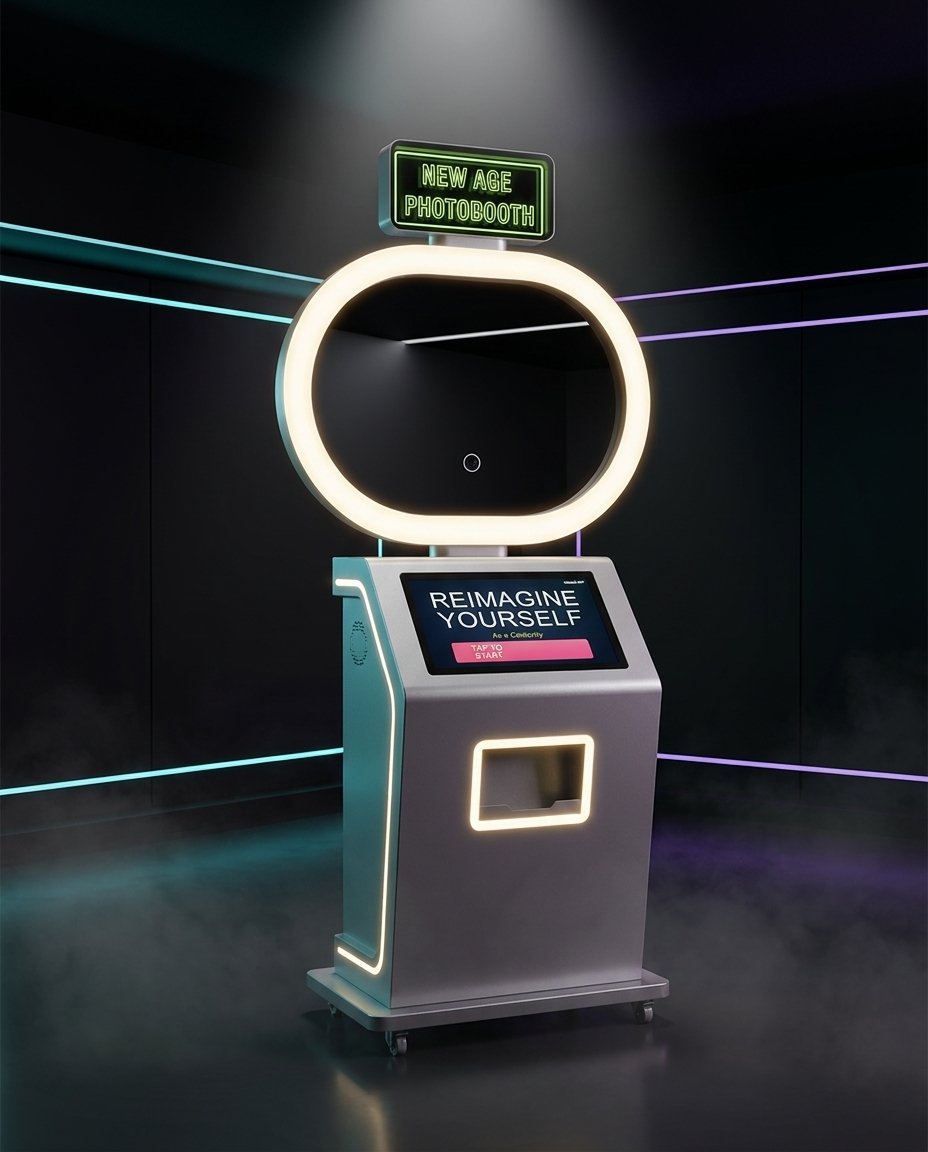
₹10 lakh buys two Pikcha AI Photo Booths — two Lite units (₹4.13L each incl. GST) or one Lite + one Studio (₹4.13L + ₹5.31L). Place them in two different malls.
Year 1 projection (2 units, conservative):
| Unit 1 (Mall A) | Unit 2 (Mall B) | Total | |
|---|---|---|---|
| Monthly gross | ₹1,50,000 | ₹1,20,000 | ₹2,70,000 |
| Monthly expenses | −₹65,000 | −₹55,000 | −₹1,20,000 |
| Monthly net profit | ₹85,000 | ₹65,000 | ₹1,50,000 |
| Annual net profit | ₹10,20,000 | ₹7,80,000 | ₹18,00,000 |
Year 1 cash return on ₹10L: ₹18L (180% return). And you still own the two machines, which have resale value.
Year 5 projection:
Assuming steady performance and reinvestment:
- Year 1: 2 booths → ₹18L profit. Buy a 3rd booth with profits.
- Year 2: 3 booths → ₹27L profit. Buy booth 4 and 5.
- Year 3: 5 booths → ₹45L profit. At this point, you have a serious business generating ₹3.75L/month — from a ₹10L starting investment.
By year 5, a disciplined operator who reinvests profits can be running 8–10 booths generating ₹60L–₹1Cr+ annually.
What is the catch?
- Location risk. A poorly placed booth earns ₹30K–₹50K/month instead of ₹1–₹2L. Location selection is the make-or-break decision.
- Not zero effort. 2–4 hours per week per booth for restocking and monitoring. With 2 booths, that is 4–8 hours/week.
- Mall rent variability. Rent increases, lease non-renewals, or mall closures can disrupt a location. Diversifying across 2–3 malls mitigates this.
- Post-warranty maintenance. AMC at 9.5% of base price/year after the warranty period. Factor this into projections.
These are real risks — but they are manageable risks with measurable downside, unlike a stock market crash that can erase 30% of your portfolio overnight.
The Allocation Framework
If you have ₹10 lakh and want both income and safety, here is a practical allocation:
| Allocation | Amount | Purpose | Expected Monthly Income |
|---|---|---|---|
| AI Photo Booth (1 unit) | ₹4.1–₹5.3L | Cash-flow engine | ₹50,000–₹1,20,000 |
| Index Fund SIP | ₹3–₹4L (lump sum, then add booth profits monthly) | Long-term compounding | ₹0 (reinvested) |
| Emergency FD | ₹2L | Safety net | ₹1,250 |
This gives you: ₹50K–₹1.2L/month cash flow from the booth, a growing equity portfolio funded by booth profits, and ₹2L liquid safety net. Over 5 years, the combination significantly outperforms any single-asset strategy.
Calculate photo booth ROI → | See pricing →
Explore more: Photo Booth Manufacturer India · Buying Guide · Franchise
Frequently Asked Questions
Where should I invest ₹10 lakh for maximum returns in India?
For maximum year-1 cash returns, a photo booth business deployed across 1–2 mall locations generates ₹12L–₹28L in the first year on a ₹10L investment — 120–280% returns. For maximum long-term compounding with zero effort, a Nifty 50 index fund returns ~12% CAGR (₹17.6L in 5 years). The optimal strategy combines both: deploy part in a cash-generating business, invest profits in index funds.
Is ₹10 lakh enough to start a business in India?
Yes. Several viable businesses can be started under ₹10L: AI photo booth (₹4–₹6.5L per unit, 2 units with ₹10L), chai franchise (₹5–₹10L), cloud kitchen (₹5–₹10L), vending machine network (₹3–₹8L). The photo booth offers the highest return and lowest operational complexity — zero staff, automated UPI collection, remote management.
Is investing in a photo booth better than mutual funds?
For monthly cash flow: yes — significantly. A ₹5L photo booth generates ₹50K–₹1.2L/month from month 1. A ₹5L mutual fund generates ₹0 in monthly cash flow (returns are capital appreciation). For long-term wealth compounding with zero effort: mutual funds are better. The optimal approach: use the photo booth for cash generation, invest profits into mutual funds for compounding.
What is the safest way to invest ₹10 lakh in India?
The safest option is an FD at 7–7.5%, fully insured up to ₹5L. However, after inflation (6%) and tax (30% slab), the real return is approximately 0–0.5%. If you want safety with meaningful returns, diversify: ₹2L in FD (emergency fund) + ₹4L in index funds (diversified equity) + ₹4L in a photo booth business (high-return cash generator with tangible asset value).