Side Business for Salaried Employees in India 2026: 6 That Work Without Quitting Your Job
You earn ₹8–₹15 lakh per year. You have ₹3–₹10 lakh in savings. You want more money but you are not ready to quit your job — you like the stability, the health insurance, the predictable salary.
The internet says: start a YouTube channel, do freelancing, build a dropshipping store. These are not side businesses — they are second full-time jobs that take 12–24 months before they pay anything. You do not have 3 hours every night to edit videos or respond to Fiverr clients after a 9-hour workday plus commute.
A real side business for a salaried employee must pass three tests:
- Under 5 hours per week of your time. You have a job. The side business cannot compete with it for your attention during working hours.
- No daily physical presence required. If the business stops making money when you are stuck in a team meeting, it is not a side business — it is an absentee employer.
- Generates income within 60 days. Not 12 months. Not "once you build an audience." Within two months of deployment.
Here are six options that pass all three tests — with honest numbers on each.
1. AI Photo Booth (Mall or Venue Installation)
Capital needed: ₹3.5–6.5L + GST
Monthly income: ₹50,000–₹1,20,000
Your weekly time: 2–4 hours
Income starts: Month 1
This is the option that reads like it should not work — and then the numbers make it obvious.
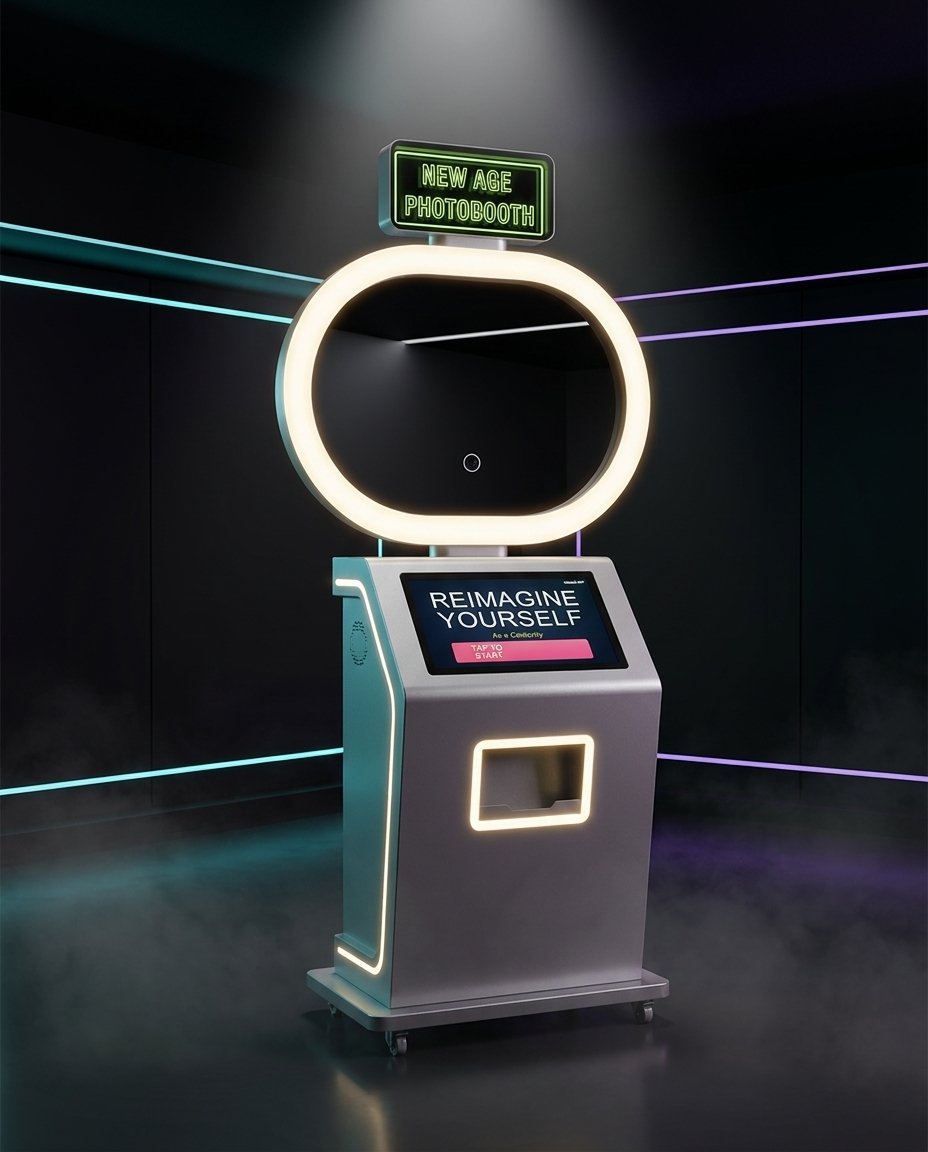
An AI photo booth is a self-service kiosk that you place in a shopping mall, hotel lobby, gaming zone, or tourist spot. Customers walk up, pay via UPI, choose an AI effect (Bollywood, K-pop, superhero, anime — 100+ options), and receive an instant print plus a WhatsApp delivery. The machine does everything. You do nothing — literally nothing — during working hours.
What your week looks like as a booth owner with a full-time job:
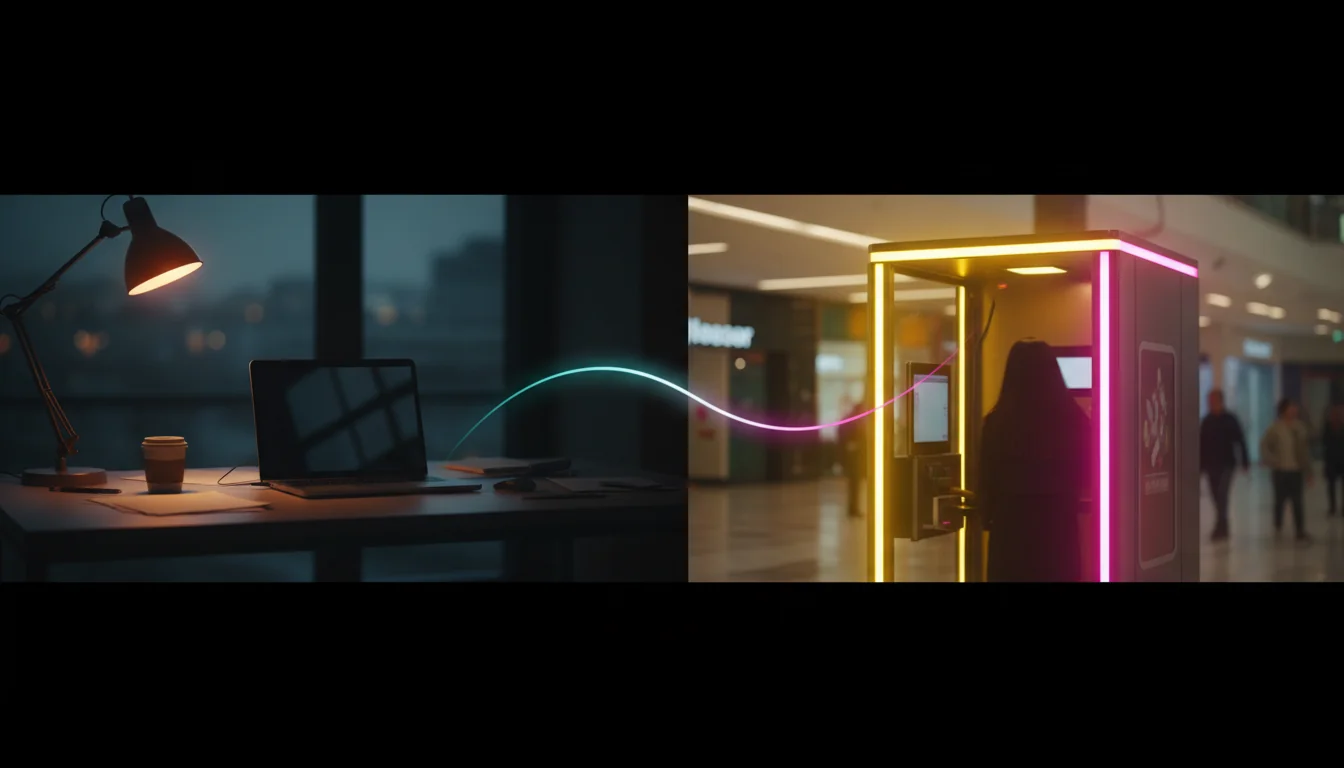
- Monday–Friday: Check the remote dashboard on your phone during lunch. 30 seconds. See yesterday's session count, revenue, and any alerts. That is it.
- Saturday or Sunday: Drive to the mall. Restock print paper and dye ribbon (15–20 minutes). Wipe down the touchscreen. Leave.
- Total weekly time: 2–4 hours.
Meanwhile, the booth has been earning ₹4,000–₹8,000 per day. UPI payments are collected by Bamigos and transferred to your bank account bi-weekly. No cash handling. No staff to call. No inventory to manage.
A real monthly P&L (mid-tier metro mall, ₹149/session, 45 sessions/day):
| Amount | |
|---|---|
| Gross revenue | ₹2,01,150 |
| Mall rent | −₹30,000 |
| Print consumables | On request |
| Electricity + internet | −₹2,500 |
| Maintenance reserve | −₹3,000 |
| Net profit | ₹1,18,400 |
Running costs depend on your print volume and paper choice. Ask us for the numbers for your venue.
That is ₹1.18 lakh per month — often more than the take-home salary of the job you are keeping. And unlike your salary, it compounds: add a second booth in a second mall, and your income doubles without doubling your hours.
The Pikcha AI Photo Booth is manufactured in India with built-in UPI, 200+ AI effects, and a remote dashboard designed for exactly this use case — operators who manage their business from a phone screen. Three tiers from ₹3.5L.
2. Rental Income from Existing Property
Capital needed: ₹0 (if you own unused property) or ₹20L+ (if buying)
Monthly income: ₹8,000–₹50,000
Your weekly time: 1–2 hours (tenant management)
Income starts: Month 1–3 (finding tenants)
If you own an unused flat, room, or commercial space, renting it out is the most traditional side income in India. Residential rent in metros yields 2–3% annually on property value; commercial spaces yield 4–6%.
The reality for most salaried employees: You do not own spare property. Buying one requires ₹20L–₹1Cr+ — capital that could generate 5–10x higher returns in a business. Rental income is passive and stable, but the capital efficiency is the worst on this list.
Best for: People who already own unused property. Not a viable "start from scratch" side business for most salaried employees.
3. Vending Machine Network
Capital needed: ₹3–5L (5–8 machines)
Monthly income: ₹10,000–₹30,000
Your weekly time: 3–5 hours (restocking routes)
Income starts: Month 1
Place snack and beverage vending machines in offices, hospitals, gyms, and college campuses. Revenue per machine: ₹3,000–₹8,000/month after product costs. With 5–8 machines across locations you can access, total net is ₹10,000–₹30,000 per month.
Compatible with a day job? Mostly. Restocking can be done on weekends or delegated to a part-time helper (₹5,000–₹8,000/month). The main effort is in securing locations — which requires networking and negotiation, often during business hours. Once locations are set, the ongoing work is mechanical.
The margin problem: You are earning ₹5–₹15 per item on products that customers can compare to Amazon prices. There is no premium positioning, no repeat-visit incentive, no social sharing that brings new customers. It is pure volume play with thin margins.
Best for: People with access to multiple office buildings, hospitals, or campuses. Moderate income supplement, not a wealth-builder.
4. Digital Product Sales (Templates, Courses, Tools)
Capital needed: ₹0–₹50,000
Monthly income: ₹0–₹50,000 (highly variable)
Planning a Gaming Zone?
Get expert recommendations and pricing for your venue: including the Pikcha AI photo booth, a self-service photo attraction to evaluate for your venue. No obligation.
Your weekly time: 5–10 hours (creation phase: 50+ hours)
Income starts: Month 3–12 (if at all)
If you have specialised knowledge (Excel, data analysis, marketing, design, coding), you can create digital products — Notion templates, online courses, design templates, SaaS micro-tools — and sell them on Gumroad, Topmate, or your own website.
The honest truth: This is a lottery ticket, not a side business. The creation phase requires 50–200 hours of work before you earn ₹1. Most digital products earn less than ₹5,000 total. The ones that earn ₹50K+/month are outliers with large existing audiences. If you do not already have 10,000+ followers somewhere, your distribution is zero and your income will reflect that.
Best for: People with existing audiences (LinkedIn, Twitter, YouTube) and deep domain expertise. Not a cold-start option for a salaried employee with no public presence.
5. Stock Market / Systematic Investment
Capital needed: ₹5,000–₹10L+ (SIP or lump sum)
Monthly income: ₹0 (appreciation, not income) or ₹2,000–₹20,000 (dividend strategy)
Your weekly time: 1–2 hours (research and monitoring)
Income starts: Month 1 (dividends) or Year 3+ (meaningful capital gains)
SIPs in index funds or dividend-paying stocks are the default "side income" recommendation. And they are legitimate — the Nifty 50 has returned ~12% CAGR over 20 years. A ₹5L lump sum in an index fund should grow to ₹8.8L in 5 years.
But let us compare honestly:
₹5L in an index fund at 12% returns ₹60,000 in year 1 (₹5,000/month equivalent — and you cannot withdraw it without breaking the compounding).
₹5L in an AI photo booth at a mall returns ₹6–₹14L in year 1 (₹50K–₹1.2L/month — liquid, monthly, in your bank account from month 1).
That is a 10–20x difference in year-1 cash returns. The stock market is safer (diversified, liquid, regulated), but the cash-flow comparison is not close.
Best for: Everyone — as a complement to a cash-generating business, not a replacement. Run the photo booth, invest the profits in index funds. That is the optimal salaried-employee strategy.
6. ATM Franchise (White-Label ATM)
Capital needed: ₹3–5L
Monthly income: ₹8,000–₹25,000
Your weekly time: 1–2 hours
Income starts: Month 1–2
Already covered in our business under ₹5 lakh guide. A passive, zero-staff option that works in semi-urban and rural areas. The catch: UPI is declining ATM transaction volumes 10–15% annually in metros. A viable side business today in the right location, but a sunset play over 5–10 years.
The Comparison for Salaried Employees
| Side Business | Capital | Monthly Income | Weekly Hours | Works with 9-to-5? | Risk |
|---|---|---|---|---|---|
| AI Photo Booth | ₹3.5–6.5L + GST | ₹50K–₹1.2L | 2–4 hrs | Yes — fully | Medium (location dependent) |
| Rental Property | ₹0 (if owned) | ₹8K–₹50K | 1–2 hrs | Yes | Low |
| Vending Machines | ₹3–5L | ₹10K–₹30K | 3–5 hrs | Mostly | Low |
| Digital Products | ₹0–₹50K | ₹0–₹50K | 5–10 hrs | Partially | High (most fail) |
| Stock Market | ₹5K–₹10L | ₹0–₹5K/mo (year 1) | 1–2 hrs | Yes | Medium (market risk) |
| ATM Franchise | ₹3–5L | ₹8K–₹25K | 1–2 hrs | Yes | Low–Medium (declining) |
The clear winner for income-per-hour: The AI photo booth generates ₹25,000–₹60,000 per hour of your weekly time. Nothing else on this list comes close. A vending machine network generates ₹2,000–₹6,000 per hour of your time. The stock market generates effectively ₹0 in year 1 relative to time spent.
The Optimal Strategy: Stack Your Income
The smartest salaried employees in 2026 are not choosing one option — they are stacking:
- Keep your salary (₹60K–₹1.5L/month) — stability, benefits, career growth
- Deploy ₹4–5L into a photo booth (₹50K–₹1.2L/month) — high-return asset, minimal time
- Invest photo booth profits into SIPs (₹10K–₹50K/month into index funds) — compounding wealth
After 12 months, you have: your salary + ₹6–14L from the booth + a growing investment portfolio. After 24 months, add a second booth and repeat.
This is how salaried employees build wealth without the risk of quitting — and without the burnout of a "side hustle" that steals every evening and weekend.
Start with the ROI calculator → | See Pikcha pricing →
Explore more: Photo Booth Manufacturer India · Buying Guide · Franchise
Frequently Asked Questions
Can I run a side business while working in IT in India?
Yes. Most Indian IT employment contracts allow side businesses as long as they do not compete with your employer or use company resources. A photo booth business, vending machines, or rental income have zero conflict with an IT job. Check your specific employment agreement for any moonlighting restrictions.
What is the best side business under ₹5 lakh for salaried people?
An AI photo booth generates the highest return (₹50K–₹1.2L/month) with the least time commitment (2–4 hours/week) of any side business at the ₹5L investment level. It is the only option that requires zero daily presence, zero staff, and generates income from month 1 via automated UPI payments.
How much can I earn monthly from a side business in India?
Realistic ranges: AI photo booth ₹50K–₹1.2L/month, vending machines ₹10K–₹30K/month, rental property ₹8K–₹50K/month, ATM franchise ₹8K–₹25K/month. Digital products and stock market returns are highly variable and typically lower in the first 1–2 years.
Is it legal for government employees to run a side business in India?
Government employees under Central Civil Services (Conduct) Rules face restrictions on private business activities. They can hold investments and rental properties, but active business operations may require prior permission. Consult your department's HR policy. Fully automated businesses like photo booths may qualify under passive investment, but verify with your administration.