![7 Best Businesses Under ₹5 Lakh in India [Ranked by ROI]](/uploads/best-business-under-5-lakh-india-2026.webp)
Best Business Under ₹5 Lakh in India 2026: 7 Options With Real Numbers
You have ₹3–5 lakh. You want a business — not a side project, not a hobby, an actual business that pays you back within a year and keeps earning after that. The internet is full of "50 business ideas!" listicles that read like they were written by someone who has never run a business. This is not one of those.
This guide compares seven specific businesses you can start under ₹5 lakh in India in 2026, with real investment numbers, realistic monthly profit ranges, and honest assessments of what each one demands from you. Some need staff. Some need daily attention. One needs neither.
The 7 Businesses at a Glance
Before the details, here is the comparison that matters — investment, profit, and how much of your life each business eats.
| Business | Investment | Monthly Profit | ROI Timeline | Staff Needed | Your Weekly Time |
|---|---|---|---|---|---|
| AI Photo Booth (Mall) | ₹3.5–6.5L + GST | ₹50K–₹1.2L | 6–14 months | None | 2–4 hours |
| Chai/Coffee Cart | ₹2–5L | ₹15K–₹50K | 10–18 months | 1–2 | 40+ hours |
| Vending Machines (3–5 units) | ₹3–5L | ₹10K–₹30K | 12–18 months | None | 3–5 hours |
| ATM Franchise | ₹3–5L | ₹12K–₹25K | 14–24 months | None | 1–2 hours |
| Digital Printing Shop | ₹3–5L | ₹25K–₹60K | 8–14 months | 1 | 50+ hours |
| EV Charging Station | ₹3–5L (1–2 units) | ₹8K–₹20K | 18–30 months | None | 1–2 hours |
| Mobile Car Wash | ₹1.5–3L | ₹20K–₹45K | 6–12 months | 2–3 | 30+ hours |
The numbers tell a story. Let us break each one down.
1. AI Photo Booth (Permanent Mall Installation)
Investment: ₹3.5–4.5L + 18% GST (₹4.13L–₹5.31L total)
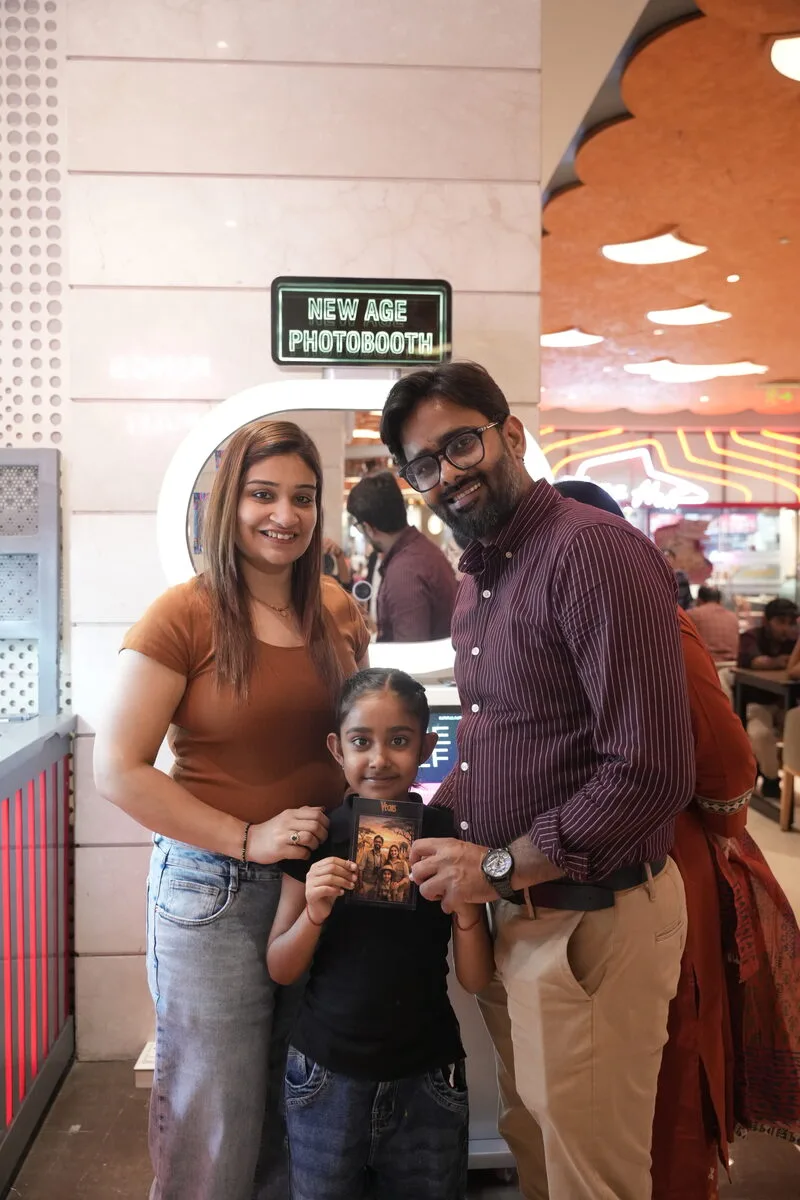
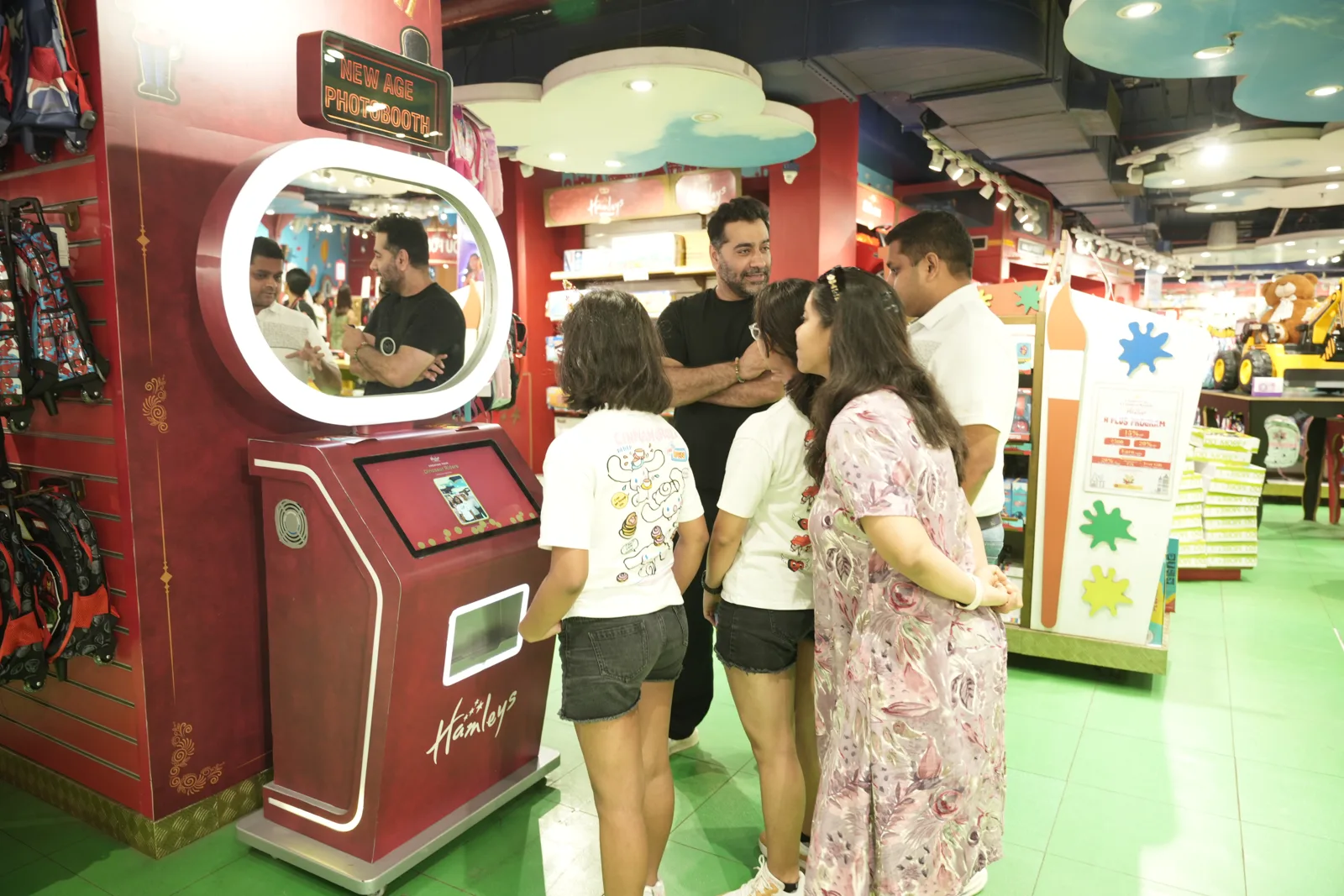
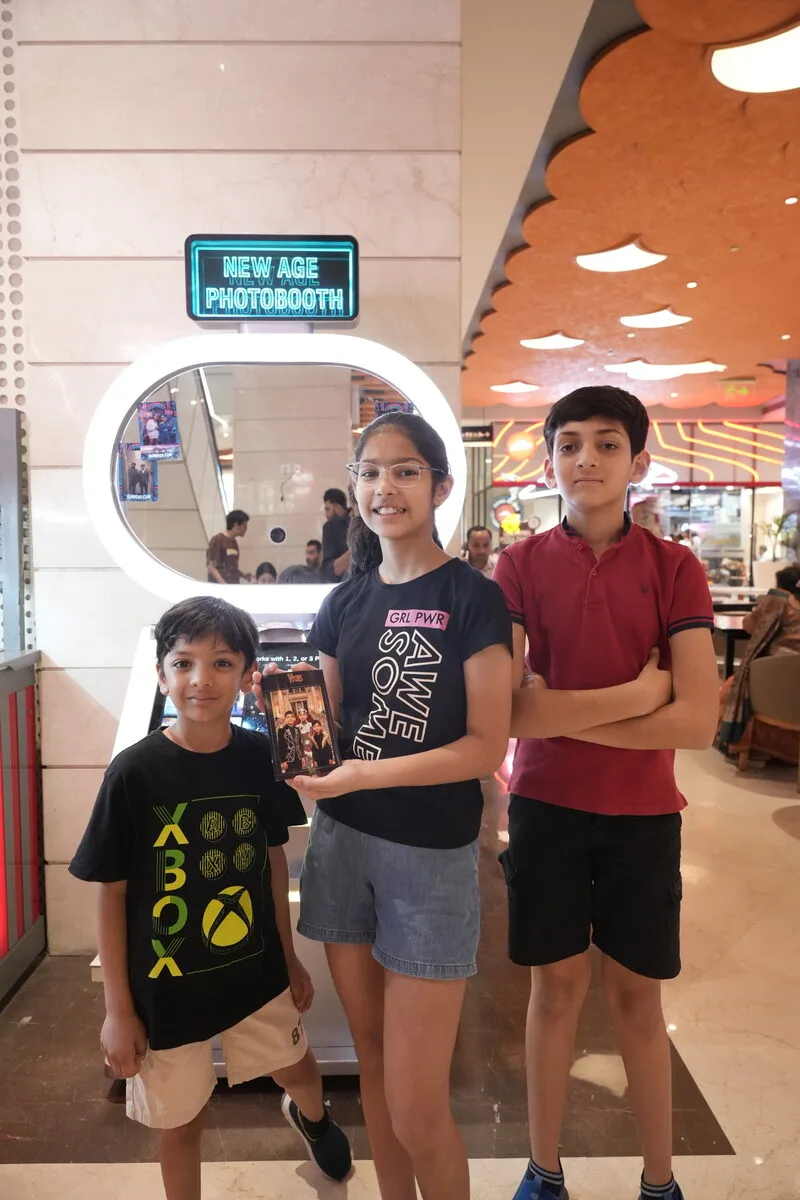
Monthly revenue: ₹50,000–₹3,00,000
Monthly net profit: ₹50,000–₹1,20,000
ROI timeline: 6–14 months
Staff: Zero — fully self-service
Weekly time commitment: 2–4 hours (restocking prints, monitoring dashboard)
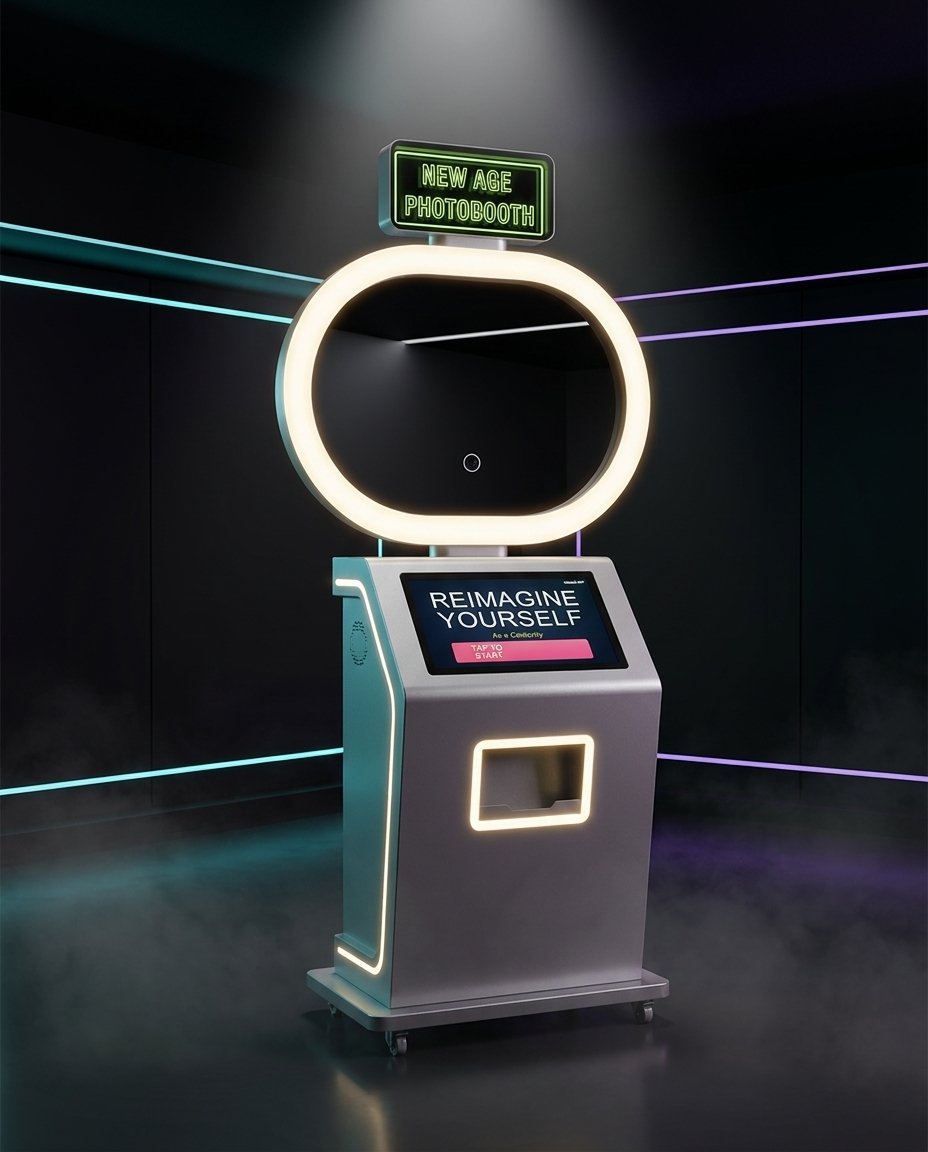
An AI photo booth is a self-service kiosk that lets customers walk up, pay via UPI, choose an AI photo effect, and receive an instant dye-sublimation print — all without staff. The machine handles everything: payment collection, photo capture, AI transformation, printing, and digital delivery via WhatsApp.
How the economics work:
Venues typically charge guests ₹149 to ₹299 per session. Estimate monthly revenue from your expected sessions per day and chosen price. Deduct mall rent, print consumables, electricity and internet to estimate net profit.
Why it wins on unit economics:
Three things set this apart from every other option on this list.
First, zero staff. A chai cart needs at least one person per shift. A printing shop needs an operator. A photo booth runs on UPI autopilot from the moment the mall opens to the moment it closes. No salaries, no ESI, no PF, no absenteeism.
Second, no perishable inventory. Chai shops deal with milk spoilage. Vending machines need weekly restocking. A photo booth's only consumable is dye-sublimation paper and ribbon, which have a long shelf life and need replacing every 1–2 weeks at moderate volumes.
Third, the revenue ceiling is high. Add a second booth in another mall for roughly the same investment, and your revenue doubles without doubling your workload. It scales horizontally — more locations, not more hours.
What to watch out for:
Location is everything. A booth near a food court or cinema exit in a busy metro mall will outperform one in a basement corridor of a tier-2 mall by 3–4x. Negotiate your mall placement carefully. Start with a 3-month trial if the mall allows it.
The technology also matters. Cheap imported booths with basic cameras and no AI effects will not generate the same per-session revenue as a purpose-built AI booth with 200+ AI generations and UPI integration. The Bamigos Pikcha AI Photo Booth is built specifically for the Indian market — integrated UPI, 200+ AI generations, and a remote management dashboard.
Best for: Working professionals wanting a genuine side business. People with ₹4–5L who want returns without quitting their job. Anyone targeting mall or venue locations.
Calculate your photo booth ROI →
2. Chai/Coffee Cart or Kiosk
Investment: ₹2–5L (cart + equipment + initial stock + permit)
Monthly revenue: ₹60,000–₹1,50,000
Monthly net profit: ₹15,000–₹50,000
ROI timeline: 10–18 months
Staff: 1–2 people minimum
Weekly time commitment: 40+ hours (you are the business, at least initially)
The chai cart is India's default "low investment business" — for good reason. The product has universal demand, the margins on beverages are strong (60–70% gross), and you can start with a cart outside an IT park for under ₹2 lakh.
The reality check:
A busy chai cart near an office complex can do ₹3,000–₹5,000 per day in sales. After milk, tea, sugar, cups, gas, staff wages, and rent/license fees, you keep ₹500–₹1,500 per day — roughly ₹15,000–₹45,000 per month.
Scaling requires hiring — and that is where most chai businesses stall. Finding reliable staff who show up on time, maintain hygiene, and do not steal inventory is the number one complaint from chai cart operators. Staff costs (₹10,000–₹15,000/person/month) eat directly into your margins.
The other issue is your time. In the first 6–12 months, you are the primary operator. You are sourcing ingredients, managing the cart, handling rush hours, and dealing with the municipal corporation. This is a full-time job, not a side business.
Best for: People who want to be hands-on operators. Those who enjoy food service and customer interaction. Works well in high-footfall office areas, college zones, and railway stations.
3. Vending Machines (3–5 Units)
Investment: ₹3–5L (3–5 machines at ₹60K–₹1.2L each)
Monthly revenue: ₹30,000–₹80,000
Monthly net profit: ₹10,000–₹30,000
ROI timeline: 12–18 months
Staff: None (restocking needed)
Weekly time commitment: 3–5 hours (restocking rounds)
Vending machines are the classic automated business. Buy 3–5 snack or beverage machines, place them in offices, gyms, hospitals, or college campuses, and earn per-sale revenue with no staff.
How the money works:
A well-placed snack vending machine does 20–40 transactions per day at ₹20–₹50 per item. After product cost (40–50% of sale price), your net per machine is ₹200–₹600 per day — roughly ₹6,000–₹18,000 per machine per month.
With 3–5 machines, total monthly net is ₹18,000–₹30,000 at realistic volumes. The margins are thin because you are selling commoditised products (chips, biscuits, cold drinks) where the wholesale price is well-known and the retail markup is modest.
The constraint:
Vending machines work on volume, not margin. You need high-footfall locations (100+ people passing daily) to justify the machine. Finding and securing these locations — offices, hospitals, metro stations — requires networking and negotiation. And unlike a photo booth where UPI collection is automatic, some vending machines still rely on cash, which creates leakage risk.
Best for: People who want truly passive income and are comfortable with thin margins. Works well as an addition to another business, not as a sole income source.
4. ATM Franchise (White-Label ATM)
Investment: ₹3–5L (machine + installation + first month)
Monthly revenue: ₹25,000–₹50,000
Monthly net profit: ₹12,000–₹25,000
ROI timeline: 14–24 months
Staff: None
Weekly time commitment: 1–2 hours (monitoring, cash loading coordination)
The white-label ATM franchise model lets you install an ATM at a location you control — a petrol pump, kirana store, or market — and earn a per-transaction fee from the bank network. Companies like Tata Indicash, Hitachi Payment Services, and BTI Payments offer franchise packages.
The economics:
You earn ₹8–₹12 per cash withdrawal transaction. A decently located ATM in a semi-urban or rural area processes 50–100 transactions per day, generating ₹400–₹1,200 daily — roughly ₹12,000–₹36,000 per month.
After rent for the ATM space (₹3,000–₹8,000), electricity (₹1,000–₹2,000), and insurance, net profit sits at ₹8,000–₹25,000 per month.
The catch:
UPI is eating cash withdrawals alive. Transaction volumes at ATMs have been declining year-on-year in metro cities. The opportunity still exists in tier-3 towns and rural areas where cash usage remains strong, but the long-term trajectory is clear: fewer people will use ATMs every year. This is a declining-market business — it works today, but plan accordingly.
Planning a Gaming Zone?
Get expert recommendations and pricing for your venue: including the Pikcha AI photo booth, a self-service photo attraction to evaluate for your venue. No obligation.
Best for: People with access to high-footfall locations in semi-urban or rural areas. A declining-market play — extract value now, but do not expect growth.
5. Digital Printing and Stationery Shop
Investment: ₹3–5L (printer, laminator, binding machine, computer, initial paper stock, shop rent)
Monthly revenue: ₹80,000–₹1,80,000
Monthly net profit: ₹25,000–₹60,000
ROI timeline: 8–14 months
Staff: 1 person (or you)
Weekly time commitment: 50+ hours (you or your employee runs the shop full-time)
A printing shop near a college, government office, or commercial area is a steady business. Services include photocopying, printing, lamination, binding, ID cards, visiting cards, and increasingly, custom merchandise (mugs, t-shirts, phone covers).
The money:
A busy shop near a university does 100–200 print jobs per day at ₹5–₹50 per job, plus higher-ticket items like thesis binding (₹200–₹500), flex banners (₹500–₹2,000), and custom printing. Monthly revenue of ₹80,000–₹1,80,000 is realistic for a well-located shop. After rent, electricity, paper/ink costs, and one employee's salary, you keep ₹25,000–₹60,000.
The trade-off:
This is a full-time-presence business. Someone needs to be at the shop every working day. It cannot run without an operator. You are also competing with every other printing shop in the area — and there are many. Differentiation is hard. Margins get squeezed when a new competitor opens across the road and undercuts your rates by ₹1 per page.
Best for: People willing to commit full-time. Works well near colleges, courts, or government offices where demand is predictable.
6. EV Charging Station (1–2 Units)
Investment: ₹3–5L (1–2 slow/moderate chargers + installation + electrical work)
Monthly revenue: ₹15,000–₹40,000
Monthly net profit: ₹8,000–₹20,000
ROI timeline: 18–30 months
Staff: None
Weekly time commitment: 1–2 hours
India's EV adoption is accelerating: about 1.9 million EVs were registered in 2024, roughly a quarter more than in 2023. The PM E-DRIVE scheme (FAME-II's successor) and state EV policies are pushing infrastructure buildout. An EV charging station can be a forward-looking investment.
The reality:
At ₹3–5L, you can install 1–2 slow or moderate chargers (7.4–22 kW). Revenue per charge session is ₹80–₹200. A charger at a mall, apartment complex, or office park might see 5–15 sessions per day initially — generating ₹12,000–₹40,000 monthly gross.
After electricity costs (your biggest expense — roughly 40–50% of revenue), equipment maintenance, and space rent, net profit is ₹8,000–₹20,000 per month.
The long view:
EV charging is a bet on the future. Current utilisation rates are low because EVs were only about 7.5% of new vehicle sales in 2024, most of them two- and three-wheelers. This means your returns will be modest for the first 2–3 years while the market develops. But if EV adoption follows the projected trajectory (30% of new sales by 2030), the same chargers will see 3–5x current utilisation.
Best for: Patient investors with a 3–5 year horizon. Works best if you own the location (no rent cost). A future-bet, not an immediate income play.
7. Mobile Car Wash / Detailing Service
Investment: ₹1.5–₹3L (pressure washer, vacuum, chemicals, supplies, vehicle for transport)
Monthly revenue: ₹60,000–₹1,20,000
Monthly net profit: ₹20,000–₹45,000
ROI timeline: 6–12 months
Staff: 2–3 workers
Weekly time commitment: 30+ hours (managing crew, bookings, quality)
A mobile car wash and detailing service requires minimal fixed infrastructure — no shop, no rent. You go to the customer. With a good pressure washer (₹15,000–₹30,000), quality chemicals, and 2–3 trained workers, you can service 8–15 cars per day.
The money:
Basic exterior wash: ₹300–₹500. Interior + exterior detailing: ₹1,000–₹2,500. Ceramic coating: ₹3,000–₹8,000. A crew doing 10 cars/day at an average of ₹600 generates ₹1,80,000/month gross. After worker salaries (₹10,000–₹12,000 each), chemicals, fuel, and equipment wear, net profit is ₹20,000–₹45,000.
The downside:
This is a labour-intensive, service-quality-dependent business. Your reputation lives and dies with the workers you hire. One bad cleaning job on an expensive car can cost you a customer and a Google review. Staff management, quality control, and scheduling are daily demands. It does not run without you watching.
Best for: People comfortable managing a field team. Works well in residential societies and office complexes with monthly subscription models.
Head-to-Head: What ₹5 Lakh Gets You
| Factor | 🏆 Winner | Why |
|---|---|---|
| Highest monthly profit | AI Photo Booth | ₹50K–₹1.2L net vs next best ₹25K–₹60K (printing) |
| Fastest ROI | AI Photo Booth / Car Wash | 6–14 / 6–12 months |
| Least time commitment | ATM / EV Charging | 1–2 hrs/week, but lowest returns |
| Most scalable | AI Photo Booth | Add booths, not staff. Revenue multiplies linearly with locations. |
| Lowest risk | Vending Machine | Smallest per-unit loss if a location fails |
| Best long-term bet | EV Charging | Market growing ~25%/yr, but patience required |
| Highest effort | Printing Shop / Chai Cart | Full-time presence, daily operations |
How to Choose
Choose the AI photo booth if you want the highest return with the least daily involvement. You have ₹4–5L, access to a mall or high-footfall venue, and you want a business that runs while you keep your day job. The numbers are the best on this list — and they scale without adding staff.
Choose the chai cart if you want to be hands-on, enjoy customer interaction, and are targeting areas near offices or colleges where foot traffic is guaranteed.
Choose vending machines if you want truly minimal involvement and are comfortable with modest returns. Best as a supplement to other income, not a primary business.
Choose the ATM franchise if you have access to a semi-urban or rural location with high foot traffic and limited UPI adoption. Accept that this is a declining market.
Choose the printing shop if you are willing to commit full-time and have a location near a college, court, or government office.
Choose EV charging if you own a suitable location, have patience for 2–3 years of modest returns, and want to bet on India's EV future.
Choose the car wash if you are good at managing people, want fast ROI, and can build a reputation in a residential or commercial area.
Explore more: Photo Booth Manufacturer India · Buying Guide · Franchise
Frequently Asked Questions
Which business under ₹5 lakh gives the highest return in India?
Based on current 2026 data, an AI photo booth in a well-located mall generates the highest net monthly profit (₹50,000–₹1,20,000) among businesses in the ₹5 lakh investment range. The combination of zero staff costs, automated UPI payments, and high per-session pricing (₹149–₹299) creates margins that service and retail businesses cannot match.
Can I run a business under ₹5 lakh while keeping my job?
Yes — but only certain businesses. An AI photo booth, vending machines, ATM franchise, and EV charging station can all run without your daily presence. A chai cart, printing shop, and car wash require your active involvement, especially in the first year.
What is the safest low-investment business in India?
The safest option depends on your definition of "safe." If you mean lowest risk of total loss, vending machines win — if one location fails, you move the machine. If you mean most predictable returns, a printing shop near a college or court has reliable demand year-round. For the best risk-adjusted return, an AI photo booth offers high margins with relatively low downside (the machine itself retains value and can be relocated).
Is photo booth a good business in India in 2026?
Yes. India's photo booth market was valued at USD 26.9 million in 2024 and is projected to reach USD 56 million by 2033, growing at 8.5% CAGR. The self-service model with UPI payments is particularly well-suited to the Indian market, where digital payments processed over 16 billion UPI transactions in December 2024 alone. See the full photo booth business opportunity analysis.
How much does an AI photo booth cost in India?
The Pikcha AI Photo Booth by Bamigos starts from ₹3.5 lakh + GST for the Lite tier. Three tiers are available — Lite (₹3.5L), Studio (₹4.5L), and Pro (₹6.5L) — all with 200+ AI generations, built-in UPI, and lifetime software updates.
What businesses can I start with ₹3 lakh in India?
With ₹3 lakh, your options include: a mobile car wash service (₹1.5–₹3L), 2–3 vending machines (₹1.8–₹3.6L), a basic chai cart (₹2–₹3L), or a single AI photo booth at the Pikcha Lite tier (₹3.5L + GST). The photo booth offers the highest return potential but requires a venue placement; the car wash requires crew management but has the fastest ROI.
One of the highest-ROI businesses under ₹5 lakh is a self-service photo booth. A commercial photo booth machine starts at ₹3.5 lakh and can gross ₹1-4 lakh a month at a busy venue, in about 6.3 sq ft — explore the Pikcha AI Photo Booth.