Quick summary: A vending machine business in India costs ₹15K–₹2L per machine and earns ₹15–30 per transaction. A Pikcha AI photo booth costs ₹3.5–6.5 lakh per unit and earns ₹149–299 per session. Both run unattended. Both are passive-income models. The unit economics, however, are 8–10× different. This post compares both honestly — capex, revenue, payback, operator effort, technology lifecycle, scalability — and explains why operators with ₹3.5L+ to deploy increasingly choose Pikcha over a vending-machine route.
Is a photo booth a better passive business than a vending machine in India?
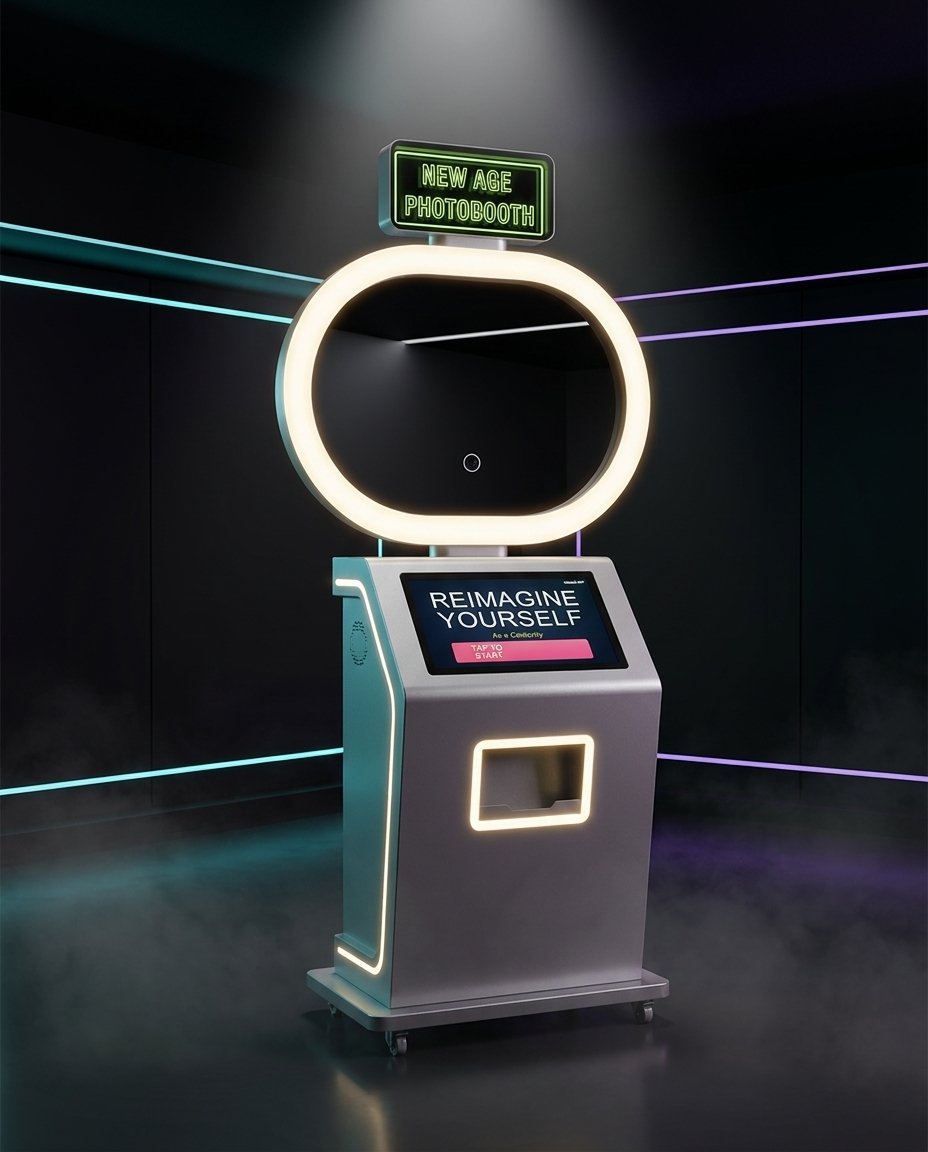
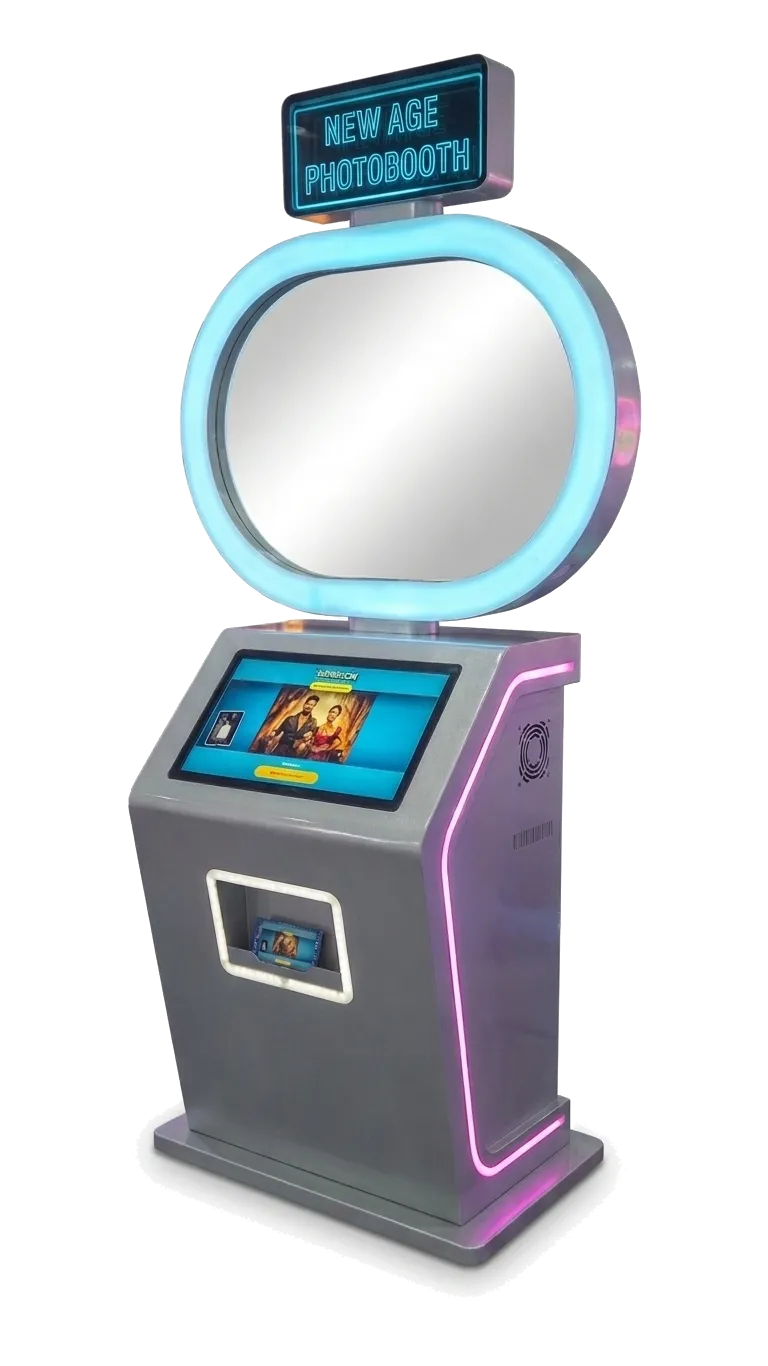
For operators with ₹3.5 lakh or more to deploy, yes — a Pikcha AI photo booth typically generates 8–10× the per-session revenue of a vending machine, with similar unattended operation and faster payback. A vending machine costs ₹15,000–₹2 lakh and earns ₹15–30 per transaction at 100–200 transactions per day in a high-footfall venue (₹50,000–₹1.2 lakh monthly). A Pikcha AI photo booth costs ₹3.5–6.5 lakh and earns ₹149–299 per session at 50–100 sessions per day (₹1.2–3.75 lakh monthly). Both run as self-service kiosks; Pikcha additionally has built-in UPI payments, real-time operator alerts (out of paper, no internet, off-hours tamper detection), a fleet management dashboard, continuously-updated AI effects, and an authentic Japanese DNP printer with company-backed warranty. Vending offers lower capex; Pikcha offers materially higher monthly cash flow per unit deployed.
The unit economics no one shows you
Most "passive income business in India" listicles — from PNB MetLife, India First Life, and the broader insurance-content factory — bucket vending machines and photo booths into the same generic "kiosk business" category. They're not the same business. The capex, revenue, and operator profile are materially different. Here are the actual numbers, side by side.
| Metric | Vending machine (typical) | Pikcha AI photo booth (Bamigos) |
|---|---|---|
| Capex per unit | ₹15,000 – ₹2 lakh | ₹3.5 lakh – ₹6.5 lakh + 18% GST |
| Per-transaction revenue | ₹15–30 (snacks, beverages) | ₹149–299 per AI photo session |
| Daily transactions (busy venue) | 50–200 | 50–100 |
| Monthly revenue (busy venue) | ₹50,000 – ₹1.2 lakh | ₹2 lakh – ₹4 lakh |
| Operating margin | 30–50% (after restocking, rent, maintenance) | 50–65% (after rent, AMC, content refresh) |
| Monthly net per unit | ₹15,000 – ₹50,000 | ₹1 lakh – ₹2.5 lakh |
| Payback timeline | 12–18 months | 6–14 months |
| Footprint required | 4–8 sq ft (small) to 25+ sq ft (large) | 6.3 sq ft |
| Restocking | Weekly (snacks, beverages perish) | Monthly (printer paper + ribbon) |
| Cash handling | Yes — coins, sometimes cards | No — UPI auto-settles to bank |
| Tamper / theft risk | Moderate (cash inside, perishables) | Low (no cash on-site, no perishables) |
| Software backend | None typical (basic mechanical units) | Full operator dashboard, fleet management, real-time alerts |
| Technology refresh need | Low — same machine for 5-10 years | Continuous AI updates push to all booths |
| Social-media content generation | Zero | 200+ AI-transformed photos per session, shared on Instagram/WhatsApp by guests — built-in marketing |
Two takeaways. First: a single Pikcha booth typically generates 4–10× the monthly net of a single vending machine, despite costing 2–10× more upfront. The capital efficiency is materially better at the unit level. Second: vending machines are mature technology with no upgrade path; Pikcha is software-managed hardware that gets better in the field. A vending machine bought today is the vending machine you have for the next decade. A Pikcha bought today receives new AI effects every quarter and a better operator dashboard every six months.
In action: how Pikcha runs unattended
The strongest argument for a photo booth as a passive business is the same as the argument for a vending machine — it runs without daily operator presence. But seeing it run is different from reading about it. The video below shows real customers using the Pikcha booth at a tier-1 Delhi NCR mall: pay via UPI, choose an AI effect, pose, get the print. No staff intervention, no manual operation, no on-site presence required.
Vending machines deliver the same self-service flow at a lower per-transaction value. Pikcha delivers it with two additional layers vending machines don't have:
Layer 1: real-time alerts to the operator's phone
The booth messages the operator's phone for any condition that needs attention:
- Out of paper or low ribbon — operator knows before customers complain
- No internet — operator can troubleshoot remotely or send someone
- Switched off during operating hours — tamper / theft detection
- Paper jam, payment failure, hardware fault — covers the long tail of operational issues
A vending machine doesn't tell you it's run out of stock — you find out when sales drop. Pikcha tells you within minutes.
Layer 2: fleet management dashboard
For operators running multiple booths, a single browser dashboard manages the whole fleet. Real-time per-booth revenue, session volume, AI effect popularity, payment health. Push new AI effects to specific booths or the whole fleet. Multi-user staff access. Vending machine fleets typically rely on manual route planning and hand-counted cash; Pikcha fleets run on software.
The 10× per-session revenue gap, explained
Why do customers pay ₹150–250 for a Pikcha photo when they pay ₹15–30 for a vending machine snack? Because they're buying different things. A vending-machine snack is a commodity transaction — fungible product, easily substituted. A Pikcha session is a unique, shareable experience — non-fungible, can't be replicated by a competitor at the next venue.
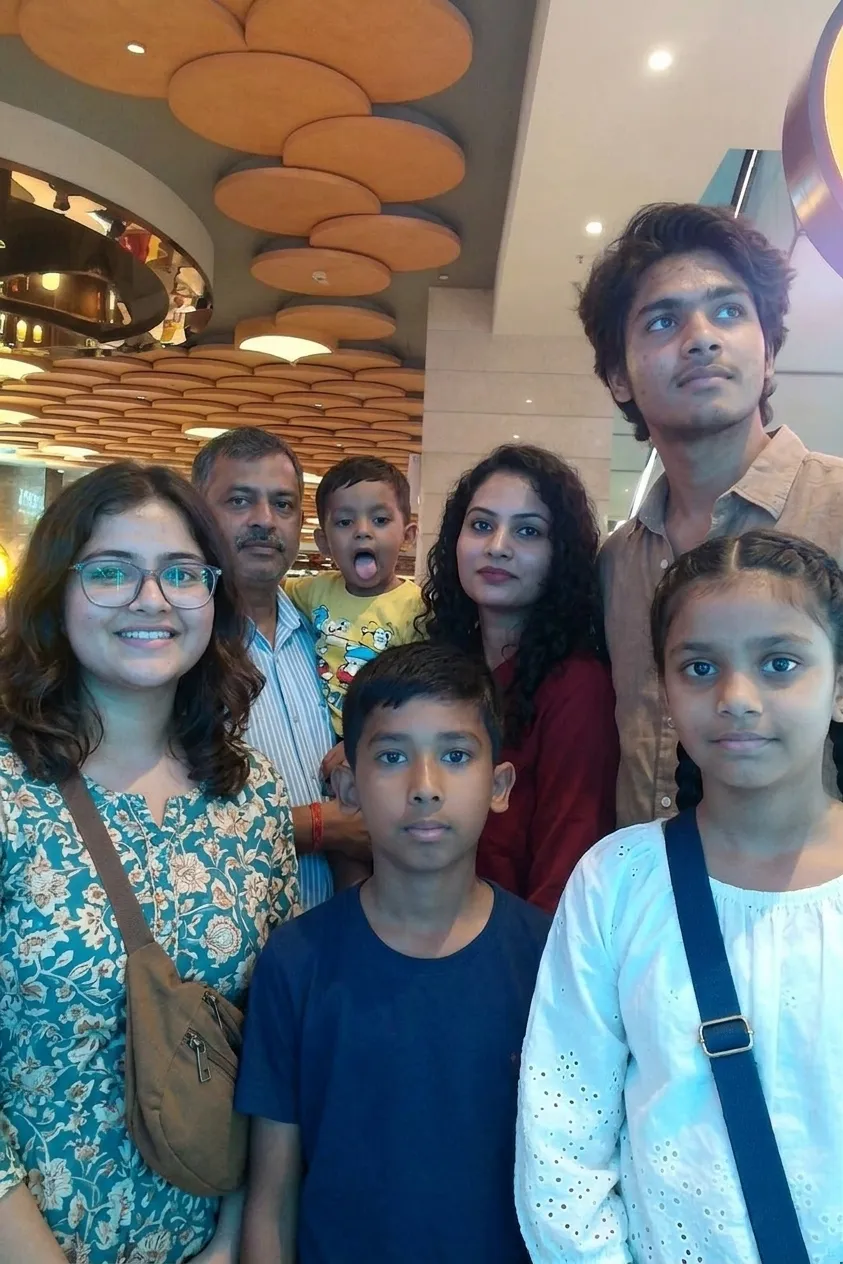
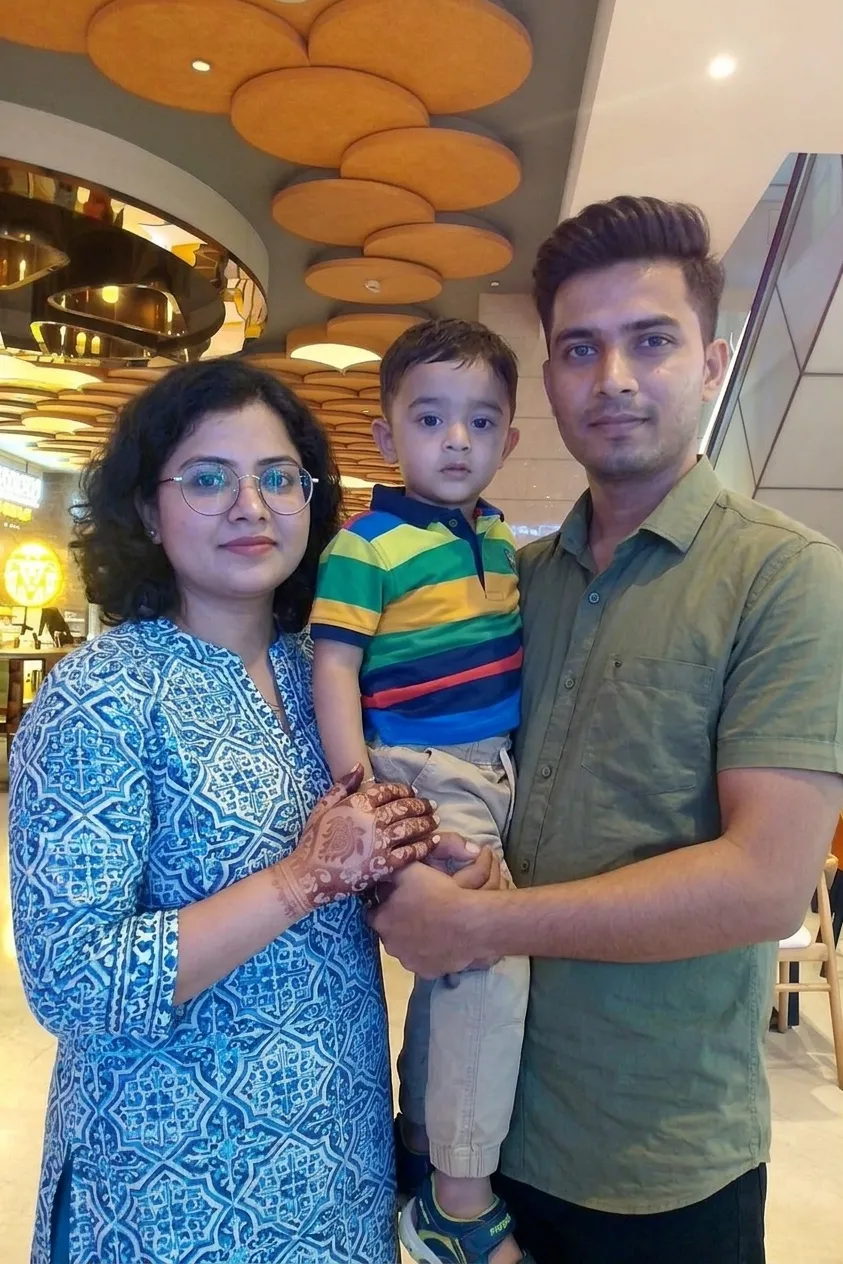
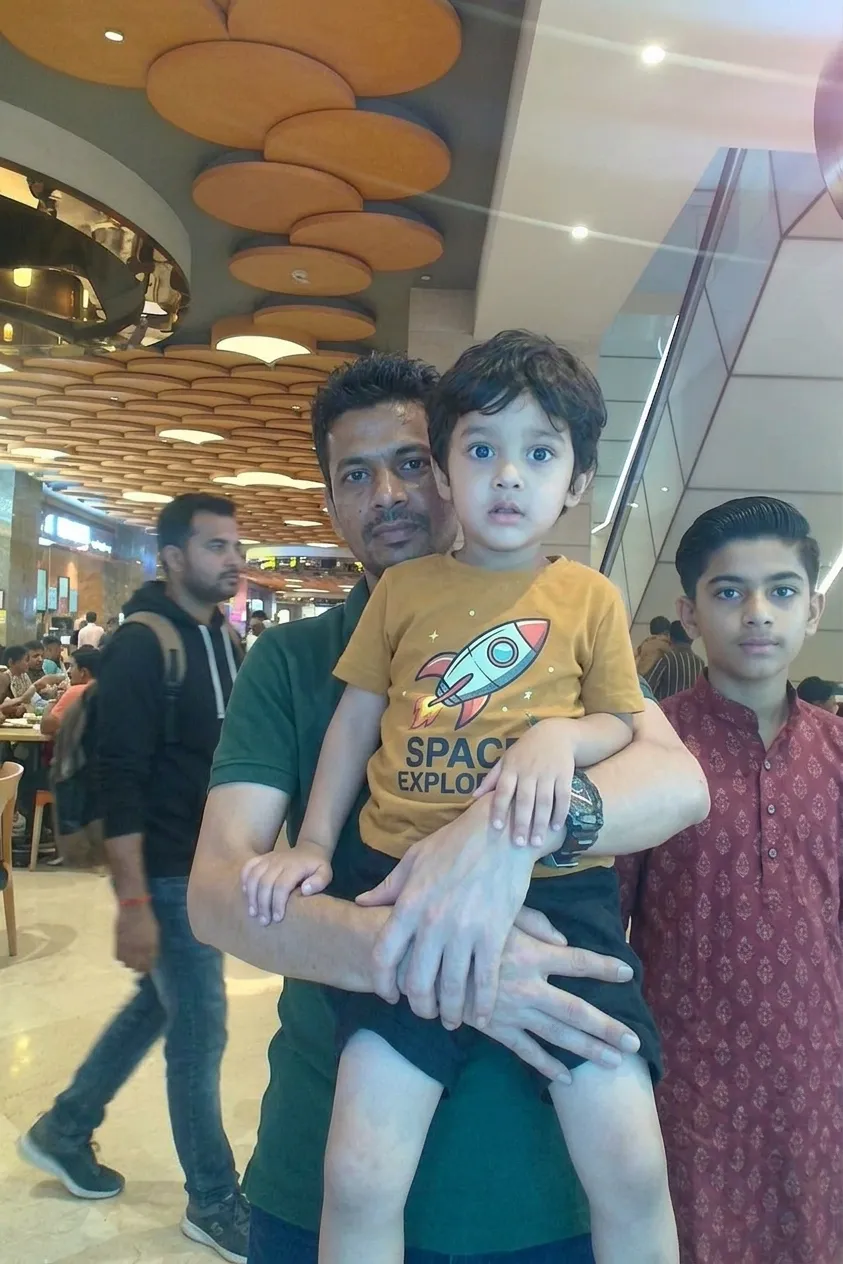
The per-session value is anchored in the AI transformation. The booth doesn't take an ordinary photo; it generates a stylised version (Royal Mughal portrait, Bollywood character, Tollywood film poster, traditional wedding lehenga overlay, K-pop-style 4-cut, pose-with-celebrity composite) that the customer wants to share on social media. Below are real before/after pairs from real customers.
Before
After — AI transformed

Before
After — AI transformed

Before
After — AI transformed

Before

After — AI transformed
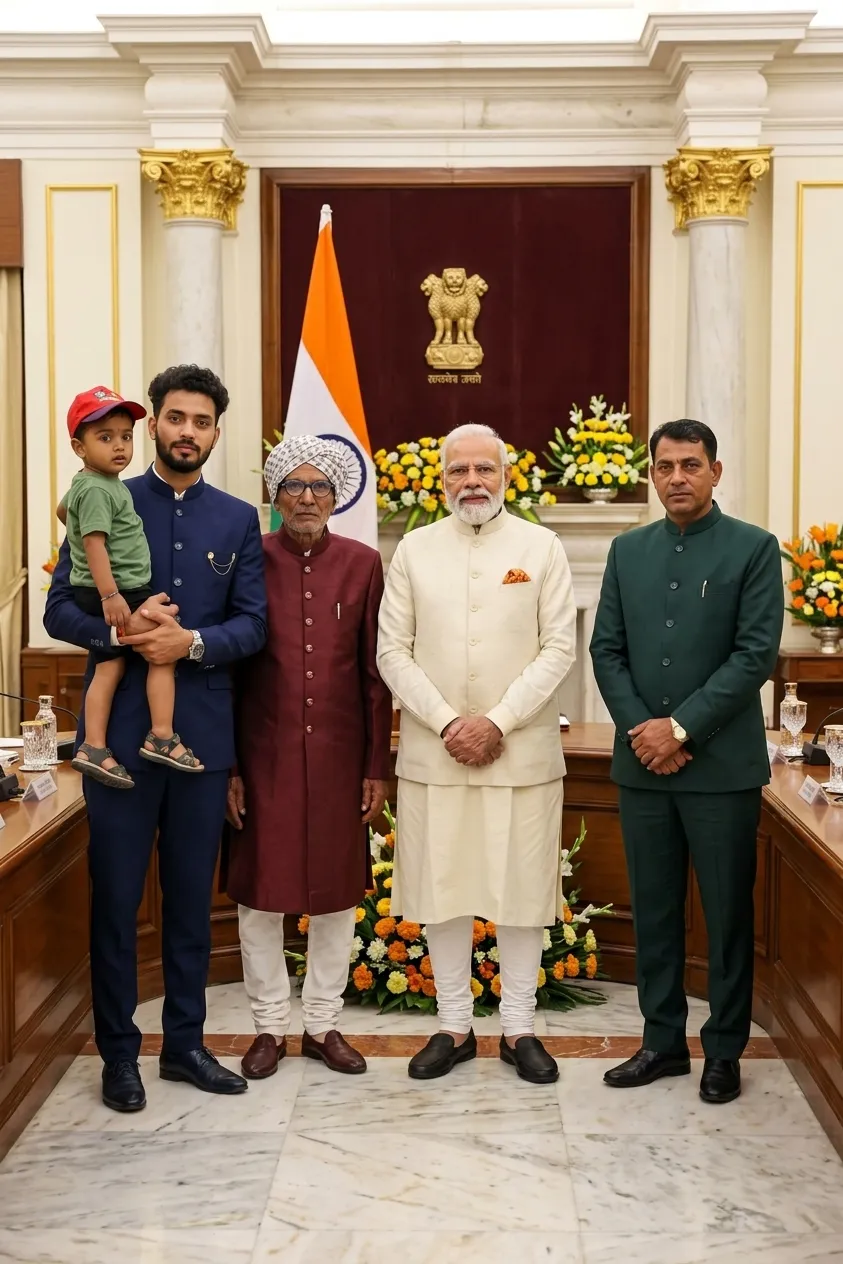
The customer pays for the social-share artefact, not the print itself. The print is the souvenir; the digital photo (delivered instantly via WhatsApp) is the marketing. Each session generates 5–10 social posts on average — Instagram stories, WhatsApp statuses, Snapchat — most tagging the venue or the event. That's free, organic discovery for the venue and recurring repeat-visit demand for the booth. A vending machine doesn't generate any social content; once the snack is consumed, the transaction is forgotten.
Where a vending machine still wins (the honest case)
Three scenarios make a vending machine the right call instead of a Pikcha booth.
1. Capital constraint below ₹3.5 lakh
Planning a Gaming Zone?
Get expert recommendations and pricing for your venue: including the Pikcha AI photo booth, a self-service photo attraction to evaluate for your venue. No obligation.
A small snack vending machine starts at ₹15,000–₹50,000. If the operator's available capital is below ₹3.5 lakh — the Pikcha entry-tier price — vending is the only viable physical-asset option for that capital tier. (For lower-cost photo-booth entry options, see smaller variant photo booth machines, but commercial-grade AI booths start at ₹3.5L.)
2. Audience is anonymous / utilitarian
If the venue serves utilitarian foot traffic — office cafeteria, hostel, hospital waiting area, factory floor break-room — customers want a snack or a drink, not a photo. Vending is the right product for utilitarian intent. Pikcha works at venues where customers are seeking entertainment, social moments, or gift purchases — malls, gaming zones, hotels, FECs, weddings, college fests, corporate events.
3. The operator wants pure cash flow, not brand association
Vending is invisible operations — the operator's identity is irrelevant. Pikcha builds operator brand association at every venue (frames carry the operator's logo, custom AI effects can carry brand campaigns). For some operators, anonymity is the goal; for those, vending is the simpler choice.
Outside these three cases, the math favours a photo booth — more revenue per session, faster payback, social-share marketing free.
Real deployment + fleet operations
The video and photo below show actual Pikcha installations in working venues — not renders, not stock photography. The mall photo is the same Delhi NCR location as the demo video; the arcade footage shows fleet integration with the venue's RFID card system, the model multi-venue operators typically run.
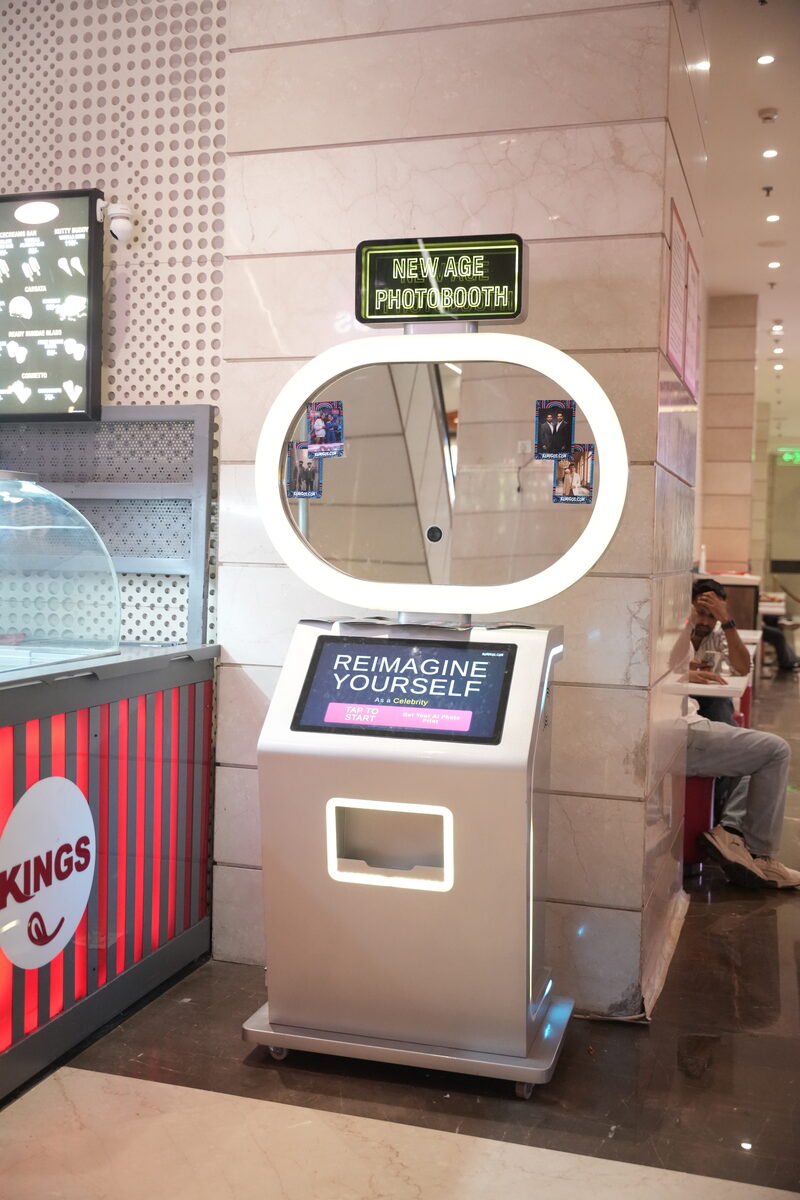
For an operator running a 5-booth fleet across malls, gaming zones, and a hotel, the operations look like this on a typical week: zero on-site presence Mon–Wed (booths run unattended, no alerts triggered), one ribbon refill on Thursday (alerted by the dashboard), one printer cleaning on Saturday (scheduled maintenance), zero cash handling all week (UPI auto-settles to the operator's bank). Compare that to a 5-machine vending fleet: 2–3 restocking visits per week per machine (~10–15 site visits weekly), cash counting and deposit visits, and machine-by-machine maintenance. Per-unit operator effort on Pikcha is materially lower.
Investment & payback math — real numbers, both sides
Vending machine business — ₹50,000 capex example
- Capex per unit: ₹50,000 (mid-tier snack vending machine)
- Initial stock: ₹15,000
- Venue revenue share: ~15-25% of gross OR fixed rental ₹3,000-8,000/month
- Daily transactions at busy venue: 100 average
- Per-transaction revenue: ₹20 average
- Monthly gross revenue: ₹60,000
- Monthly costs (rent + cost of goods + restocking trips): ~₹40,000
- Monthly net: ~₹20,000
- Payback on capex + initial stock (₹65,000): ~3-4 months — fast, but the cash flow ceiling is also low
Pikcha photo booth — ₹4.13 lakh capex example (Lite tier)
- Capex per unit: ₹4,13,000 (Pikcha Lite ₹3.5L + 18% GST)
- Initial setup costs: included (delivery, install, training)
- Venue revenue share: ~15-25% of gross OR fixed rental ₹15,000-40,000/month
- Daily sessions at busy venue: 65 average
- Per-session revenue: ₹180 average
- Monthly gross revenue: ₹3,51,000
- Monthly costs: request venue-specific figures for rent, AMC, ribbon/paper and content refresh.
- Monthly net: ~₹2,00,000
- Payback on ₹4.13L capex: ~2.5-3 months at this venue density — at average venue density (40-50 sessions/day) payback stretches to 6-10 months
What ₹4.13L gets you on each side
The ₹4.13 lakh that buys one Pikcha booth could buy 8-10 vending machines instead. So why not deploy 10 vending machines? Three reasons.
- Operations multiply: 10 vending machines = 10 sites to restock, 10 sets of contract negotiations, 10 cash handling chains. 1 Pikcha = 1 site, software-managed, dashboard-monitored.
- Total monthly net comparable: 10 vending machines × ₹20K = ₹2L. 1 Pikcha = ₹2L. Same monthly net at 1/10th the operations overhead.
- Pikcha scales the same way: at the second booth, the operator's per-unit operations effort goes down (dashboard, fleet alerts), not up. Vending operations effort scales linearly with units.
The real choice isn't "vending vs Pikcha" — it's "scale-by-units vs scale-by-software". Vending is the linear path. Pikcha is the operations-leveraged path.
When operators switch from vending to photo booths
The pattern Bamigos sees in operator conversations: existing vending-machine operators with 10-25 active machines hit an operations ceiling. Adding the 26th vending machine doesn't materially change their monthly net (each unit adds ₹15-50K) but adds another 1-2 hours per week of restocking and cash handling. They start looking for higher-revenue-per-unit asset classes that don't multiply their operations workload.
Photo booths fit the brief. Same self-service operating model. Higher revenue per unit. Software-backed fleet management. Lower per-unit operations cost as the fleet grows. We see this transition repeatedly — vending operators add 1-3 Pikcha booths to their portfolio, find the operations easier and the cash flow stronger, then progressively reduce vending machine count.
The reverse — Pikcha operators adding vending machines — happens almost never. The unit economics make it a downgrade.
Frequently asked questions
Is a photo booth more profitable than a vending machine in India?Per unit, yes typically. A vending machine generates ₹15K-50K monthly net; a Pikcha photo booth generates ₹1L-2.5L monthly net. The capex is materially different (₹15K-2L vending vs ₹3.5L-6.5L Pikcha), but per-unit margin and monthly cash flow favour photo booths at busy venues.
How much does it cost to start a vending machine business in India?₹15,000-₹2,00,000 per machine depending on type. Snack vending starts ₹15-50K, beverage vending ₹40-90K, ice-cream/frozen vending ₹80K-1.5L, full-meal vending ₹1.5-2L. Add ₹10-30K initial stock per machine. Operators typically start with 3-5 machines for a viable monthly cash flow.
How much does it cost to start a photo booth business in India?₹3.5L-6.5L base price for a Pikcha AI photo booth (Lite / Studio / Pro tiers) + 18% GST + venue rent or revenue share. Final landed price ₹4.13L-7.67L per unit. Most operators start with 1-2 booths and scale to 3-10 as the model proves.
Can a photo booth run unattended like a vending machine?Yes. Pikcha is fully self-service: UPI QR payment, touchscreen interface, AI photo generation, instant dye-sublimation print, WhatsApp digital delivery. The booth alerts the operator's phone for issues (out of paper, no internet, switched off during hours, paper jams). No daily on-site presence required.
What's the payback timeline on a Pikcha photo booth?Most operators recover their investment within 6-14 months at busy venues. At a high-footfall mall doing 65+ sessions/day at ₹150+ per session, payback can be 2.5-3 months. At lower-footfall venues doing 30 sessions/day, payback stretches to 12-15 months.
How does Pikcha compare to a vending machine on operator effort?Lower per-unit effort once you scale beyond 1-2 machines. Pikcha runs unattended with phone alerts; vending machines need 1-3 weekly restocking visits per unit + cash counting. A 5-booth Pikcha fleet typically requires 2-4 hours per week of operator attention. A 5-machine vending fleet typically requires 8-15 hours per week.
Are vending machine and photo booth businesses both passive income?Both are "passive" in the sense of self-service operation, but neither is fully hands-off. Vending requires weekly restocking, cash handling, and route management. Pikcha requires monthly ribbon/paper refills + occasional troubleshooting via the alert system. Pikcha is closer to truly passive because the software backend handles most operational decisions.
Can I run a Pikcha photo booth as a side business while keeping a job?Yes. Operators with full-time jobs typically run 1-3 Pikcha booths as side income. The fleet management dashboard + phone alerts let them attend to issues from anywhere. Total weekly operator time on a 1-3 booth fleet is typically 1-3 hours.
Where do I deploy a Pikcha photo booth for best ROI?High-footfall venues with entertainment intent: tier-1 mall food courts, gaming zones, FECs, hotel lobbies, college campuses with high event volume, wedding halls (event-rental model). Avoid low-footfall or utilitarian venues (offices, hospitals) — those are vending territory.
What if I want both — vending machines and photo booths?That's a common portfolio for established operators. Vending fills utilitarian venues (offices, hostels, factories), Pikcha fills entertainment venues (malls, gaming zones, hotels). They don't compete in the same locations; they complement each other in a diversified asset portfolio.
Can I get a franchise for either vending machines or Pikcha photo booths?Vending franchises exist with multiple Indian operators. Pikcha is sold direct from manufacturer (Bamigos) — there's no franchise fee, just the unit purchase, with optional multi-unit volume pricing for operators ordering 3+ booths. For the photo-booth franchise/multi-unit model, see Photo Booth Franchise India.
Authoritative sources and further reading
- Ministry of MSME — Indian small-business policy and registration framework for both vending-machine and photo-booth operators.
- Startup India — government portal for business registration, recognition, and support schemes.
- GST Council — input tax credit framework relevant to capex purchases (both vending and photo-booth qualify for input credit on GST-registered domestic invoices).
Next steps
If you're evaluating a passive-income physical asset for India:
- Honestly assess your available capital. Below ₹3.5 lakh, vending is your option. Above it, run the math on Pikcha.
- Identify your target venue type. Utilitarian foot traffic = vending. Entertainment intent = Pikcha.
- Compute per-unit monthly net at your venue's expected footfall. Multiply by realistic units you can deploy in year 1.
- Compare operations workload. If your time is constrained (full-time job, multiple businesses), Pikcha's software backend is the unlock.
- Get direct pricing and a venue-specific quote: contact Bamigos or message us on WhatsApp. We'll send a per-tier breakdown and the unit-economics model for your specific venue.
For more depth on the Pikcha product:
- Photo Booth Machines India — full product overview
- Pikcha Pricing — three tiers from ₹3.5L
- Photo Booth Manufacturer India — Built in India by Bamigos
- Photo Booth Franchise India — multi-unit operator path
- Pikcha vs Alibaba imported photo booth — companion comparison
- How to start a photo booth business in India