Every brand manager and agency planner asks the same question: "What does a brand activation actually cost in India?" The answer depends on scale — and most guides online are either vague or US-focused. This is the India-specific cost guide, with real ranges across 4 budget tiers, from ₹50K guerrilla activations to ₹50L+ national rollouts.
₹50,000 to ₹50+ lakhs depending on scale. A single-location mall activation with one interactive installation runs ₹2–10L. A multi-city campaign with custom-built experiences runs ₹10–50L+. The biggest cost drivers are: custom hardware build (30–40%), venue rental (20–30%), staffing (10–15%), and logistics (10–15%).
If you're planning an activation for 2026, you already know the landscape has shifted. Audiences scroll past banner ads. Influencer fatigue is real. And after the pandemic-era reset, Indian consumers crave in-person experiences more than ever.
Experiential marketing — live, interactive, physical-digital activations — now commands an outsized share of brand budgets across FMCG, auto, fintech, and D2C. The FICCI-EY M&E Report 2025 pegged India's experiential and activation market at ₹8,500 crore and growing at 18% CAGR. EY's experiential marketing study found that 78% of Indian CMOs planned to increase activation budgets in 2025–26.
But what does it actually cost? Below, we break it down with real India numbers — no vague "it depends" hedging.
The 4 Budget Tiers of Brand Activation in India
Brand activations in India fall into four broad budget tiers. Where you land depends on your goal, audience size, number of locations, and the complexity of the experience you want to build.
Tier 1: Guerrilla / Micro
What you can do
- Pop-up photo booth rental at a local event
- Social media contest with a physical element
- QR code treasure hunt across a neighbourhood or campus
- Branded standee with AR trigger
Best for
- Local store openings
- College campus activations
- Small brand launches and D2C pop-ups
Benchmarks
Reach: 500–2,000 engagements CPE: ₹25–100Tier 2: Single-Location / Mid-Scale
What you can do
- Custom-branded claw machine with prize fulfilment
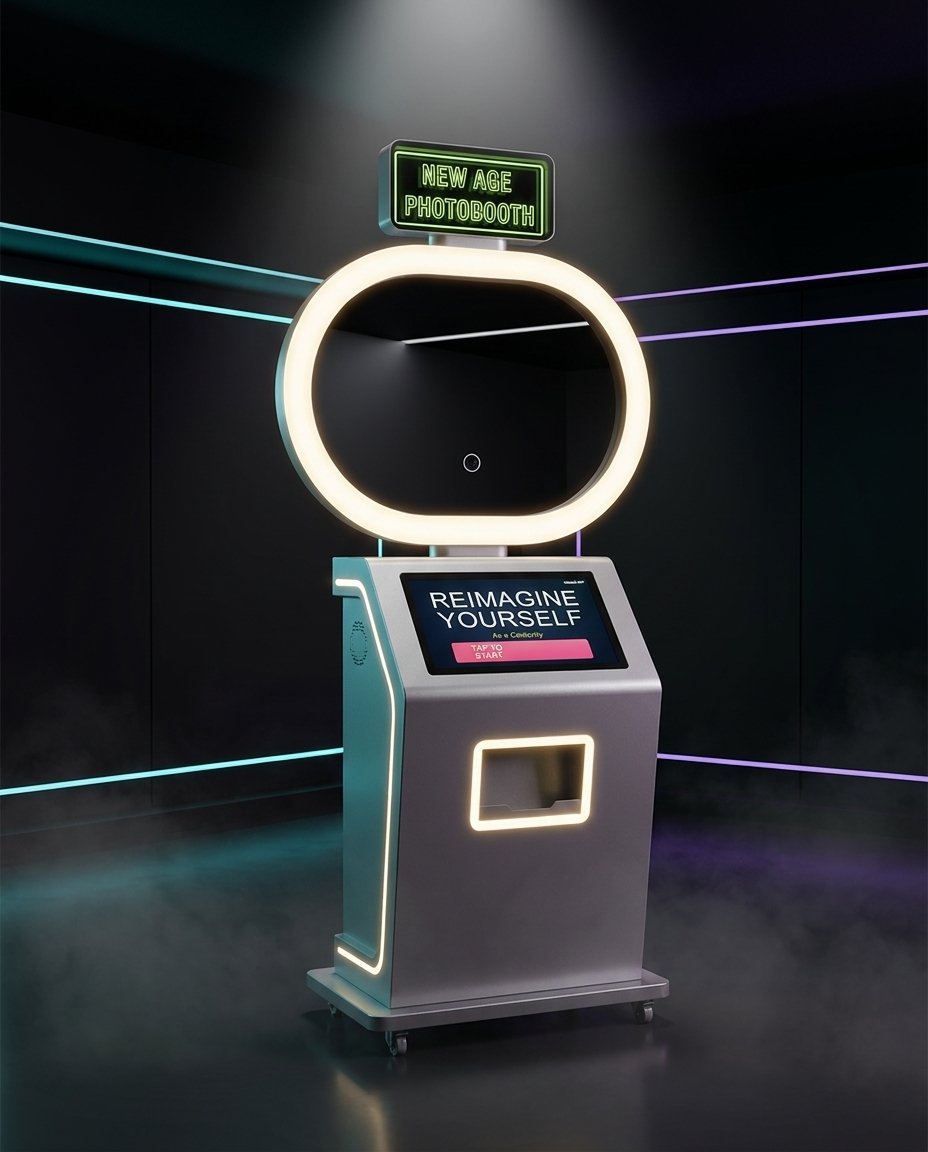
- AI photo booth (buy or rent) — branded overlays, instant social sharing
- Interactive projection game (floor or wall)
- Gamified kiosk with lead capture and data collection
- VR experience pod with branded content
Best for
- Mall activations and atriums
- Trade show booths
- Flagship store launches
- Corporate events and product unveils
Benchmarks
Reach: 2,000–15,000 engagements CPE: ₹15–50Tier 3: Multi-Location / Flagship
What you can do
- 3–5 custom installations at a single flagship event
- Multi-city mall tour with 2–3 machines rotating across venues
- Large-scale projection mapping on a building facade
- Immersive walkthrough experience with multiple interactive zones
Best for
- National product launches
- Diwali/festive campaigns
- Auto Expo and major trade shows
- Multi-city brand campaigns
Benchmarks
Reach: 15,000–1,00,000 engagements CPE: ₹10–30Tier 4: National / Mega
What you can do
- 10+ city activation tour with dedicated logistics fleet
- Stadium-scale immersive experience
- National mall chain partnership (large retail groups)
- Large-format projection mapping on landmarks
Best for
- FMCG national launches (HUL, ITC, Marico)
- Telecom campaigns (Jio, Airtel)
- IPL/sports sponsorship activations
- Government tourism campaigns (Incredible India)
Benchmarks
Reach: 1,00,000+ engagements CPE: ₹5–15Notice the pattern: as budget scales up, cost per engagement drops sharply. A ₹50L campaign isn't just 25x bigger than a ₹2L one — it's also 5–10x more efficient per interaction. That's the economics of experiential at scale: setup and logistics costs are relatively fixed, while engagement scales with footfall.
Cost Breakdown: Where Your Activation Budget Actually Goes
Regardless of your total budget, the proportional split stays remarkably consistent. Here's where the money goes in a typical Indian brand activation:
| Cost Component | % of Budget | What It Covers |
|---|---|---|
| Custom Hardware / Installation | 30–40% | Machines, screens, projectors, custom fabrication, electronics, software development |
| Venue Rental / Mall Fees | 20–30% | Mall atrium rental ₹50K–3L/week, exhibition booth ₹1–5L/event, outdoor permit fees |
| Creative & Content | 10–15% | UI/UX design, game development, AR/VR content, branded digital assets, print collateral |
| Staffing | 10–15% | Brand ambassadors (₹1,500–3,000/day), on-site technicians, event managers, security |
| Logistics | 10–15% | Delivery, crating, setup, teardown, inter-city transport, warehousing between deployments |
| Miscellaneous | 5–10% | Permits, insurance, power/internet provisioning, contingency buffer |
Planning a Gaming Zone?
Get expert recommendations and pricing for your venue: including the Pikcha AI photo booth, a self-service photo attraction to evaluate for your venue. No obligation.
The single largest line item is almost always the hardware and installation itself. This is where going direct — buying from the manufacturer rather than through an agency that marks up 40–60% — creates the biggest savings. An agency might quote ₹6L for a branded claw machine that costs ₹2.5L direct from the maker. That ₹3.5L difference can fund your entire staffing and logistics budget.
Venue costs are the second major variable. A tier-1 mall atrium in Mumbai or Delhi can run ₹2–3L per week, while a tier-2 city mall might charge ₹50K–1L for the same space. For brands watching their budget, tier-2 city malls often deliver better ROI: lower rental costs, less competition for attention, and surprisingly strong footfall.
Staffing costs in India remain relatively affordable compared to Western markets, but they add up fast for multi-day or multi-location campaigns. Budget ₹1,500–3,000 per day per brand ambassador, plus ₹2,000–5,000 per day for a qualified on-site technician who can troubleshoot equipment issues.
Experiential Marketing ROI: How to Measure It
The perennial challenge with experiential marketing is measurement. Unlike digital ads with their neat dashboards, physical activations require deliberate tracking infrastructure. Here are the four metrics that matter most:
- Cost Per Engagement (CPE): Total activation cost ÷ number of people who interacted with your installation. An "interaction" means they played the game, used the photo booth, or engaged with the experience — not just walked past.
- Cost Per Lead (CPL): Total cost ÷ leads captured. This requires a data-capture mechanism — QR code scan, phone number entry, app download, or email submission built into the experience.
- Cost Per Social Share: Total cost ÷ social media posts generated by participants. AI photo booths excel here because every user creates and shares branded content organically.
- Cost Per App Install (CPI): Total cost ÷ app downloads generated. Relevant for gamified campaigns that reward app installation.
How does experiential stack up against other channels? Here's the honest comparison:
| Channel | Cost Metric | Typical Range | Engagement Depth |
|---|---|---|---|
| Experiential / Activation | CPE | ₹10–50 | 3–5 minutes |
| Digital Ads (Google/Meta) | CPC | ₹5–30 | 1–3 seconds |
| Influencer Marketing | CPE | ₹20–100 | 5–15 seconds |
| Print / OOH | CPM | ₹50–200 | 1–3 seconds |
Experiential costs more per impression than a digital ad, but delivers 10–50x higher engagement depth. A person who spends 3–5 minutes interacting with your brand — playing a game, taking AI-powered photos, competing on a leaderboard — has a fundamentally different relationship with your brand than someone who scrolled past a carousel ad in 1.5 seconds.
According to Statista's India advertising market data, brand recall from experiential activations is 3–4x higher than digital display ads at 30-day follow-up. The cost per remembered brand interaction makes experiential surprisingly competitive.
The key is to build measurement into the experience from day one. Every Bamigos installation can be configured with QR-gated play (scan to start = lead captured), social sharing prompts (share to unlock bonus round), and real-time analytics dashboards. You know exactly how many people engaged, for how long, and what data they shared.
How to Get the Most From Your Budget
Whether you're at ₹2L or ₹20L, these five principles will stretch your activation budget further:
- Define the photo booth brief. For rentals across India, specify the city, venue, dates, guest-facing hours, photo format and branding scope. Compare quotes with the same print allowance, staffing, transport and taxes so an apparently cheaper offer does not omit work your campaign needs.
- Go direct to the maker (skip the agency markup on hardware). Event agencies add 40–60% markup on hardware they source from manufacturers like us. For a ₹5L activation, that's ₹1.5–2L that goes to the middleman, not the experience. Come to us directly for the machines, and use the savings to fund better venue placement or more days on-ground. We'll even help you brief your agency on technical specs so integration is smooth.
- Combine digital + physical (QR-gated play captures data). The activations that deliver the strongest ROI are hybrid ones. Gate the physical experience behind a QR code scan or app download. Now every person who plays your claw machine or uses your photo booth has given you a phone number or email. You've turned a brand awareness exercise into a lead generation engine — and you can retarget those leads digitally for weeks after the activation ends.
- Reuse custom builds across campaigns. A branded claw machine at a Diwali mall activation today can be re-skinned for a Valentine's Day campaign next quarter, then deployed at a trade show in March. Our machines are designed for exactly this: swap the graphics, update the software, and you have a "new" experience at a fraction of the cost. A well-maintained machine can handle 15–20 deployments over 2–3 years.
- Start with one hero installation, not 5 mediocre ones. A single spectacular experience that creates a viral moment is worth more than five forgettable touchpoints. If your budget is ₹5L, don't spread it across five ₹1L elements. Put ₹3L into one jaw-dropping interactive installation and ₹2L into amplification — staffing, social media, and venue placement. The crowd will form around the hero, and your social share rate will tell the story.
What Bamigos Builds in Each Budget Tier
Our machines are built in India by Bamigos, with firmware, software and cabinet design developed for each product. Founded in 2022 by Virender Khanna, Bamigos.com builds interactive entertainment and activation hardware. Here's what falls in each price range:
- Branded claw machine (custom graphics + prize logic)
- Gamified kiosk with touchscreen + lead capture
- Photo booth rental packages (daily/weekly)
- Custom AI photo booth (Pikcha) with branded overlays
- Interactive projection floor or wall game
- VR experience pod with branded content
- Multi-installation setup (2–3 machines, unified branding)
- Custom game development with leaderboard + prizes
- AI try-on / virtual makeover screen
- Multi-city deployment packages with logistics
- Turnkey activation solutions (hardware + staffing + setup)
- Custom large-format interactive installations
Every machine we build is designed for the Indian operating environment: voltage fluctuations, heat, dust, and the kind of enthusiastic usage that a mall in Lajpat Nagar or a trade show in Delhi demands. Our machines are built in India by Bamigos. No imports, no Chinese UI, no dependency on overseas support.
Planning a Brand Activation?
Share your budget and brief — we'll recommend the right installations and quote direct. No agency markup, no vague "custom quote" runaround. Real numbers within 48 hours.