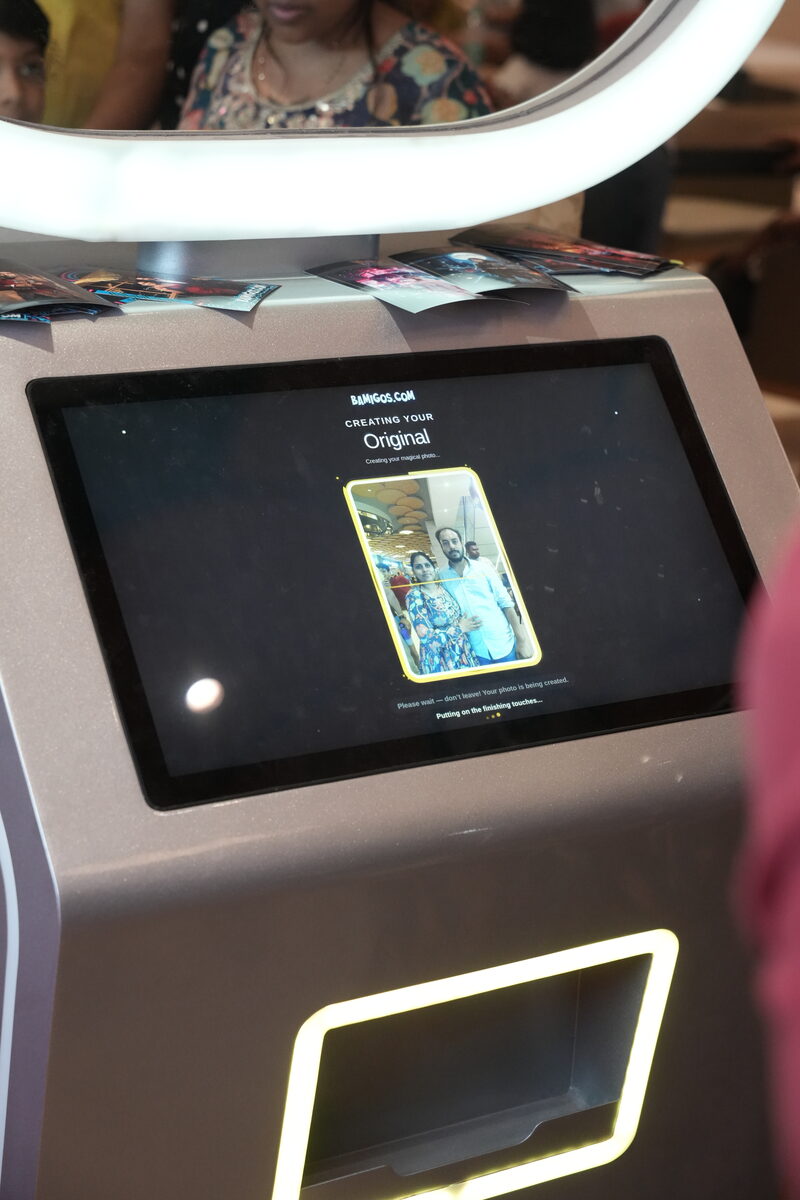
Quick answer: An automatic photo booth machine is a self-service kiosk that takes payment (UPI/coin), lets the customer pick a photo effect, captures the shot, and prints it — all without an operator. Modern AI-powered automatic booths like the Pikcha start at ₹3.5 Lakhs and run 200+ effects, built-in UPI, and instant dye-sublimation prints in a 6.3 sq ft cabinet.
When people search for "automatic photo booth machine," they're looking for one thing: a booth that runs itself. No staff behind it pressing buttons, no attendant handing out prints, no one explaining how it works. Customer walks up, pays, gets a photo. Done.
That's exactly what the current generation of AI photo booths does. But "automatic" means different things depending on the machine. Let's break down what makes a photo booth truly automatic vs. what's just marketing.
What Makes a Photo Booth "Automatic"?
A truly automatic photo booth handles every step of the customer journey without human intervention:
| Step | Manual Booth | Automatic Booth |
|---|---|---|
| Payment collection | Staff collects cash/card | Built-in UPI QR / coin acceptor |
| Customer guidance | Operator explains process | Touchscreen UI with visual prompts |
| Effect selection | Operator selects or limited choice | Customer browses 200+ effects |
| Photo capture | Operator triggers camera | Auto-capture with countdown timer |
| AI processing | Not available | 5-10 second on-device processing |
| Printing | Operator manages printer | Auto-print, customer collects from slot |
| Digital delivery | Email/SMS by operator | Instant WhatsApp delivery |
| Monitoring | Operator watches machine | Remote dashboard with alerts |
The critical features that make a booth fully automatic: self-service payment, on-screen customer flow, auto-print with no jams, and remote monitoring so you know when paper runs low or the machine goes offline.
How an Automatic AI Photo Booth Actually Works
Here's the full customer flow, step by step, on a Pikcha AI Photo Booth:
- Attract. The booth's LED light ring and touchscreen animation draw attention. In a mall or gaming zone, kids and teenagers spot it from 15-20 feet away. The screen shows sample AI-transformed photos cycling through effects.
- Pay. Customer taps the screen, selects a package (single photo, strip of 4, etc.), and scans the UPI QR with their phone. Google Pay, PhonePe, Paytm — all work. Payment confirms on screen in 2-3 seconds. Coin acceptor is available too for venues that prefer it.
- Choose an effect. 200+ AI effects displayed in a scrollable grid: Bollywood, Royal Indian, Korean K-Pop, Celebrity pose, Cultural, Superhero, Anime, Vintage, and more. Customer picks one and sees a live preview on screen.
- Pose. The screen shows a 3-2-1 countdown. Camera captures. AI processes the photo in 5-10 seconds — the screen shows a transformation animation while it works.
- Print. A lab-quality 4×6 dye-sublimation print drops into the collection tray. Under 30 seconds from capture to print.
- Share. A QR code appears on screen for instant WhatsApp delivery of the digital version. Customer scans, gets the photo on their phone, shares on Instagram.
Total time per customer: 60-90 seconds. No explanation needed. No staff required. The machine handles queues, payment reconciliation, and print inventory tracking automatically.
Automatic Photo Booth Machine Price in India (2026)
Automatic photo booth pricing depends on the level of AI capability, build quality, and branding options:
| Tier | Price (ex-GST) | What You Get |
|---|---|---|
| Pikcha Lite | ₹3.5 Lakhs | Black finish, standard camera, 200+ AI effects, UPI, instant prints, fleet dashboard, 1-yr warranty |
| Pikcha Studio | ₹4.5 Lakhs | Chrome finish, 4K camera, industrial touchscreen, co-branded frames, everything in Lite |
| Pikcha Pro | ₹6.5 Lakhs | Full custom wrap, branded UI, dedicated account manager, white-label everything |
All prices are ex-GST (add 18%). Includes the complete machine, software license, lifetime AI effect updates, and 1-year warranty. Delivery and installation are extra — plug-and-play self-install takes 2 hours; on-site engineer from Delhi available at ₹2,500/day + flights.
For the detailed price breakdown with AMC costs and warranty options, see the full Pikcha pricing page.
Starting a Photo Booth Business?
Get AI photo booth pricing and ROI details from our team. No obligation.
The Operator Dashboard: How You Monitor Without Being There
Running an "automatic" machine doesn't mean running blind. Every Pikcha booth connects to a fleet management dashboard that shows:
- Real-time revenue: Every UPI transaction logged with timestamp, amount, and customer phone (for WhatsApp delivery).
- Print inventory: Paper and ribbon levels. You get alerts at 20% remaining — typically 2-3 weeks of runway.
- Machine health: Online/offline status, printer temperature, camera status. If anything goes wrong, you know before customers complain.
- Usage analytics: Most popular effects, peak hours, session counts by day. Helps you optimize pricing and effect library.
- Off-hours alerts: Get notified if the machine runs outside operating hours (someone left it on) or if it's offline during business hours.
Operators with multiple booths manage everything from one dashboard. Some run 4-5 booths across different cities and visit each one once a month for a paper roll change.
Automatic Photo Booth vs. Operated Photo Booth
Some event companies still use operated booths — a staffer runs the camera, helps with poses, manages prints. That model works for premium weddings that need an attended experience. Pikcha rentals start from ₹55,000 per day. Travel and logistics are quoted per city.
But for permanent installations (malls, gaming zones, hotels), automatic is the only model that makes economic sense:
- Staff cost: An operator costs ₹15-25K/month. That eats 10-20% of your revenue from a single booth. With an automatic machine, that margin is yours.
- Operating hours: An automatic booth runs 10-14 hours/day, every day. No sick leaves, no late arrivals, no lunch breaks.
- Consistency: The machine gives every customer the same experience. No mood swings, no rushing through the process during peak hours.
- Scale: You can't hire 5 operators for 5 booths and manage them remotely. You can deploy 5 automatic booths and monitor them from your phone.
Where Automatic Photo Booths Work Best
Self-service machines thrive in locations with high footfall and impulse-purchase behaviour:
- Mall atriums and corridors — highest revenue per booth. Families and teenagers make up 70%+ of users.
- Gaming zones and arcades — visitors are already in "coin-in-machine" mode. Photo booths fit the environment perfectly.
- Hotel lobbies — wedding guests, conference attendees, tourists. Lower volume but higher willingness to pay.
- Airports and railway stations — travellers want instant souvenirs. Works especially well in tourist-heavy terminals.
- College campuses and events — K-Pop and celebrity effects drive massive demand with the 18-25 demographic.
What to Check Before Buying an Automatic Photo Booth
If you're evaluating automatic photo booths, here's what separates a machine that runs itself from one that just claims to:
- UPI integration — built-in or retrofitted? If UPI was added as an afterthought (external QR stand, separate payment terminal), it's a manual machine with a UPI sticker. Built-in means the payment flow is integrated into the touchscreen software.
- Printer reliability. Dye-sublimation printers (Japanese DNP printers, for example) jam less and produce waterproof prints. Inkjet printers are cheaper but jam frequently and produce smudge-prone prints. An automatic machine can't have a printer that needs manual intervention every 20 prints.
- Remote monitoring. If the manufacturer doesn't offer a dashboard showing machine status and revenue, you'll need to physically visit the booth to know if it's working. That defeats the point of "automatic."
- AI quality on Indian faces. Imported AI models trained on East Asian or Western faces often distort Indian skin tones and facial features. Ask for a live demo with Indian faces before buying.
- Warranty and spare parts. An automatic machine needs fast spare parts. If the manufacturer is in China and you're in India, a printer issue means 2-4 weeks of downtime waiting for parts. Indian-made machines ship spares in 2-3 days.
Pikcha by Bamigos.com is designed and manufactured in New Delhi since 2022. Japanese DNP printer, built-in UPI, AI effects updated over the air, fleet dashboard, and a 1-year warranty with spare parts from Bamigos. See the full product page or compare all photo booth models.