How to Increase Sales in a Clothing Store Without Adding More Stock
Seven practical strategies that turn more of your existing foot traffic into paying customers — no extra inventory, no extra floor space, no extra marketing budget required.
Table of Contents
- The Conversion Lever Most Retailers Ignore
- Strategy 1: Reduce Fitting Room Friction
- Strategy 2: The "Endless Aisle": Show What You Don't Stock
- Strategy 3: Capture and Use Customer Data
- Strategy 4: Visual Merchandising That Tells a Story
- Strategy 5: Shareable Shopping Experiences
- Strategy 6: Staff as Stylists, Not Salespeople
- Strategy 7: Technology That Works While You Sleep
- The Math That Matters
- Frequently Asked Questions
The Conversion Lever Most Retailers Ignore
Most clothing store owners think increasing sales means more stock, more floor space, or more marketing spend. Buy another 200 pieces, lease an extra 500 square feet, run another Instagram campaign. All of those cost money upfront and carry inventory risk.
But the biggest lever is often the one sitting right under your nose: conversion rate — turning more of your existing foot traffic into buyers.
Consider a simple example. If 300 people walk into your store daily and 5% buy something, that is 15 sales. Increase the conversion rate to just 7% — a modest 2-percentage-point improvement — and you get 21 sales. That is 6 extra transactions every single day, without spending a single extra rupee on stock or advertising.
This article covers seven strategies that do exactly that. Some are low-tech, some involve new technology, and all focus on one thing: getting more value from the customers who already walk through your door.
Strategy 1: Reduce Fitting Room Friction
The fitting room is where purchase decisions happen — or don't. It is the single most important conversion point in any clothing store. A customer who physically tries on a garment is far more likely to buy it than one who only holds it against themselves in front of a mirror — the tactile experience of wearing the fabric, seeing the fit, and feeling the drape drives commitment.
Yet fitting rooms are often the biggest bottleneck. Long queues during peak hours lead to walkaway customers. A shopper who has picked out four items but sees a 15-minute wait will often put everything back and leave. You never know you lost that sale because it never reached your billing counter.
Low-tech fixes: Staff alert systems so attendants know immediately when a room is free. Numbered token systems to set expectations on wait time. Limiting the number of garments per session to speed turnover (many stores already do this — 6 items is a common cap).
Tech-enabled fix: Virtual try-on for the browsing phase. Instead of carrying 10 garments into the fitting room, a customer uses a screen to see how different styles and colours look on them, narrowing down to 2-3 items for the physical fitting room. This reduces fitting room load while actually increasing the number of items a customer considers. Target's AR feature deployment showed a 25% increase in time-on-product for categories with virtual try-on, meaning customers spend more time considering items — a strong purchase-intent signal. (Source: Target AR Feature Data)
The physical fitting room then becomes a confirmation step, not an exploration step. Faster turnover, fewer walkaways, more conversions.
Strategy 2: The "Endless Aisle": Show What You Don't Stock
Floor space limits how many items you can display. A typical 1,000-square-foot clothing store in India can physically show perhaps 300-500 SKUs. But your supplier catalogue might run to 3,000. Every item not on the floor is a potential sale you are silently losing.
The "endless aisle" concept solves this with a simple setup: a digital screen (tablet, kiosk, or large display) showing your full catalogue — or even your supplier's catalogue. The customer browses items not physically in store, places an order through your staff, and the item ships to the store or directly to the customer's home.
This is already standard practice in Western retail. Nordstrom, Zara, and John Lewis all use in-store digital catalogues to extend their assortment beyond physical shelves. In India, the concept is emerging — particularly in multi-brand stores and franchise operations where store sizes vary but the brand catalogue is consistent.
The business case is compelling. Retailers using endless-aisle strategies consistently report higher average order values because customers discover items they would never have seen on the shop floor. The incremental revenue comes with near-zero inventory cost since the items ship from the supplier.
No extra floor space. No extra inventory sitting unsold. Just a screen, a catalogue, and a delivery arrangement with your supplier.
Strategy 3: Capture and Use Customer Data
Here is a question most clothing store owners cannot answer: which items do customers try on but not buy? That data — the gap between interest and purchase — is your single most valuable merchandising signal. It tells you what customers want but something stopped them: price, fit, colour, or just the wrong occasion.
Even basic data is valuable. Track which fitting room items come back on the return rack versus which go to billing. Note which items get asked about but are out of stock (lost-sale tracking). Record which sizes run out first and which sit unsold. Most independent clothing stores operate on gut feel; even a simple spreadsheet moves you ahead of 90% of competitors.
Technology amplifies this. Virtual try-on kiosks, for instance, capture rich data without any staff effort: which styles each customer tried, which colours they lingered on, how long they spent per item, and which items they shortlisted versus skipped. This data feeds directly into buying decisions ("customers try this style 3x more than we stock it"), store layout ("move high-interest items to front displays"), and promotional targeting ("send WhatsApp offers on items customers tried but didn't buy").
The National Retail Federation's 2024 State of Retail report found that retailers who used customer behaviour data for merchandising decisions saw 8-12% higher sell-through rates compared to those relying on buyer intuition alone. (Source: National Retail Federation, "State of Retail Technology" report, 2024)
Strategy 4: Visual Merchandising That Tells a Story
Walk into most clothing stores and you see garments sorted by type: shirts here, trousers there, accessories in a corner. This makes inventory management easy but makes buying decisions hard. A customer has to mentally assemble an outfit from scattered items across the store.
The fix is story-based merchandising. Instead of sorting by product type, create occasion-based sections: "Wedding Guest," "Office to Evening," "Weekend Casual," "First Date." Each display shows a complete outfit — top, bottom, accessories, footwear if you stock it. The customer sees a finished look, not isolated garments.
Stores that organise by occasion rather than category consistently report higher units-per-transaction — because the customer sees a complete outfit rather than isolated pieces, and adding the matching dupatta or accessories feels natural rather than like an upsell.
Rotate displays weekly during peak season (festival months, wedding season). What feels fresh and curated on week one feels stale by week three, even if the stock hasn't changed.
Finally, think about mirror placement. Customers should see themselves in context — wearing the outfit, in good lighting, at a flattering angle — not just the garment on a hanger. Full-length mirrors near displays, not only inside fitting rooms, encourage impulse try-ons and purchase decisions right on the shop floor.
Strategy 6: Staff as Stylists, Not Salespeople
Most retail staff are trained to help customers find what they came for. The customer asks for a kurta, the staff shows kurtas. Transaction complete. But the highest-ROI investment in retail is training staff to think like stylists, not order-takers.
"That kurta would look great with these trousers and this dupatta" turns a ₹2,500 sale into a ₹6,000 sale. It is not pushy upselling — it is genuine styling advice that makes the customer feel taken care of. Done well, it increases both ticket size and customer satisfaction.
According to a study by the Harvard Business Review, salespeople who offered unsolicited styling recommendations (not just responding to requests) generated up to 30% higher average transaction values than those who only answered direct questions. (Source: Harvard Business Review, "Making the Consensus Sale," 2015)
The training does not need to be elaborate. Weekly 15-minute sessions where staff practise suggesting complete looks based on that week's new arrivals. A lookbook (physical or digital) that staff can reference when pairing items. Cross-selling becomes natural when staff genuinely understand how items work together.
Strategy 7: Technology That Works While You Sleep
The strategies above all require your store to be open and staffed. But technology can extend your selling hours and capture leads even when no one is behind the counter.
Store window displays with interactive elements. A screen in your shop window showing trending outfits or seasonal looks attracts passersby outside store hours. Add a QR code linking to your WhatsApp catalogue and you capture interest at 10 PM that turns into a visit at 11 AM the next day.
WhatsApp catalogue for post-visit engagement. Every customer who walks in but does not buy is a warm lead. Capture their number (offer a small discount for WhatsApp opt-in), then send curated selections based on what they browsed. The customer who was "just looking" today may buy tomorrow when they see the right item at the right moment.
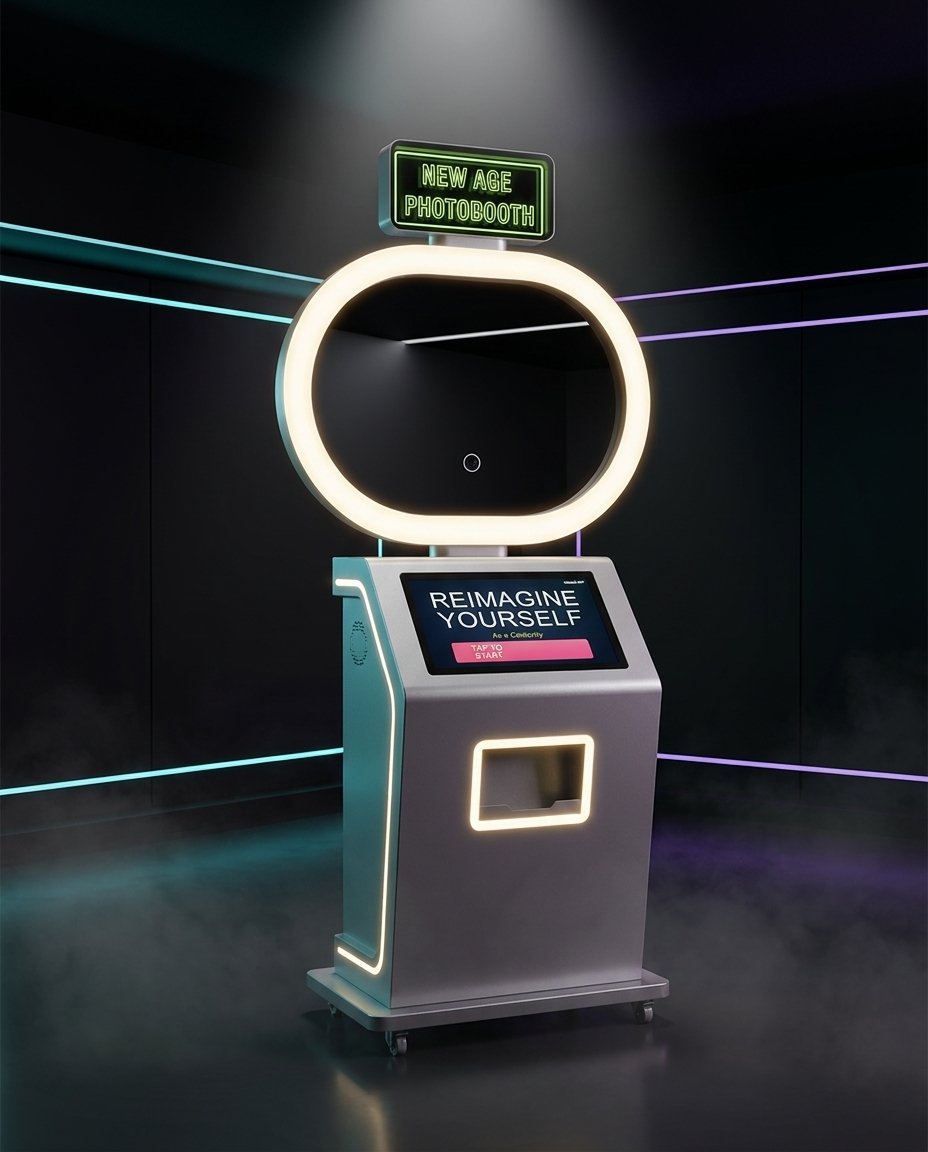
Virtual try-on kiosks as silent salespeople. A kiosk in-store captures leads even from casual browsers who do not speak to staff. The customer interacts with the screen, tries on items virtually, and the system captures their preferences and contact details. Your staff can follow up later with personalised recommendations.
The data on technology-assisted retail is clear. Sephora reported that customers who used their virtual try-on tools had a 19% higher lifetime value over 12 months compared to those who did not. (Source: Sephora/LVMH investor presentation, 2022)
Separately, Shopify's 2024 Commerce Trends report found that fashion brands using AR try-on saw a 27% increase in conversion rates compared to standard product imagery. (Source: Shopify, "Commerce Trends 2024" report)
The Math That Matters
Let us put concrete numbers to this. Take a clothing store with average metrics:
Now, improve the conversion rate to 6.5% — a modest target, well below the 27% conversion uplift that Shopify documented for AR-enabled fashion brands:
No extra stock. No extra floor space. No extra marketing budget. Just better conversion of the customers who are already walking through your door.
Your biggest untapped asset is the 95% of visitors who walk out without buying.
Frequently Asked Questions
Ready to convert more foot traffic into sales?
Bamigos.com builds interactive technology for retail stores in India. From virtual try-on kiosks to smart mirrors, we help stores convert more of their existing foot traffic into paying customers.