How to Reduce Clothing Returns in Your Retail Store: 7 Proven Methods
Clothing returns are the silent profit killer in retail. Every returned garment sets off a chain of costs that most store owners never fully calculate: processing time at the counter, repackaging labour, potential markdowns on opened items, staff hours spent on restocking, and the logistics of reverse shipping for online orders.
The problem is most severe for online fashion retail, where customers cannot touch, feel, or try on garments before buying. But physical stores are far from immune. Impulse purchases, poor fitting room experiences, family opinions after the fact, and colour mismatches under different lighting all drive returns in brick-and-mortar stores too.
In India, the challenge is especially acute for ethnic wear, wedding outfits, and occasion-wear categories. A bride who buys a lehenga under showroom spotlights may find it looks entirely different in natural daylight at home. A customer who purchases a saree without draping it first discovers the fabric falls differently than expected.
This article covers seven practical methods to reduce clothing returns in your retail store. Each is backed by data, applicable to Indian retail, and ranges from free quick wins to higher-investment technology solutions.
!The Scale of the Problem
Before diving into solutions, it helps to understand the true scale of what returns cost the clothing industry.
Online apparel return rates hover at 30-40% globally, making fashion the highest-returning category in e-commerce (The Interline, March 2026). For context, that means roughly one in three garments purchased online comes back.
The cost per return is substantial. Average return processing costs range from $10-15 per item (Narvar 2024 Consumer Survey), covering inspection, repackaging, restocking, and potential markdowns. For Indian retailers, this translates to roughly Rs 800-1,200 per returned item when you factor in courier costs and staff time.
The root cause is consistent across markets: size inconsistency is the primary return driver, accounting for approximately 40% of all returns (Aptos Retail research). Customers genuinely want the product — they just cannot get the right fit without trying it on.
In India, wedding and occasion wear faces among the highest return rates in the industry. The reasons compound: fit uncertainty with heavily constructed garments, colour appearing different under showroom lighting versus home lighting, and the common practice of seeking family approval after purchase. When a Rs 25,000 lehenga comes back, the cost is not just processing — it is potential markdown on a seasonal item.
01Better Size Guides and Measurement Charts
This is the simplest, lowest-cost intervention — and one of the most effective. Most clothing retailers use generic S/M/L/XL labels that vary wildly across brands. A "Medium" from one manufacturer fits like a "Large" from another. Customers know this, and the uncertainty drives returns.
The fix: provide detailed size charts with actual body measurements in centimetres. Include bust, waist, hip, shoulder width, sleeve length, and garment length for each size. For ethnic wear, add specific measurements like blouse length, saree width, and kurta length.
Go a step further and include a simple measurement guide showing customers exactly how to measure themselves — where to place the tape, whether to measure over clothing or directly on skin, and common mistakes to avoid.
The data backs this up. Gap's A/B testing of a "Find Your Size" interactive button showed a 15% conversion lift (Gap A/B testing data), meaning customers who felt confident about sizing were significantly more likely to complete a purchase and keep the item.
For physical stores, train staff to take quick measurements and recommend the right size rather than letting customers guess. A 30-second measurement can prevent a return that costs Rs 800 to process.
02Improved Product Photography and Descriptions
A significant portion of returns happen because the product does not match what the customer expected. This is almost always a photography and description problem, not a product quality problem.
Show garments on diverse body types — not just one model. When a customer sees a kurta on someone with a similar build, they can judge fit far more accurately. Multiple angles are essential: front, back, side, and close-ups of fabric texture, embroidery detail, and stitching quality.
Colour accuracy is critical and frequently neglected. Photograph garments under colour-calibrated lighting that matches real-world conditions. If a garment appears navy blue on screen but arrives looking black, the return is almost guaranteed. Show the garment in at least two lighting conditions — studio and natural daylight.
Video is increasingly important. A short clip showing how fabric drapes, moves, and falls on a walking model conveys information that no still photograph can. For sarees, showing the pallu drape in motion is worth more than ten static images.
Write honest descriptions of fit. Use specific terms: "relaxed fit through the body," "fitted at the waist, flared from the hip," "true-to-size, order your regular size." Avoid vague language like "flattering" or "comfortable" — these tell the customer nothing about actual fit.
03Virtual Try-On Technology
Highest impact method — backed by the strongest data
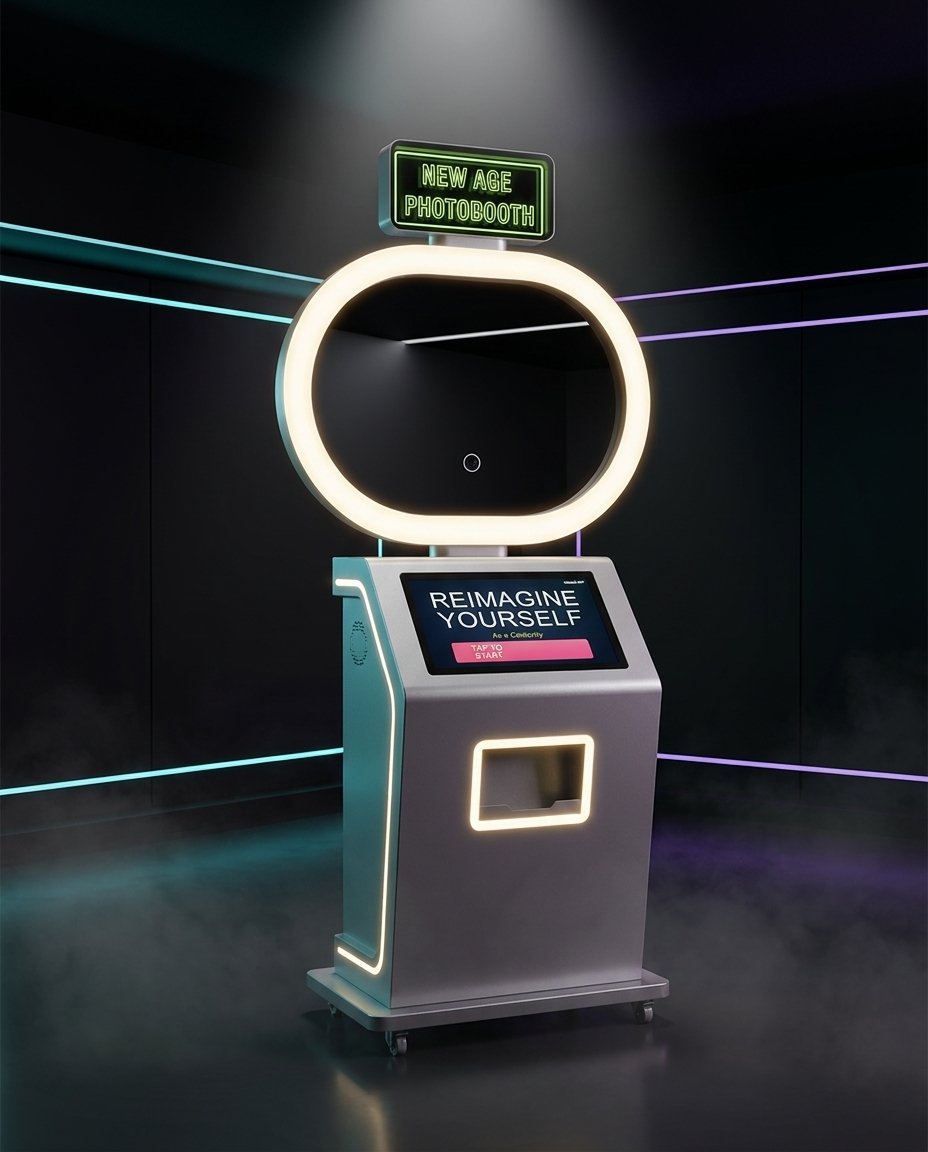
Virtual try-on (VTO) technology uses augmented reality mirrors and AI-powered screens to let customers see garments on themselves without physically changing. The customer stands in front of a screen or kiosk, and the system overlays the selected garment onto their body in real time, adjusting for their proportions and posture.
The return reduction data is compelling:
- Deloitte's 2024 research found up to 28% return reduction for retailers using virtual fitting technology (Deloitte 2024 Digital Consumer Study)
- Warby Parker reported a 45% return reduction after implementing virtual try-on for their eyewear line (Warby Parker public reporting)
- Shopify's 2024 data showed a 27% conversion increase for fashion brands using AR try-on features (Shopify 2024 Commerce Trends report)
VTO is particularly valuable for categories where physical trying-on is time-consuming or inconvenient. Ethnic wear is the prime example: draping a saree takes 10-15 minutes, trying a lehenga with dupatta and jewellery takes even longer. When a customer can virtually try six sarees in two minutes instead of physically draping two in thirty minutes, they explore more options and make more confident purchase decisions.
The technology is maturing rapidly in India. Google Shopping has launched virtual try-on features live in India, covering billions of listings and normalising the experience for Indian consumers (Google Shopping India, 2024). Customers are increasingly expecting this capability.
For physical stores, VTO kiosks serve as an additional fitting tool alongside traditional trial rooms. They do not replace the physical try-on experience but complement it — letting customers narrow down their shortlist before committing to the time-intensive process of physically trying garments.
Bamigos.com is building interactive kiosks in New Delhi and developing virtual try-on solutions specifically designed for Indian clothing retailers. You can explore how this applies to your store:
04Staff Training on Fit Consultation
A brief, structured fit conversation at the point of sale can prevent a significant number of "it didn't look right at home" returns. Train your staff to ask specific questions before a customer commits: What is the occasion? Do you prefer a fitted or relaxed silhouette? How do you plan to wash this garment? Will you be wearing it with heels or flats?
These questions accomplish two things. First, they surface potential mismatches early — a customer buying a dry-clean-only silk kurta for daily wear is a return waiting to happen. Second, they make the customer feel heard and confident in their choice, which reduces post-purchase doubt.
For ethnic wear, staff training on draping techniques is especially valuable. A salesperson who can quickly pin a saree into three different draping styles or show how a dupatta can be worn four ways transforms the purchase from uncertain to confident. The two minutes invested in consultation save the Rs 800+ cost of processing a return.
05Better Lighting in Trial Rooms
Poor fitting room lighting is a surprisingly common driver of returns. The typical scenario: a customer tries on a garment under warm, yellowish showroom lighting. It looks great. They buy it. At home, under natural daylight or cooler LED lighting, the colour appears different, the fabric texture looks different, and the overall impression changes. The garment goes back.
The fix is straightforward. Install LED panels in fitting rooms that simulate daylight (5000-6500K colour temperature). This gives customers an accurate preview of how the garment will look in the most common real-world lighting condition. Some retailers go further with adjustable lighting that lets customers toggle between daylight, evening, and indoor settings.
Mirrors matter too. Full-length mirrors at the correct height, positioned to show the complete outfit without distortion, help customers make accurate assessments. Ensure the fitting room has enough space for the customer to step back, turn, and see the garment from multiple angles. For ethnic wear, where the full silhouette matters, a cramped fitting room with a half-length mirror is a return generator.
06Post-Purchase Styling Guidance
A portion of returns stem not from product dissatisfaction but from buyer's remorse and uncertainty about how to wear the garment. The customer liked it in the store, but at home they cannot figure out how to style it, what to pair it with, or whether it suits their existing wardrobe.
Combat this with post-purchase styling communication. Send a WhatsApp message 24 hours after purchase with practical styling tips: "Here are three ways to style your new emerald kurta — with white palazzos for a casual look, with a gold dupatta for festive occasions, or layered under a jacket for winter." Include photos or short videos showing each combination.
For high-value purchases like wedding wear, offer a complimentary styling consultation call. A five-minute conversation about jewellery pairing, shoe selection, and makeup tone matching can transform a hesitant buyer into a delighted one. The cost of a phone call is negligible compared to the cost of processing a return on a Rs 25,000 lehenga.
07Flexible Exchange Over Return Policy
Many "returns" are not genuine rejections of the product — they are customers who want the same item in a different size, a different colour, or a slightly different style. If your return process makes it easier to get a refund than to exchange, you are losing sales unnecessarily.
Design your policy to make exchanges frictionless and returns slightly more effortful. Offer WhatsApp-based exchange requests where the customer sends a photo of the item and states what they would prefer instead. For high-value items, offer doorstep swaps — a delivery person brings the new size and collects the original in a single visit.
The psychology matters: when a customer calls to return a Rs 5,000 kurta and you offer to send two alternative sizes to their door within 24 hours, a significant percentage will choose to exchange rather than return. You keep the revenue, the customer gets what they actually wanted, and the cost of a doorstep swap is far less than the cost of a full return and refund.
Which Method Works When
| Method | Cost | Impact | Best For |
|---|---|---|---|
| Size guides | Free | Moderate | Online + physical |
| Better photography | Low | Moderate | Online |
| Virtual try-on | Medium-High | High (28-45% reduction) | Physical stores + online |
| Staff training | Low | Moderate | Physical stores |
| Better lighting | Low | Low-Moderate | Physical stores |
| Styling guidance | Free | Low | All |
| Exchange policy | Low | Moderate | All |
Frequently Asked Questions
Virtual try-on is the highest-impact method for physical retail stores
Bamigos.com builds interactive kiosks in New Delhi and is developing virtual try-on solutions for Indian clothing retailers. See what it could do for your return rates.
Or reach out directly: