Virtual Trial Room for Shops in India: Technology, Benefits, and What It Costs
A complete guide for Indian retailers evaluating virtual trial room technology — from AR mirrors to generative AI kiosks. Covers published prices from Indian manufacturers, real adoption data, and a practical checklist for choosing the right solution.
Every clothing shop owner in India knows the trial room bottleneck. A customer walks in, picks up five or six outfits, waits for a trial room to free up, tries each one on, and walks out having purchased just one — or none at all. In stores with only one or two fitting rooms, the queue stretches across the floor, other shoppers leave without trying anything, and staff spend their time managing frustration rather than selling.
Virtual trial rooms promise to change this. Using augmented reality, 3D body scanning, or generative AI, these systems let customers see themselves wearing clothes on a digital screen — without stepping into a physical fitting room. The technology is no longer a concept demo at trade shows. Indian brands like Lenskart and CaratLane have deployed virtual try-on at scale, and a growing number of Indian manufacturers now sell hardware and software designed for Indian retail.
This guide covers everything an Indian retailer needs to evaluate virtual trial room technology: how the different systems work, what they actually cost (with published prices from Indian suppliers), which brands are already using them, who manufactures them in India, and how to pick the right solution for your shop.
1What Is a Virtual Trial Room?
A virtual trial room is a screen — standalone kiosk, wall-mounted mirror, or even a mobile app — that uses AR or AI to overlay clothing onto a live image or scan of the customer. The shopper stands in front of a camera, selects garments from a digital catalogue, and sees a realistic preview of how each item looks on their body. No changing, no undressing, no queue.
Internationally, this technology goes by several names: virtual fitting room, virtual dressing room, smart mirror, or simply virtual try-on (VTO). In Indian English, “trial room” is the standard term for what the rest of the world calls a fitting room, so “virtual trial room” is the natural phrase Indian shoppers and retailers use.
The technology sits on a spectrum. At the simpler end, an AR overlay maps a 2D image of a garment onto the customer’s silhouette in real time, similar to an Instagram filter. At the advanced end, a 3D body scan captures the shopper’s measurements and renders the garment with accurate draping, fit, and fabric behaviour. The newest approach — generative AI — creates photo-realistic images of the customer wearing the garment, producing results that look like an actual photograph rather than a digital overlay.
Lenskart proved the model works at scale in India for eyewear. According to the India AI portal (a Government of India initiative), one in four Lenskart users now use the AR try-on feature, and the company has seen 3x growth in AR engagement. Clothing is a more complex problem — fabric drapes differently than spectacle frames — but the underlying principle is identical, and multiple Indian companies are now building solutions specifically for apparel and ethnic wear.
2Types of Virtual Trial Room Technology
Not all virtual trial rooms work the same way. The technology, form factor, and price vary significantly. Here are the main categories available in the Indian market today:
Magic Mirror / AR Mirror
A floor-standing or wall-mounted display with a built-in camera that captures the customer and overlays clothing in real time. Gesture or touch controls let the shopper browse the catalogue and switch between outfits. Some Indian manufacturers offer 42-inch floor-standing AR mirrors with Kinect depth sensors and i7 processors. These mirrors are designed for high-traffic retail environments and typically handle the full body, making them suitable for apparel, not just accessories.
Touch-Screen Kiosk
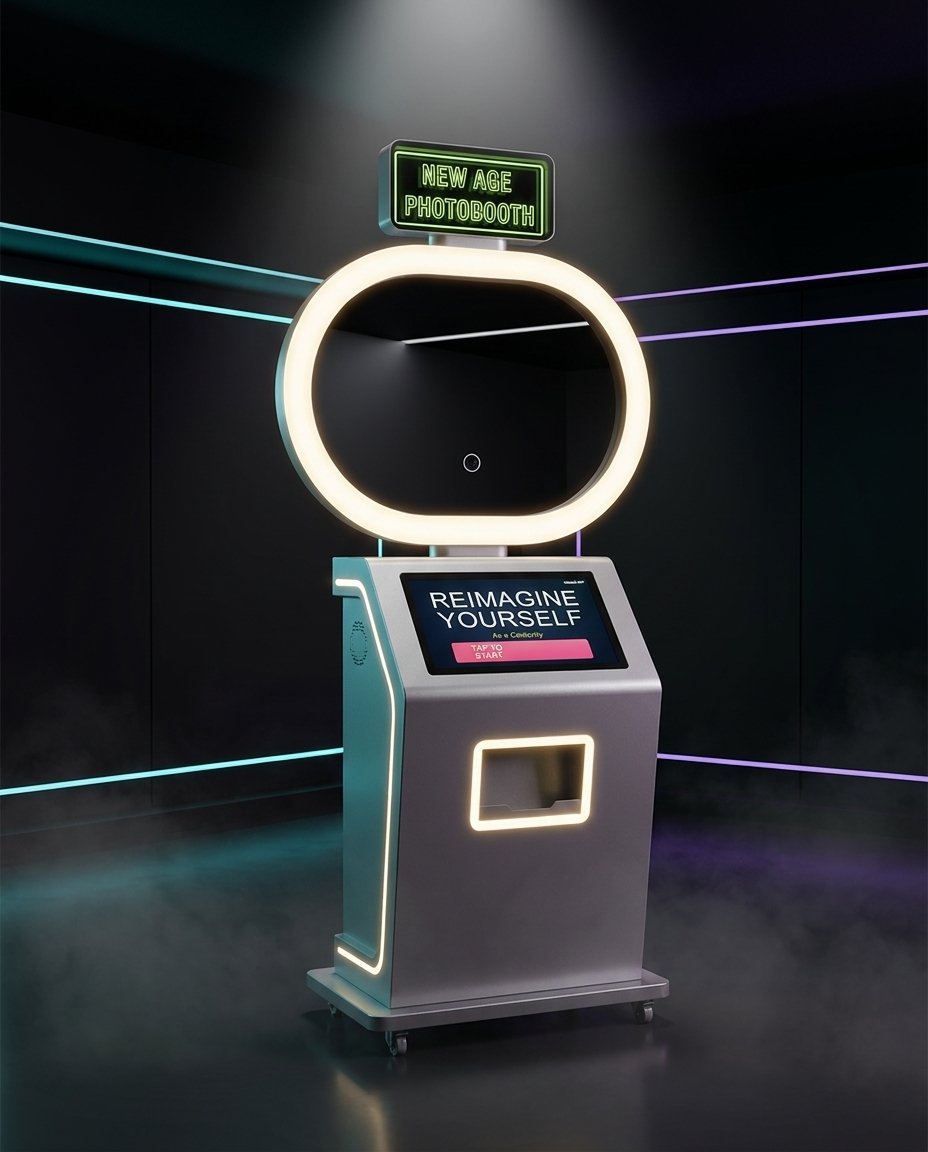
A compact, self-standing kiosk with a touchscreen (typically 15 to 21.5 inches) and an integrated camera. Entry-level AR kiosks from Indian manufacturers are listed at around ₹2.9 lakh on trade platforms like IndiaMART. The smaller screen makes these better suited for jewellery, eyewear, or accessory try-on rather than full-body clothing, though some vendors offer larger display options.
Wall-Mounted Smart Mirror
A large-format mirror (3 feet by 6 feet or larger) with an embedded display, camera, and 3D body-scanning sensors. Premium smart mirrors with 3D body scanning from Indian manufacturers are listed at around ₹7.5 lakh on trade platforms like IndiaMART. These systems typically include 3D body scanning, social media sharing from the mirror itself, and integration with the retailer’s inventory. The larger form factor provides a more immersive experience and supports full-outfit visualisation.
Software-Only SaaS
A pure-software solution where the retailer provides their own screen and camera; the vendor supplies the AI platform on a monthly subscription. SaaS-only providers offer software subscriptions starting around ₹30,000 per month (listings available on IndiaMART). This approach has a lower upfront cost but requires the retailer to source and maintain their own hardware. It also means the retailer depends on the vendor’s cloud infrastructure for processing.
Generative AI Mirror
The newest category. Instead of overlaying a flat garment image or rendering a 3D model, generative AI creates a photo-realistic image of the customer wearing the selected outfit. Newer generative AI approaches can produce photo-real try-on imagery in approximately 20 seconds. The output looks like an actual photograph rather than a composite, which creates a more convincing result, particularly for fabrics with complex textures or draping.
3How Much Does a Virtual Trial Room Cost in India?
Pricing varies widely depending on the form factor, AI capability, display size, and whether hardware is included. Below are published prices from Indian manufacturers and service providers as listed on IndiaMART and company websites. These are indicative figures — actual pricing may differ based on configuration, volume, and support terms.
| Solution Type | Origin | Type | Published Price | Source |
|---|---|---|---|---|
| Entry-level AR kiosk | Indian manufacturer | AR touchscreen kiosk (15–21.5″) | ₹2,90,000/unit | IndiaMART listing |
| Premium smart mirror | Indian manufacturer | 3x6 ft wall mirror, 3D body scan | ₹7,50,000/unit | IndiaMART listing |
| SaaS subscription | Indian provider | SaaS (software only, BYOD) | ₹30,000/month | IndiaMART listing |
| Custom AR smart mirror (dev cost) | — | Custom build | $14,000–$16,000 | Indian dev agency estimate |
An entry-level AR kiosk at around ₹2.9 lakh represents the starting point for a turnkey hardware solution. Premium smart mirrors at around ₹7.5 lakh sit at the higher end, offering a larger display and 3D scanning. A SaaS model at ₹30,000 per month avoids the large upfront cost but accumulates over time — at that rate, the annual cost equals ₹3.6 lakh, which approaches the price of a dedicated kiosk within a year.
For retailers considering a fully custom build, Indian development agencies have published estimates of $14,000 to $16,000 (roughly ₹11.7 lakh to ₹13.4 lakh at current exchange rates) for developing a custom AR smart mirror solution from scratch. This includes the software development, 3D rendering engine, and hardware integration, but not the ongoing maintenance or content digitisation.
Note: Pricing depends on display size, AI capability, deployment scale, and support terms. Contact manufacturers directly for current quotes. The figures above are published listing prices and may not reflect negotiated or bulk-order rates.
4Benefits for Indian Retail Shops
Virtual trial rooms are not just novelty tech. Retailers who have deployed them report measurable improvements in conversion, returns, and customer engagement. Here are the key benefits, supported by published data:
Higher Conversion Rates
Shopify’s 2024 commerce data showed that retailers using virtual try-on technology saw a 27% increase in conversion rates compared to those without it (source: Shopify, 2024). When a customer can visualise how a garment looks on them before committing, they move from browsing to buying faster.
Fewer Returns
Returns are expensive for any retailer — logistics, restocking, and lost margin. Deloitte’s 2024 retail technology report found that virtual try-on can reduce return rates by up to 28% (source: Deloitte, 2024). Warby Parker, which has been a pioneer in virtual eyewear try-on, reported a 45% reduction in returns after implementing their VTO system (source: Warby Parker, published company data).
Greater Purchase Confidence
Nordstrom found that customers who used virtual try-on technology reported 62% higher purchase confidence (source: Nordstrom, published retail data). Separately, Target reported that shoppers spent 25% more time engaging with products when virtual try-on was available (source: Target, published retail data). Longer engagement time correlates with higher basket values.
India-Specific Advantages
Beyond the global data, virtual trial rooms solve problems that are particularly acute in Indian retail:
- Trial room queues. Most Indian clothing shops, especially those in high-street markets and malls, have just one or two physical trial rooms for the entire store. During peak hours — weekends, festivals, wedding season — the queue alone drives customers away. A virtual trial room lets multiple customers try outfits simultaneously without occupying physical space.
- Ethnic wear complexity. Trying on a saree or lehenga is a 10 to 15-minute process. Draping, pinning, adjusting — each trial takes significantly longer than Western-style clothing. A virtual trial room that can visualise a saree’s drape on the customer’s body saves substantial time per session.
- Wedding shopping speed. Indian wedding shopping often involves evaluating dozens of outfits across multiple shops in a single day. Virtual try-on lets the customer shortlist outfits digitally and only physically try the top two or three, dramatically reducing the time spent per shop.
- Hygiene and comfort. Many customers, particularly women, are uncomfortable with shared trial rooms in crowded markets. A virtual trial room eliminates the need to undress in a shared space entirely.
5Indian Brands Already Using Virtual Try-On
Virtual try-on is not theoretical in India. Several major Indian brands have deployed the technology at scale, and the results are publicly documented.
Lenskart — Eyewear
Lenskart’s AR try-on feature is arguably the most widely used virtual try-on deployment in India. According to the India AI portal (a Government of India initiative), one in four Lenskart users now use the AR feature, and the company has reported 3x growth in AR engagement. Their system uses face mapping to show how frames look on the customer in real time, both in-app and on in-store screens.
CaratLane (Tata Group) — Jewellery
CaratLane, the Tata-owned jewellery brand, integrated virtual try-on for rings, necklaces, and earrings across their app and website. According to Indian Retailer (trade publication), CaratLane reported a 20% increase in conversion rates after implementing the VTO feature. Given CaratLane’s national footprint and online reach, this represents a substantial volume of transactions influenced by virtual try-on.
Aza Fashions — Luxury Fashion
Aza Fashions, an Indian luxury fashion platform stocking over 50 designers, launched an AI-powered virtual try-on feature in May 2026. As reported by ANI News, the platform uses generative AI to let customers see themselves in designer outfits before purchasing. Given the high price points of luxury ethnic wear (lehengas, sherwanis, couture sarees), the virtual trial room addresses a real friction point: customers are reluctant to order ₹50,000+ garments without knowing how they will look.
Tanishq — Jewellery
Tanishq, India’s largest jewellery retailer, uses a virtual jewellery try-on platform developed by an Indian AR software company based in Gurugram. The platform claims over 150 jeweller clients across India, with Tanishq being the most prominent. The technology enables customers to try on necklaces, earrings, and bangles using their phone camera or in-store tablets.
Google Shopping — Apparel
Google’s virtual try-on feature for Shopping search results is now live in India. When a shopper searches for clothing on Google, eligible product listings include a “Try On” button that uses generative AI to show the garment on diverse body types. This is not a retailer-specific deployment but a platform feature, which means Indian shoppers are increasingly being exposed to virtual try-on as a standard shopping experience.
6What to Look for in a Virtual Trial Room Provider
The Indian market has a mix of hardware manufacturers, software-only SaaS providers, and imported solutions. Choosing the right partner depends on your store format, catalogue size, and support needs. Here are the criteria that matter:
Hardware + Software Integrated?
Does the provider supply both the kiosk/mirror hardware and the AI software as a single package? Or do you need to source hardware separately? Integrated solutions mean one company to deal with for support and warranty.
Indian Manufacturer or Import?
Indian-manufactured hardware means GST invoicing, shorter lead times, on-site support, and no customs delays. Imported solutions often come with 2–3 month lead times and remote-only support.
AR Overlay, 3D, or Generative AI?
Basic AR overlays are cheapest but least realistic. 3D avatar systems are best for fit accuracy. Generative AI (the newest approach) produces photorealistic results from standard product photos — no 3D scanning needed.
On-Site Support Across India?
Hardware breaks. Software needs updates. Can the provider send someone to your store in Delhi, Mumbai, Bangalore, or Tier 2 cities? Remote-only support from another country is not sufficient for retail hardware.
Catalogue Digitisation Included?
Your clothing catalogue needs to be photographed and uploaded into the system. Does the provider handle this, or is it your responsibility? For large catalogues (500+ items), this is a significant effort.
Analytics and Customer Data?
The best systems capture which styles are tried most, popular colours and sizes, dwell time, and conversion from try-on to purchase. This data is valuable for buying and merchandising decisions.
Multi-Location Management?
If you have multiple stores, can you manage all kiosks from a centralised dashboard? Push catalogue updates to all locations simultaneously? Monitor uptime remotely?
Custom Branding and UI?
The kiosk in your store should look like your brand, not the technology provider’s. Ensure the UI, colours, catalogue organisation, and customer experience can be fully customised.
The Indian market has a growing number of hardware manufacturers, SaaS providers, and software companies building virtual trial room solutions. Some offer turnkey hardware-plus-software packages, others provide software only. When evaluating providers, focus on the criteria in the checklist above rather than brand names — the market is young and evolving quickly.
Bamigos, based in New Delhi, manufactures AI-powered kiosks (currently deployed as photo booths in malls and events across India) and is actively exploring virtual try-on as an adjacent application for its existing hardware platform.
7How to Choose the Right Virtual Trial Room Solution
With multiple Indian manufacturers and service providers now offering virtual trial room technology, the decision comes down to practical fit rather than whether the technology works in principle. Here is a checklist for evaluating solutions:
- Hardware included or BYOD? Does the price include the display, camera, and enclosure, or do you need to source your own hardware? A turnkey hardware-plus-software solution reduces integration risk. A SaaS-only model offers flexibility but adds hardware procurement to your plate.
- Indian manufacturer or import? Indian-made hardware means local warranty, replacement parts without customs clearance, and on-site service calls. Imported smart mirrors from China or Europe may be cheaper upfront but create ongoing support headaches.
- AR overlay or generative AI? AR overlays are faster (real-time) but less realistic. Generative AI produces photo-quality results but takes 15 to 30 seconds per try-on. Which matters more for your customer depends on the product category and price point.
- On-site support available? If the mirror goes down on a Saturday afternoon, can the vendor send someone? Check whether the provider has a service presence in your city, not just their headquarters city.
- Analytics and reporting? Can the system track which garments are tried on most, conversion from try-on to purchase, and peak usage times? This data is valuable for merchandising and inventory decisions.
- Catalogue digitisation included? The virtual trial room is only as useful as the garment catalogue loaded into it. Some vendors include the service of photographing and digitising your inventory; others expect you to provide catalogue-ready assets. If you stock 500+ SKUs of ethnic wear, digitisation is a significant effort — clarify who handles it and at what cost.
8Frequently Asked Questions
Interested in Virtual Try-On for Your Store?
Bamigos.com manufactures AI-powered kiosks in New Delhi. We are developing virtual try-on solutions for Indian retail stores. To discuss your requirements, reach out.