Virtual Fitting Room vs Traditional Fitting Room: What Indian Retailers Need to Know
The traditional fitting room has been unchanged for decades. Now augmented reality and AI are offering an alternative that is faster, data-rich, and space-efficient. But this is not a story about one replacing the other — it is about understanding what each does best and when to deploy which.
Table of Contents
- 1. The Traditional Fitting Room — Strengths and Limitations
- 2. The Virtual Fitting Room — Strengths and Limitations
- 3. Head-to-Head Comparison Table
- 4. What the Data Says
- 5. When to Use Which — Decision Framework
- 6. The Hybrid Approach — Best of Both Worlds
- 7. What This Means for Indian Retail
- 8. Frequently Asked Questions
Walk into any clothing store in India and the fitting room experience is instantly recognisable: a curtained cubicle, a mirror, a hook on the wall, and a queue of customers waiting their turn. This setup has survived largely unchanged for the better part of a century. It works — but it has never been particularly efficient, and it was never designed for a world where customers expect speed, personalisation, and shareable experiences.
Virtual fitting rooms — also called virtual dressing rooms, digital fitting rooms, or AR fitting rooms — use a combination of augmented reality, computer vision, and AI to let shoppers see how clothing looks on them without physically changing. The technology has matured significantly in the last three years, and major retailers worldwide are deploying it. But does it make sense for Indian retail, where ethnic wear dominates, budgets are tight, and customers are tactile?
This piece compares both options honestly, with sourced data where it exists, and offers a practical decision framework for retailers evaluating their options.
1. The Traditional Fitting Room — Strengths and Limitations
Strengths
The physical fitting room has endured because it does something no technology can fully replicate: it lets the customer feel the garment. The weight of a silk saree, the stretch of a cotton kurta, how a fabric falls across the shoulder — these are tactile judgments that cameras and screens cannot capture. For customers, there is zero learning curve. Everyone knows how a fitting room works. There is no app to download, no screen to navigate, no technology to trust. The experience is familiar, private, and self-directed.
Traditional rooms also have no technology dependency. They do not need power, internet, or software updates. They simply work, every day, without a maintenance contract.
Limitations
Space is the first constraint. A standard fitting room occupies 1.5 to 2 square metres, and most Indian stores can only accommodate one to three rooms. During peak hours — especially wedding season — this creates queues. A wait of three to five minutes is common in busy stores, and that assumes a quick try-on. For ethnic wear, the situation is worse: draping a saree or trying on a lehenga with dupatta can take ten to fifteen minutes per outfit. A customer shortlisting four lehengas may occupy a fitting room for close to an hour.
Staff are required to manage the queue, limit items taken in, and maintain cleanliness. Post-COVID, hygiene concerns have become more pronounced — customers are more conscious of shared spaces, and stores must clean rooms more frequently. Traditional fitting rooms also capture no data: the retailer has no record of what was tried on, what was rejected, or why. Every abandoned outfit is a lost insight.
Finally, the fitting room is limited to physical stock. If a garment is not on the rack in the customer's size and colour, it cannot be tried. This is a significant constraint for stores with large catalogues but limited floor space.
2. The Virtual Fitting Room — Strengths and Limitations
Strengths
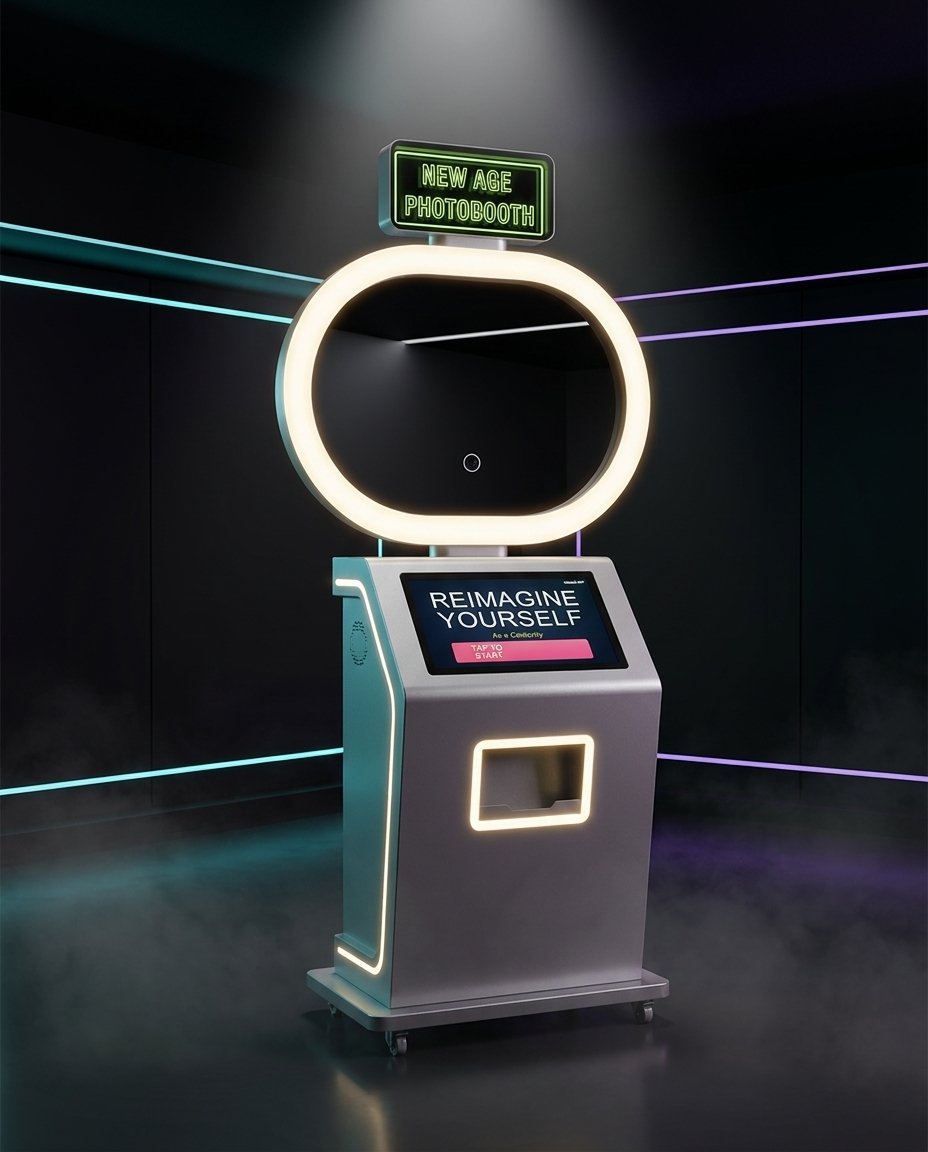
A virtual fitting room — whether a kiosk, a mirror-style screen, or a tablet-based application — lets customers try on outfits in seconds rather than minutes. There is no undressing, no re-dressing, no waiting for a room to free up. A customer who might physically try three outfits in thirty minutes can virtually browse twenty or more in the same time.
For ethnic wear, this speed advantage is particularly significant. Virtual try-on eliminates the draping and pinning process entirely. The customer sees an approximation of how the garment will look on their body instantly, which makes it viable as a shortlisting tool even if the final decision involves a physical trial.
Virtual fitting rooms also enable the “endless aisle” concept: showing customers items that are not physically present in the store. A retailer with five hundred styles in the warehouse but fifty on the floor can let customers browse the full catalogue virtually. The experience is shareable — customers can email or WhatsApp photos of themselves in different outfits to family members, which is a common behaviour in Indian wedding shopping.
Critically, virtual fitting captures data. Every item tried, every outfit saved or discarded, every session duration — this is actionable retail intelligence that traditional rooms simply cannot provide.
Limitations
The most obvious limitation is that you cannot feel the fabric. No screen can communicate the drape of georgette versus chiffon, the scratchiness of a polyester blend, or how tight an armhole actually is. Fit accuracy varies significantly by technology provider — some systems are genuinely impressive, others produce results that look more like a Photoshop overlay than a realistic try-on.
Virtual fitting rooms require power, a stable internet connection (for cloud-based processing), and ongoing maintenance. There is a customer learning curve, particularly for older shoppers who may be less comfortable with touchscreens or AR interfaces. The upfront technology cost is non-trivial.
And trust remains an issue. As The Interline reported in March 2026, roughly half of surveyed U.S, online shoppers remain unconvinced by virtual try-on technology. While the Indian market may respond differently — given the country's rapid adoption of digital payments and QR codes — it would be naive to assume universal acceptance from day one.
3. Head-to-Head Comparison
The table below summarises the practical differences across twelve criteria that matter most to Indian retailers evaluating their options.
| Factor | Traditional Fitting Room | Virtual Fitting Room |
|---|---|---|
| Space needed | 1.5–2 sqm per room | 0.5–1 sqm (kiosk/screen) |
| Outfits tried per hour | 4–8 (western); 2–4 (ethnic) | 20–40+ |
| Staff requirement | Dedicated attendant during peak hours | Minimal (occasional assistance) |
| Customer data captured | None | Items tried, session duration, preferences |
| Ethnic wear handling | 10–15 min per outfit (draping required) | Seconds (no physical draping) |
| Setup cost | Low (construction + mirror + curtain) | Higher (hardware + software + integration) |
| Maintenance | Cleaning, bulb replacement, minor repairs | Software updates, hardware servicing, connectivity |
| Queue management | 3–5 min wait common during peak | Faster turnover: 2–3 min per session vs 10–15 min physical change |
| Stock limitation | Limited to physical inventory on floor | Full catalogue ("endless aisle") |
| Hygiene | Shared space; requires regular cleaning | Contactless or minimal-touch |
| Shareable experience | Mirror selfies only | Email/WhatsApp photos directly from system |
| Tactile / fabric feel | Full sensory experience | Not possible |
4. What the Data Says
The evidence base for virtual try-on is growing, though most published data comes from Western markets. Here is what credible sources report, with caveats noted.
Conversion uplift
Shopify (2024) reported a 27% increase in conversion rates for products that included an AR try-on experience compared to those without. The Interline (March 2026) found that virtual try-on users convert at twice the rate of non-users and add 52% more items to their carts.
Return reduction
Deloitte (2024) cited up to 28% reduction in returns for retailers using virtual try-on. Warby Parker, the eyewear brand, reported a 45% reduction in returns after implementing their virtual try-on feature.
Customer lifetime value
Sephora reported 19% higher lifetime value among customers who used their Virtual Artist try-on tool compared to those who did not.
Engagement
Target found a 25% increase in time spent on product pages that included a virtual try-on option.
The other side of the data
It is important to read these numbers with context. Most of the above stats come from large, well-funded Western retailers with mature e-commerce operations. The technology they deployed was often custom-built or heavily customised, with budgets that most Indian retailers would find prohibitive.
The Interline's March 2026 report is particularly useful because it includes the counterpoint: roughly half of surveyed U.S, online shoppers remain unconvinced by virtual try-on technology. Early implementations had accuracy problems that eroded trust, and that scepticism has not fully dissipated even as the technology has improved.
No comparable large-scale study exists for the Indian retail market specifically. The stats above are directional indicators, not guarantees. Any retailer evaluating virtual fitting rooms should insist on a pilot period with their own customer base rather than relying on aggregated Western data.
5. When to Use Which — Decision Framework
Rather than framing this as an either/or choice, it helps to think about which tool fits which moment in the customer journey.
Use traditional fitting rooms when:
- •The customer needs to feel the fabric — silk vs polyester, the weight of embroidery, the stretch of a knit
- •Final fit confirmation is needed before purchase — especially for tailored or semi-stitched garments
- •The luxury experience matters — high-end bridal stores, designer boutiques, bespoke tailoring
- •The customer demographic is less comfortable with technology-mediated experiences
Use virtual fitting rooms when:
- •Initial browsing and shortlisting — narrowing from twenty options to three before entering the physical room
- •Ethnic wear speed is critical — eliminating the ten-to-fifteen-minute draping cycle for each outfit
- •Large catalogues with limited floor stock — the “endless aisle” use case
- •Capturing customer preference data for merchandising and marketing
- •Reducing queue pressure during peak seasons (wedding, festive)
Use both (hybrid model) when:
The sweet spot for most Indian retailers is likely a hybrid approach: virtual for shortlisting, traditional for final decisions. The customer browses twenty styles virtually, saves their top three, and then physically tries those three in the fitting room. This dramatically reduces fitting room load, cuts the time per customer visit, and gives the retailer data on the seventeen outfits that were considered but not physically tried. For stores with only one or two fitting rooms, this hybrid model can effectively double or triple throughput during peak hours.
6. The Hybrid Approach — Best of Both Worlds
The most successful deployments of virtual fitting technology globally have not replaced physical fitting rooms — they have complemented them. The model that is emerging is straightforward: virtual screens or kiosks are placed on the showroom floor for browsing, while traditional fitting rooms are reserved for final decisions on the shortlisted pieces.
Aza Fashions, the Indian luxury multi-designer platform, offers a useful reference point. Their approach uses virtual try-on to let customers shortlist across a catalogue of over 10,000 styles, then invites them for a physical trial of their top choices. This reduces the burden on fitting rooms while preserving the tactile, personalised experience for the garments that matter most.
The hybrid model addresses the primary objection to virtual fitting rooms — that customers want to feel the fabric — while solving the primary limitation of traditional rooms — that they create bottlenecks. It also creates a natural upselling moment: a customer who virtually tries fifteen outfits and shortlists four is more likely to purchase multiple items than one who only physically tried two.
For smaller retailers, the hybrid approach is also more financially pragmatic. Rather than building additional fitting rooms (which consume selling floor space), a single virtual fitting kiosk can serve the browsing function while existing rooms handle final trials. The kiosk pays for itself not by replacing the room, but by making the room more efficient.
7. What This Means for Indian Retail
India's retail context has specific characteristics that make this comparison different from Western markets. Most Indian clothing stores operate with one to three trial rooms. Ethnic wear — which accounts for a substantial share of the apparel market — takes disproportionately longer to try on than Western clothing. Wedding and festive seasons create intense, predictable demand peaks that overwhelm existing fitting room capacity.
At the same time, Indian consumers have shown remarkable willingness to adopt new technology when it solves a clear problem. The speed of UPI adoption, the penetration of QR-code payments even in small shops, and the normalisation of video-call shopping during the pandemic all suggest that the “customer learning curve” objection may be less severe in India than in some Western markets.
The key insight for Indian retailers is this: a virtual fitting room does not replace the trial room. It dramatically reduces how many outfits go into it. If a bride-to-be can virtually shortlist from fifty lehengas to five, the fitting room goes from being a bottleneck to being a decision confirmation point. The retailer serves more customers per day, captures preference data on the forty-five options that were considered but not physically tried, and creates a shareable, WhatsApp-friendly experience that extends the store's reach to the customer's family and friends.
The question for Indian retailers is not “virtual or traditional?” but “how do we make our existing fitting rooms work harder?” For most stores, the answer involves some form of virtual pre-selection.
Frequently Asked Questions
Interested in virtual try-on for your store?
Bamigos.com manufactures interactive technology in New Delhi. We are developing virtual try-on kiosks that complement your existing fitting rooms — not replace them. Talk to us about your store.