Augmented Reality in Fashion Retail: How Indian Brands Are Using AR to Sell More
1. Why AR in Fashion Retail Matters Now
Augmented reality in fashion is no longer a novelty demo at trade shows. It is live, at scale, and influencing purchase decisions for millions of shoppers in India and globally. Google Shopping rolled out virtual try-on across Indian product listings. Snap built physical AR mirrors that sit inside Nike and Men's Wearhouse stores. Lenskart reports that one in four app users now use its AR eyewear try-on feature. CaratLane, a Tata company, attributes a measurable conversion increase to its 3D virtual jewellery experience.
The numbers reflect this momentum. India's augmented reality fashion market was valued at approximately $113.5 million in 2024 and is projected to reach $801.7 million by 2030, growing at a 38.3% CAGR, according to The Business Research Company. Globally, the virtual try-on market is expected to reach $15.3 billion in 2026 at a 26.5% CAGR (also TBRC).
This guide covers the four main ways AR is deployed in fashion retail today, profiles the Indian and global brands doing it well, explains the underlying technology in plain language, and lays out the business case with sourced data. Whether you operate a single boutique or a multi-city retail chain, this is what the landscape looks like right now.
2. What AR Looks Like in Fashion Retail
AR in fashion retail is not a single technology. It is deployed in at least four distinct modes, each suited to different retail contexts and customer journeys.
In-Store Smart Mirrors
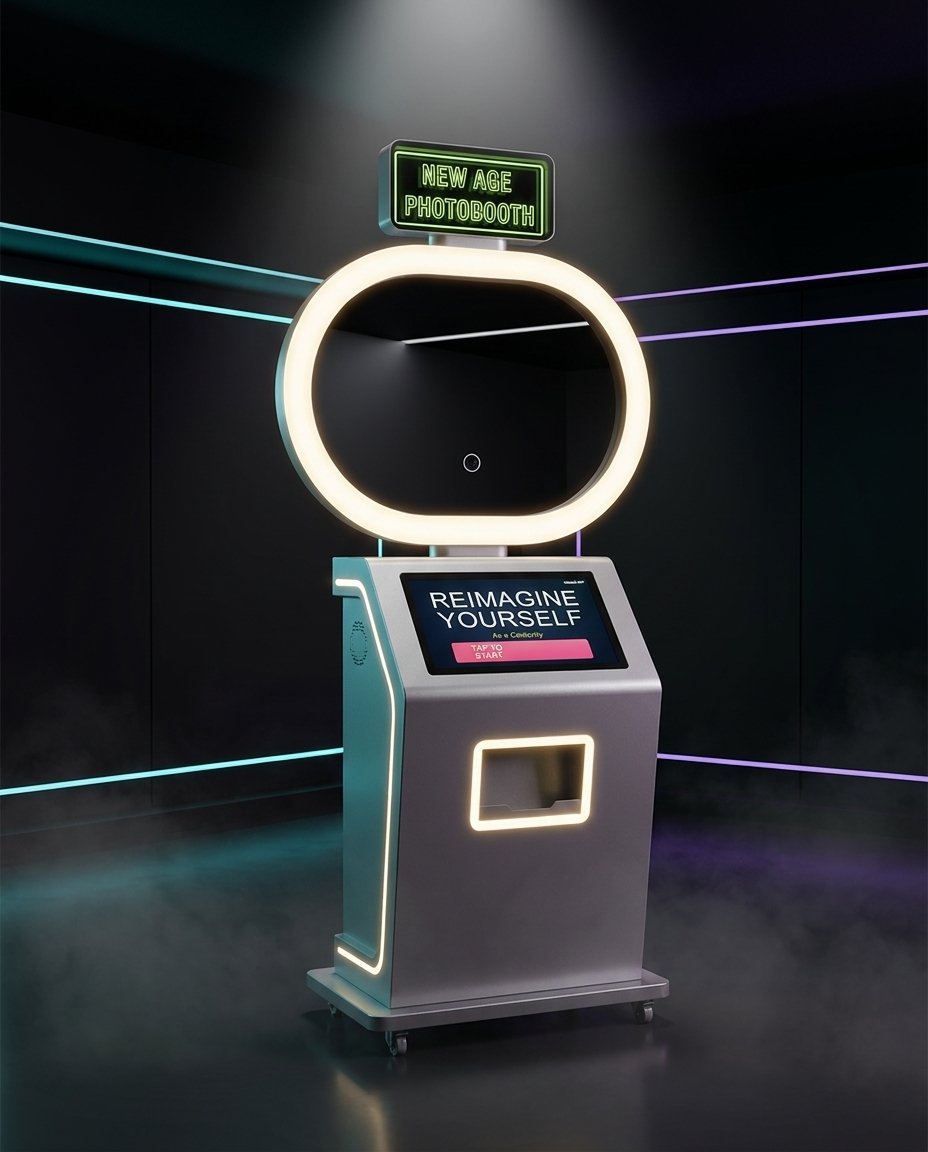
A large display with a camera functions as a digital mirror. The customer stands in front of it, and the system overlays garments, accessories, or makeup onto their live reflection. Snap's ARES (Augmented Reality Enterprise Services) platform powers physical AR mirrors deployed in Nike stores and Men's Wearhouse locations in the US. These mirrors let shoppers visualise outfits without physically changing. The advantage is zero friction — no app download, no phone required, and the experience is shareable. In India, mirrAR (StyleDotMe) has deployed similar mirror-based try-on for jewellery retailers including Tanishq and Kalyan Jewellers.
Mobile App Try-On
The customer uses their smartphone camera to see products on themselves in real time. Lenskart's app lets users try on eyewear frames using their phone's front camera. CaratLane's app does the same for rings, earrings, and necklaces. The advantage is that the customer can try on products from home, at any time, removing the need to visit a store for the initial browse. The limitation is that it requires an app download, which adds friction.
Web-Based Try-On
No app needed. The try-on runs in the browser, typically using WebAR or a custom rendering pipeline. Google Shopping's virtual try-on, available in India, lets shoppers see how tops and dresses look on a range of real model body types directly from search results. OTB Group (parent of Diesel, Jil Sander, and Maison Margiela) launched a web-based VTO powered by Google Cloud's API in May 2026. The advantage is maximum reach — any shopper with a browser can use it. The technology is improving rapidly, though web-based experiences still lag slightly behind native apps in rendering quality.
Social AR (Filters and Lenses)
Brands create Snapchat lenses or Instagram filters that let users try on products within the social platform. This doubles as both a try-on tool and a marketing channel, since users share their AR selfies organically. Snap reports that users who interact with AR product lenses are 82% more likely to recommend the brand to others (Snap Partner Summit). For fashion brands, social AR works particularly well for accessories, eyewear, and cosmetics where the try-on is quick and visually compelling.
3. Indian Brands Leading the Way
Lenskart
Lenskart is arguably the most mature AR deployment in Indian retail. The company offers over 10,000 eyewear styles through its AR-powered virtual try-on, and one in four app users actively use the feature. AR try-on usage on the platform has grown 3x, according to a profile published on the India AI government portal. Lenskart captures approximately 41% of India's organised eyewear market. Gen Z and millennial customers account for 70% of the company's revenue, a demographic that expects digital-first shopping experiences (Analytics India Magazine). The AR feature is not a gimmick layered on top — it is core to how Lenskart sells eyewear, reducing the need for in-store trials for frame selection while the stores handle lens fitting and adjustments.
CaratLane (Tata Group)
CaratLane, a subsidiary of Titan Company (Tata Group), offers 3D virtual jewellery try-on from a smartphone. The feature lets customers see how rings, earrings, and necklaces look on them using the phone camera. According to Indian Retailer and Mobility India, the virtual try-on feature has driven a 20% increase in conversion rates. CaratLane expects 30–40% of its business to eventually come through virtual try-on (Kyross Solution). The company reported revenue of Rs 2,169 crore in FY23, a 73% year-on-year increase. Jewellery is a high-consideration, high-value category where customers traditionally need to see a piece on themselves before buying. AR try-on addresses that need without requiring a store visit, which is particularly valuable for customers in cities without a nearby CaratLane outlet.
Aza Fashions
Aza Fashions launched what it describes as India's first occasion-led virtual try-on experience in May 2026, branded "The Look. On You." The platform covers Indian wedding and festive occasions with over 50 designers and 10,000+ styles. Rather than offering try-on as a standalone feature, Aza organises the experience around the occasion — the user selects a wedding function (sangeet, reception, haldi), and the system presents coordinated outfits to try on virtually (ANI News, May 2026). This is a significant development for Indian ethnic wear, a category where silhouette, drape, and colour coordination matter enormously and where returns are costly due to the price points involved.
Tanishq and mirrAR (StyleDotMe)
mirrAR, founded in 2015 in Gurugram, is the technology provider behind AR try-on for many of India's largest jewellery brands. The company claims to be the first globally to implement real-time markerless hand tracking for virtual jewellery try-on. Its client list includes Tanishq, Kalyan Jewellers, Senco Gold, and HazooriLal, with over 150 jeweller clients in total (CB Insights, FashNerd), mirrAR's approach is B2B — it provides the AR engine that retailers embed in their own apps and websites. For the Indian jewellery industry, where the average transaction value is high and the tactile experience of trying on a piece is central to the purchase decision, AR try-on serves as a powerful pre-qualification tool. Customers arrive at the store having already narrowed their choices, which reduces the time staff spend on each sale.
Myntra and Ajio
India's large fashion e-commerce platforms are also deploying virtual try-on as part of their omnichannel strategies. Myntra and Ajio have both invested in AR capabilities, integrating virtual try-on features into their apps to reduce return rates and improve customer confidence in online purchases (Glance AI blog). For these platforms, the business case is straightforward: returns in online fashion retail run between 25–40% in India, and even a modest reduction represents significant savings at their transaction volumes.
4. Global Brands Setting the Standard
Google Shopping Virtual Try-On
Google launched virtual try-on for Google Shopping, including in India, using a custom AI model trained to handle fabric physics — how different materials drape, stretch, fold, and catch light on different body types. The feature works directly in search results and product listings, which means shoppers do not need to visit a brand's website or download an app. Google has stated that the VTO is available across billions of product listings (Google Blog). For retailers, this is significant because it means AR try-on can reach customers at the moment of search intent, before they have even clicked through to a product page.
Walmart and Zeekit
Walmart acquired Zeekit, an Israeli virtual fitting room company, and integrated it into its e-commerce platform. The "Be Your Own Model" feature lets customers upload a photo of themselves and see how more than 270,000 items would look on their actual body. The system uses the customer's own image rather than a standard model, which makes the experience more personal and the fit prediction more useful (TechCrunch, Walmart Corporate). This approach addresses a key limitation of traditional product photography — shoppers can never tell from a model shot whether a garment will suit their specific body shape.
Snap ARES
Snap's Augmented Reality Enterprise Services (ARES) division builds both digital and physical AR experiences for retailers. The physical AR mirrors deployed in Nike and Men's Wearhouse stores allow in-store customers to try on products virtually. Snap reports that users who engage with AR shopping experiences are 82% more likely to recommend the brand to others (Snap Partner Summit, MIT Technology Review). Snap's advantage is its existing AR infrastructure — the company has spent years building the Lens Studio platform and the camera technology that powers Snapchat filters, and ARES repurposes that stack for retail.
ASOS
ASOS launched its virtual try-on feature in February 2026, covering approximately 10,000 products at launch (The Interline). ASOS operates as a pure e-commerce company with no physical stores, which makes the return rate problem even more acute. Virtual try-on is a direct attempt to reduce the "buy multiple sizes and return what doesn't fit" behaviour that is standard in online fashion.
OTB Group (Diesel, Jil Sander, Maison Margiela)
OTB Group, the Italian fashion conglomerate behind Diesel, Jil Sander, and Maison Margiela, launched a web-based virtual try-on powered by Google Cloud's VTO API in May 2026 (Google Cloud Press). This is notable because it brings AR try-on to luxury and high-fashion brands, a segment that has historically been slower to adopt digital retail technology. The web-based approach means luxury customers can access the experience without downloading a separate app for each brand.
5. The Technology Stack Behind AR Fashion
Understanding the technology does not require an engineering background, but knowing what each layer does helps retailers evaluate vendors and ask the right questions.
Computer Vision and Pose Estimation
The system needs to understand the customer's body in 3D space. Pose estimation models detect body landmarks — shoulders, elbows, hips, wrists — from a camera feed and build a skeletal model. For jewellery, this extends to hand tracking (finger positions for rings) and face mesh detection (ear positions for earrings, neck for necklaces), mirrAR's markerless hand tracking for jewellery is an example of this layer being pushed to its limits.
3D Rendering and Garment Physics
Once the system knows the body position, it needs to render the garment realistically. This involves 3D meshes of each product, combined with physics simulations for how fabric drapes, folds, and moves. Google's VTO model was specifically trained to handle how different materials — silk, denim, chiffon — behave differently on different body shapes. This is the layer that separates a convincing try-on from one that looks like a flat image pasted onto a body.
Generative AI (the 2025–2026 Shift)
The most significant technology shift in the past two years is the use of generative AI models to produce photorealistic try-on images directly from standard product photographs. Rather than requiring a 3D scan or mesh of every garment, these models can take a flat product photo and generate a realistic image of how it would look on a specific person. This dramatically reduces the cost and time of catalogue onboarding — instead of 3D-scanning thousands of SKUs, a retailer can feed in existing product images. Google's VTO and several startup platforms use this approach.
RFID Integration
Some in-store systems use RFID tags to automatically detect which garments a customer brings into a fitting room. The smart mirror then displays those specific items and suggests complementary pieces, sizes, or colours. Retailr is one company building this auto-detect capability, linking the physical garment to the digital experience without the customer needing to scan a barcode or search for the product.
Analytics Layer
Every AR interaction generates data: which styles were tried on, how long a customer spent with each, which were added to cart, which were shared. This data feeds back into merchandising and product development decisions. If a style is frequently tried on but rarely purchased, that signals a pricing or fit issue. If a style is rarely tried on but converts well when it is, that signals a discovery or marketing problem. The analytics layer turns the AR try-on from a customer-facing feature into a business intelligence tool.
6. The Business Impact — By the Numbers
The business case for AR in fashion retail rests on three pillars: higher conversion rates, lower return rates, and richer customer data. Here are the sourced numbers.
Market Size
- •Global virtual try-on market: $15.3 billion in 2026, growing at 26.5% CAGR (The Business Research Company)
- •India AR fashion market: $113.5 million in 2024, projected to reach $801.7 million by 2030 at 38.3% CAGR (The Business Research Company)
- •VTO startup funding: 31 funded virtual try-on startups have raised $168 million collectively (Tracxn)
Conversion Impact
- •Shopify (2024): 27% increase in conversion rates for merchants using AR product experiences
- •McKinsey (2024): 18% average sales conversion lift across retailers deploying AR try-on
- •CaratLane: 20% conversion increase attributed to virtual try-on (Indian Retailer, Mobility India)
- •Sephora: 19% higher lifetime value for customers who use AR try-on features
Return Reduction
- •Deloitte (2024): Up to 28% reduction in product returns for retailers using AR
- •Warby Parker: 45% reduction in returns after implementing virtual try-on for eyewear
These numbers matter because the cost structure of fashion retail heavily penalises returns. A returned garment incurs shipping costs (both ways), inspection and repackaging labour, potential markdowns if the item cannot be resold at full price, and the environmental cost of reverse logistics. For a category like Indian ethnic wear or jewellery, where price points are high and customisation is common, the cost per return is even steeper. A 20–28% reduction in returns can materially improve a retailer's margins without requiring any increase in top-line sales.
The customer engagement and brand recommendation data is equally compelling. Snap's finding that AR users are 82% more likely to recommend the brand suggests that AR does not just convert the individual shopper — it generates word-of-mouth that brings in new customers at no additional acquisition cost.
7. What Indian Retailers Should Consider
The temptation with any new technology is to start with the solution and work backwards to a problem. That approach tends to produce expensive installations that go unused. Start instead with the specific business problem you want to solve.
High return rates? A mobile or web-based VTO for your top-returned categories (ethnic wear, formal shirts, eyewear) can let customers pre-qualify fit before ordering. Long queues at trial rooms? In-store smart mirrors can let customers try on styles without occupying a fitting room, increasing throughput during peak hours. Complex ethnic wear coordination? An occasion-led VTO, like Aza's approach, can guide customers through coordinated outfits for weddings and festivals. Need better merchandising data? The analytics layer from AR interactions reveals which styles are browsed but not bought, and why.
Consider a hybrid approach: virtual try-on for initial browsing and shortlisting, physical trial for the final purchase decision. This matches how most Indian customers already shop for high-value fashion — research online, buy in store.
When evaluating technology providers, consider whether they are an Indian manufacturer or an importer. Indian providers offer advantages in after-sales support, GST-compliant invoicing, shorter lead times for replacements and spares, and the ability to customise for Indian retail formats and body types. Several of the companies profiled in this article — mirrAR, Lenskart's in-house team, and others — are built and supported from India.
Frequently Asked Questions
Interested in AR-Powered Retail Technology?
Bamigos.com manufactures interactive technology for malls, hotels, and retail venues from New Delhi. We are developing AR-powered virtual try-on solutions for fashion retailers. Get in touch to discuss your requirements.